
Migraine symptoms can include much more than head pain: early fatigue or yawning, visual/sensory/language aura, moderate-to-severe headache, nausea, movement sensitivity, light/sound sensitivity, cognitive difficulty, and a drained postdrome. An attack can move through prodrome, aura, headache, and postdrome, but phases overlap and many people skip one or more phases. Aura is not required.
Migraine also varies between attacks. Pain can be one-sided or bilateral, throbbing or pressure-like, and sometimes less disabling than nausea, dizziness, or sensory sensitivity. Diagnosis depends on a recurring pattern and clinical evaluation—not one symptom checklist.
Get emergency help for a sudden severe headache or new weakness/numbness, facial droop, speech trouble, confusion, fainting, seizure, sudden persistent vision loss, or fever with marked neck stiffness. A first or substantially changed neurological/visual event needs urgent assessment rather than an assumed migraine label.
If the order is difficult to remember, the private migraine prodrome and attack timeline turns one episode into a chronological summary for an appointment.
Migraine symptoms at a glance
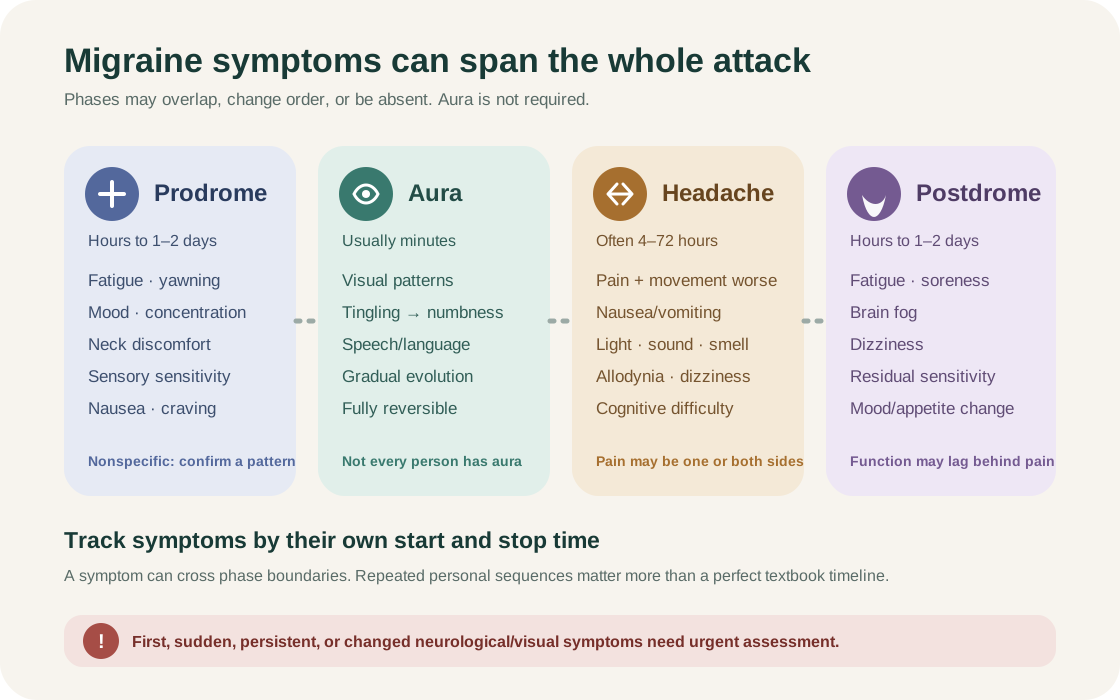
| Phase | Possible symptoms | Approximate timing |
|---|---|---|
| Prodrome | Fatigue, yawning, mood/cognitive change, neck discomfort, sensory sensitivity, nausea, appetite or urination change | Hours to up to 1–2 days before pain in some attacks |
| Aura | Fully reversible visual, sensory, or speech/language symptoms that often develop gradually | Usually minutes; each typical symptom commonly lasts 5–60 minutes |
| Headache | Head pain, nausea/vomiting, light/sound/smell and movement sensitivity, allodynia, dizziness, cognitive difficulty | Untreated migraine without aura typically lasts 4–72 hours in adults |
| Postdrome | Fatigue, cognitive slowing, mood change, dizziness, residual sensory sensitivity, neck/body soreness | Hours to roughly 1–2 days after the main pain in some attacks |
Not every early symptom predicts a headache, and not every symptom after pain is postdrome. Record timing and recurrence before assigning a phase.
Formal migraine symptoms without aura
ICHD-3 describes migraine without aura as recurrent attacks lasting 4–72 hours when untreated or unsuccessfully treated. The headache has at least two of four characteristics:
- one-sided location;
- pulsating quality;
- moderate or severe intensity; and
- worsening with, or avoidance of, routine activity such as walking or stairs.
During the headache, there is nausea/vomiting and/or both light and sound sensitivity. A definite formal diagnosis also requires a recurring attack history and no better explanation.
These criteria describe a recognizable clinical pattern; they do not say every migraine must throb, stay on one side, or cause vomiting. Children can have shorter attacks, and pain is more often bilateral in younger people. Treatment can also shorten an attack before it displays the full untreated pattern.
Early migraine symptoms: the prodrome
Prodrome—also called the premonitory phase—can begin hours or occasionally a day or two before headache. Possible early signs include:
- unusual fatigue or low energy;
- repeated yawning;
- difficulty concentrating or a “foggy” feeling;
- irritability, low mood, or feeling unusually energetic;
- neck discomfort or stiffness;
- light, sound, or smell sensitivity;
- nausea or appetite change;
- food craving;
- thirst or increased urination; and
- sleepiness or disrupted sleep.
These symptoms are nonspecific. Fatigue, neck pain, craving, and mood change occur for many reasons, so a single episode cannot confirm prodrome. Look for a repeatable sequence across several attacks.
Food craving also creates a common interpretation trap: eating the craved food may happen because the attack has already begun, then be blamed as its trigger. Timing does not prove either explanation. Record when the craving started, what happened next, and whether the pattern repeats.
Migraine aura symptoms
Aura is a set of fully reversible neurological symptoms. Typical aura involves visual, sensory, and/or speech-language symptoms without motor weakness, brainstem symptoms, or retinal symptoms.
Visual aura
Examples include a shimmering or jagged line, a spreading blind spot, flickering shapes, flashes, or distorted edges. Brain-based visual aura usually affects corresponding areas of the visual field in both eyes, even when it feels one-sided. New visual loss confined to one eye needs prompt eye/medical assessment.
Sensory aura
Pins and needles may begin in one hand and gradually spread up the arm or toward the face, tongue, or mouth. Numbness can follow. A sudden static numb area is less typical and should not be self-labeled as aura.
Speech or language aura
A person may struggle to find words, express or understand language, or read. New speech difficulty is a stroke warning sign until appropriately assessed.
Features supporting aura include gradual spread over at least five minutes, symptoms occurring in succession, positive symptoms such as flashing or tingling, and each symptom lasting 5–60 minutes. Stroke/TIA and aura can overlap, so these are clinical clues—not a home rule-out test. Read the detailed migraine aura guide for the full observation and safety framework.
Head pain during migraine
Migraine pain is often moderate or severe and worsened by routine movement, but its location and quality vary.
- Location: one temple, behind an eye, across one side, both sides, forehead, occiput, face, or neck.
- Quality: throbbing/pulsating, pounding, pressure, aching, or mixed.
- Intensity: can build gradually, fluctuate, or leave a lower-grade background pain.
- Activity response: stairs, bending, walking, or ordinary tasks may increase pain or be avoided.
- Touch response: scalp, hair, glasses, clothing, or a pillow may become painful because of cutaneous allodynia.
One-sided pain is common but not mandatory. Likewise, “sinus pressure,” watery eyes, nasal stuffiness, and neck pain can occur during migraine. Location alone does not distinguish migraine from sinus, eye, jaw, neck, or other headache disorders.
Nausea and digestive symptoms
Nausea is a core migraine symptom and can be more disabling than pain. Vomiting, loss of appetite, abdominal discomfort, and slowed stomach emptying can make oral medicines difficult to take or absorb. Some people become thirsty or crave food; others cannot tolerate food or smells.
An acute plan should address nausea and route of treatment, not only pain. A clinician may consider non-oral treatment when vomiting or severe nausea repeatedly prevents tablets from working. Persistent vomiting, inability to keep fluids down, or signs of dehydration need medical care.
Light, sound, smell, movement, and touch sensitivity
Migraine can amplify ordinary sensory input:
- Photophobia: light feels painful or intensifies other symptoms.
- Phonophobia: normal sounds feel intrusive or painful.
- Osmophobia: perfume, food, smoke, or other odors worsen nausea or head pain.
- Movement sensitivity: walking, head movement, or riding in a vehicle worsens symptoms.
- Allodynia: normally non-painful skin or scalp contact hurts.
These sensitivities can begin before pain, peak during headache, and linger afterward. They are not proof that light, sound, or smell caused the attack; they may be symptoms of an attack already underway.
Cognitive, mood, balance, and neck symptoms
Difficulty concentrating, slowed thinking, word-finding problems, irritability, anxiety, dizziness, motion sensitivity, neck pain, and fatigue can occur across multiple phases. Because they are not phase-specific, forcing them into “prodrome” or “postdrome” can distort the timeline.
True language aura is a focal neurological symptom, not simply brain fog. New inability to speak, understand language, walk normally, or remain conscious needs urgent assessment. Recurrent vertigo-dominant episodes may require evaluation for vestibular migraine or another vestibular/neurological condition.
Neck pain is common in migraine and does not prove the neck caused it. New severe neck pain with sudden headache, neurological symptoms, or recent injury/manipulation needs urgent evaluation.
Migraine postdrome symptoms
Postdrome begins after the main headache has resolved and is sometimes called a migraine hangover. Symptoms may include:
- profound fatigue or need for sleep;
- cognitive slowing or poor concentration;
- dizziness or unsteadiness;
- residual light/sound sensitivity;
- neck, scalp, or body soreness;
- low, irritable, or unusually upbeat mood;
- thirst, appetite change, or nausea; and
- a mild residual head discomfort.
Postdrome can impair work, driving, exercise, and caregiving even when pain is low. It is still part of the functional attack burden. Read migraine hangover and postdrome for recovery and return-to-activity guidance.
Migraine symptoms without headache
Migraine is not synonymous with head pain. Typical aura can occur without headache, formally called typical aura without headache. Vestibular migraine can involve vertigo and motion sensitivity with or without headache during a given episode. Prodrome-like or postdrome symptoms may also be prominent while pain is mild.
However, nausea, dizziness, light sensitivity, or fatigue alone do not prove migraine. First focal neurological symptoms, one-eye vision change, or a new pain-free aura pattern require assessment because serious mimics are harder to distinguish without a familiar headache.
Migraine symptoms in children and adolescents
Younger people may have shorter attacks, pain on both sides, pallor, nausea/vomiting, abdominal symptoms, dizziness, irritability, or a need to sleep. They may describe behavior rather than pain—stopping play, seeking darkness, avoiding food, or becoming unusually quiet.
Recurring headaches in a child deserve clinical discussion, especially when the pattern is new, wakes them repeatedly, follows injury, includes neurological change, causes repeated vomiting, or affects school and development. Do not apply adult duration and communication expectations rigidly.
Symptoms that can mimic migraine
Several patterns overlap with migraine:
- Tension-type headache: usually bilateral pressing/tightening without nausea and without both light and sound sensitivity.
- Cluster headache: very severe one-sided orbital/temporal attacks with same-side tearing/nasal/eyelid signs and restlessness, often recurring in bouts.
- Rhinosinusitis: purulent nasal drainage plus obstruction/facial pressure and an infectious or inflammatory timeline; migraine can also cause congestion.
- Eye disease: one-eye vision loss, painful red eye, halos, or persistent visual change needs eye assessment.
- TIA/stroke: sudden neurological loss, weakness, speech trouble, or persistent deficit requires emergency evaluation.
- Infection or vascular/pressure headache: systemic illness, thunderclap onset, positional or exertional pattern, papilledema, pregnancy/postpartum context, or abnormal examination changes the work-up.
Relief from migraine medicine can support a history but does not prove the cause or make red flags safe.
How migraine symptoms are diagnosed
There is no single blood test or brain scan that confirms ordinary migraine. Diagnosis uses attack history, symptom combinations, duration, recurrence, family/medical history, medicine response, and physical/neurological examination.
A clinician may ask whether pain worsens with activity, whether nausea and light/sound sensitivity occur, whether neurological symptoms are gradual and reversible, and how completely you recover. Imaging or other testing is selected when the onset, pattern, examination, age, or health context suggests another cause—not ordered automatically for every stable migraine pattern.
Keep migraine without aura, migraine with aura, and chronic migraine as distinct but potentially coexisting labels. The same person can have attacks with and without aura.
What to do when migraine symptoms start
For a familiar, clinician-diagnosed pattern:
- Follow the agreed acute plan at the timing specified; many treatments work better when used early in the headache phase.
- Stop driving or unsafe activity during visual, neurological, severe dizziness, or cognitive symptoms.
- Reduce light, sound, smell, and motion exposure where practical.
- Address hydration and food if delayed intake is adding strain and you can tolerate them.
- Record onset, medicine, and response before details blur.
- Escalate when the event differs from the plan or does not resolve within its safety boundaries.
Do not copy another person’s medication or begin aspirin for a new neurological event. Pregnancy, cardiovascular disease, kidney/liver disease, medication interactions, and prior adverse effects can change what is safe.
A symptom record clinicians can use
Record each symptom as an observation rather than assigning a phase immediately:
- symptom in your own words;
- start/end time and order;
- relation to head pain;
- pain location, quality, intensity, and movement response;
- nausea/vomiting and sensory sensitivities;
- aura details and full recovery;
- medicine, timing, and response;
- function lost; and
- return to baseline.
Track headache days, migraine-feature days, and acute-medicine days separately. A phase map is most useful after several attacks reveal a recurring sequence.
Frequently asked questions
What are the first signs of a migraine?
Possible early signs include fatigue, yawning, concentration or mood change, neck discomfort, sensory sensitivity, nausea, food craving, and urination/appetite changes. They are nonspecific; a repeated personal sequence makes them more informative.
Can migraine symptoms happen without head pain?
Yes. Typical aura without headache is a recognized diagnosis, and some vestibular migraine episodes have little or no head pain. New neurological or one-eye visual symptoms still require assessment.
How long do migraine symptoms last?
Untreated headache in migraine without aura typically lasts 4–72 hours in adults. Prodrome may start earlier, aura symptoms usually last minutes, and postdrome can continue after pain. The total attack can therefore outlast the headache phase.
Is neck pain a migraine symptom?
Yes, neck discomfort can occur before, during, or after migraine. It does not automatically mean a cervical problem caused the attack. Sudden severe neck pain with a new headache or neurological symptoms needs urgent evaluation.
When are migraine-like symptoms an emergency?
Seek emergency help for thunderclap headache, new weakness/numbness, speech trouble, confusion, seizure, fainting, sudden persistent vision loss, fever/stiff neck, or a major new neurological pattern. Do not wait for pain to appear.
The practical takeaway
Migraine symptoms form a variable neurological attack, not a mandatory four-step checklist. Prodrome may bring fatigue, yawning, cognitive or sensory change; aura may cause reversible visual, sensory, or language symptoms; the headache phase can combine pain, nausea, movement and sensory sensitivity; and postdrome can impair function after pain fades. Track the sequence across attacks, treat an established pattern according to a clinician-agreed plan, and treat first, sudden, persistent, or substantially changed neurological symptoms as a reason for urgent assessment.
For lived-experience descriptions, read what a migraine feels like, explore types of migraine, and review the medical disclaimer.
Sources
- Migraine without auraInternational Headache Society · Accessed
- Migraine with auraInternational Headache Society · Accessed
- Migraine with typical auraInternational Headache Society · Accessed
- Migraine—Symptoms and causesMayo Clinic · Accessed
- HeadacheNational Institute of Neurological Disorders and Stroke · Accessed
- The timeline of a migraine attackAmerican Migraine Foundation · Accessed
- Headaches in over 12s—RecommendationsNICE · Accessed
- Redefining migraine phases—Clinical, physiological, and imaging evidenceCephalalgia / PubMed Central · Accessed