How long do migraines last? The headache phase of an untreated or unsuccessfully treated migraine attack commonly lasts 4 to 72 hours in adults. But the full migraine timeline can be longer: early prodrome symptoms may begin hours before the pain, aura usually lasts minutes, and postdrome symptoms can continue after the headache ends. Treatment may shorten an attack, and not everyone experiences all four phases.
Do not wait for a migraine to reach a certain number of hours before getting help. Seek urgent medical care for a sudden extremely severe headache, new weakness or numbness, confusion, fainting, seizure, trouble speaking, vision loss, fever with a stiff neck, headache after an injury, or a major change from your usual pattern.
How long do migraines last? The short answer
The familiar “4 to 72 hours” figure comes from the International Classification of Headache Disorders. It is one feature clinicians use when classifying migraine without aura in adults, and it refers to headache that is untreated or unsuccessfully treated.
It does not mean every migraine must last at least four hours. Effective treatment may stop an attack sooner. Children and teenagers can have shorter headache phases. Migraine with aura, vestibular migraine, chronic migraine, and other forms can produce timing patterns that do not fit a simple three-day box.
It also does not mean an attack automatically becomes dangerous at hour 73—or that symptoms are safe before then. Duration is one clue among many. The speed of onset, associated symptoms, change from usual, medicine use, and overall health context matter too.
A complete migraine timeline can include four phases
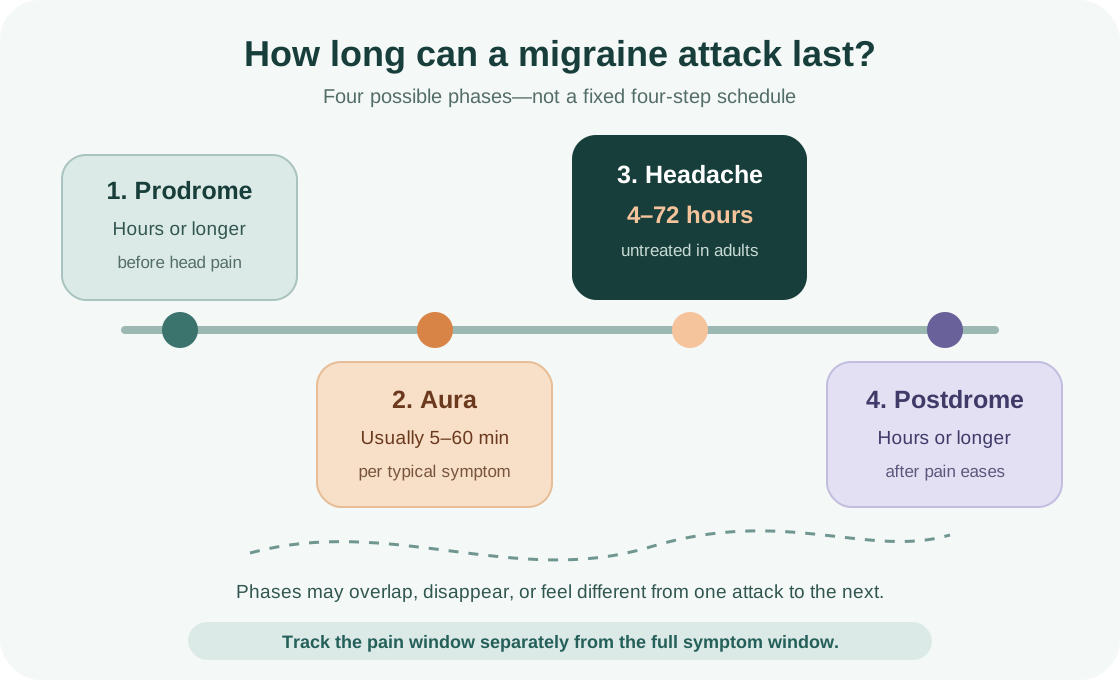
The four commonly described phases are prodrome, aura, headache, and postdrome. They are not mandatory stages on a fixed schedule. A person may have no aura, notice prodrome only in hindsight, move directly into head pain, or have symptoms that overlap across phases.
| Phase | Typical position in the attack | Possible duration | Common experiences |
|---|---|---|---|
| Prodrome | Before headache or aura | Hours; sometimes noticed up to a day or more before pain | Yawning, fatigue, mood change, food cravings, neck stiffness, trouble concentrating |
| Aura | Before or during headache in some people | Each typical aura symptom commonly lasts 5–60 minutes | Visual changes, tingling or numbness, temporary language difficulty |
| Headache | Main pain phase | Commonly 4–72 hours untreated in adults | Head pain, nausea, sensory sensitivity, movement sensitivity |
| Postdrome | After the strongest pain ends | Hours; sometimes into the next day or longer | Fatigue, fogginess, dizziness, mood change, head or neck tenderness |
The ranges overlap and vary. A precise clock is useful for describing your own pattern, but it cannot predict when the current attack will end.
Phase 1: how long does migraine prodrome last?
Prodrome is the earliest part of a possible migraine attack. It can begin hours before head pain, and some sources describe symptoms starting a day or more beforehand. Common experiences include:
- repeated yawning;
- unusual tiredness or difficulty concentrating;
- irritability, low mood, or a burst of energy;
- neck stiffness;
- thirst or increased urination;
- food cravings; and
- sensitivity to light or sound.
These symptoms are easy to misread as causes. If you crave a certain food and a headache follows, the craving may have been an early migraine symptom rather than proof that the food triggered the attack. Record the sequence before drawing a conclusion.
Prodrome can also be hard to time because many symptoms are nonspecific. “Felt unusually tired after lunch” is a valid entry; you do not need to invent a minute-by-minute onset.
Phase 2: how long does migraine aura last?
Aura does not happen in every migraine attack, and most people with migraine do not experience it every time. In the ICHD-3 classification, each individual typical aura symptom usually lasts 5–60 minutes and develops gradually. Multiple symptoms can occur one after another, so the entire aura experience may last longer than one hour.
Typical aura may include:
- flashing lights, zigzag lines, shimmering shapes, or a spreading blind spot;
- pins and needles or numbness that moves across the hand, arm, or face; and
- temporary difficulty finding words or speaking clearly.
Aura can begin before the headache, overlap it, or occur without a later headache. Sudden symptoms, first-time aura-like symptoms, new weakness, vision loss in one eye, or symptoms that differ from your established pattern need medical assessment. Stroke, retinal problems, seizures, and other conditions can resemble aura; the clock alone cannot safely separate them.
Phase 3: how long does migraine headache last?
The headache phase commonly lasts 4–72 hours in untreated or unsuccessfully treated migraine without aura. During this time, pain may be throbbing, pulsing, aching, or pressure-like. It may affect one or both sides and can shift. Nausea, vomiting, and sensitivity to light, sound, smells, touch, or movement may be as disruptive as the pain.
Several things can change the observed duration:
- Early effective treatment: A medicine that works for the person may shorten or stop the headache before four hours.
- Sleep: Some people wake with the headache gone; others wake with it still active. ICHD-3 counts the duration until awakening when sleep ends an attack.
- Vomiting or delayed medicine absorption: Nausea and vomiting can make oral treatment harder to take or keep down.
- Age: Children and adolescents can have shorter attacks than adults.
- Attack type and frequency: Different migraine types and a high number of headache days can make individual attack boundaries less clear.
- Ongoing aggravating conditions: Dehydration, missed meals, poor sleep, illness, heat, or repeated sensory exposure may complicate recovery even when they are not the sole cause.
If pain fades and returns, note the pain-free interval and whether medicine or sleep occurred between episodes. That helps a clinician decide whether it sounds like one continuing attack, recurrence after treatment, or separate headaches.
Phase 4: how long does migraine postdrome last?
Postdrome begins after the strongest head pain has eased. It is often called a “migraine hangover,” but it is still part of the migraine experience rather than an unrelated afterthought.
Possible postdrome symptoms include:
- physical exhaustion;
- brain fog or slowed thinking;
- dizziness;
- low mood, irritability, or feeling unusually upbeat;
- lingering sensitivity to light, sound, or movement;
- scalp, head, or neck tenderness; and
- reduced appetite or mild nausea.
Postdrome may last hours or continue into the next day; some people report longer recovery. Not everyone has it, and it may not follow every attack. The return of severe pain, new neurological symptoms, or an unfamiliar pattern should not be dismissed as postdrome.
Why some migraines seem to last for days
A person can reasonably say “my migraine lasted three days” even when the severe headache occupied only part of that time. The full experience may include a prodrome evening, a day of head pain, and a foggy postdrome morning.
Other explanations for a multi-day experience include:
- one continuous headache phase;
- pain that improves and then returns after medicine wears off;
- overlapping attacks when migraine is frequent;
- another headache type occurring between migraine attacks;
- ongoing nausea, sensory sensitivity, or fatigue after pain; and
- medication-overuse headache complicating an existing migraine disorder.
This is why it helps to record both the pain window and the wider symptom window. A single total can hide the distinction.
Can a migraine last longer than 72 hours?
Yes, but a prolonged or unusually persistent attack deserves medical guidance. ICHD-3 defines status migrainosus as a debilitating migraine attack that is unremitting for more than 72 hours, is typical of the person’s previous migraine except for duration and severity, and is not better explained by another diagnosis.
That formal definition does not make “status migrainosus” a label to apply at home. A clinician must consider whether medication overuse, another headache disorder, infection, vascular disease, or another cause could explain the symptoms.
Contact a healthcare professional promptly when a familiar migraine continues beyond 72 hours, keeps returning despite your established treatment plan, prevents you from drinking or keeping fluids down, or is causing substantial disability. Seek emergency care sooner for warning signs; do not wait for the 72-hour point.
How long should a migraine last after treatment?
There is no universal treatment countdown. Response depends on the medicine, when it was taken, the route used, the individual attack, nausea or vomiting, other health conditions, and whether the diagnosis is correct.
A useful treatment record includes:
- the first symptom you noticed;
- when head pain began;
- the medicine name, amount, and time taken according to its label or your prescription;
- symptom intensity before treatment;
- when meaningful relief began;
- whether normal activity became possible again; and
- whether pain returned and when.
Do not repeat a dose early or combine medicines based on a general article. Follow the product label or your clinician’s instructions. If your usual medicine repeatedly does not work, causes side effects, or is needed on many days, ask a clinician or pharmacist to review the plan rather than simply taking more.
How to track migraine duration accurately
Instead of forcing the whole attack into one start and end time, record five boundaries:
- First unusual change: the earliest possible prodrome symptom, with uncertainty if needed.
- Aura start and end: time each visual, sensory, or language symptom separately.
- Head-pain start: note whether pain was gradual or sudden.
- Head-pain end: record “still active” if it has not ended rather than guessing.
- Return to usual: note the last lingering symptom and when normal function returned.
Also record medicine timing, sleep, vomiting, hydration, meals, menstruation, and whether the attack matched your usual pattern. The difference between migraine and other headaches becomes easier to discuss when duration is paired with symptoms and function.
If headaches are so frequent that one attack seems to blend into the next, count headache days as well as episodes. The distinction matters when discussing chronic migraine and possible medication overuse.
When to seek urgent medical help
Get urgent or emergency care for:
- a sudden headache that reaches maximum intensity within seconds or minutes;
- a first severe headache or a headache dramatically different from usual;
- new weakness, numbness, confusion, fainting, seizure, loss of balance, or difficulty speaking;
- new vision loss, persistent double vision, or a painful red eye;
- fever with a stiff neck, rash, confusion, or repeated vomiting;
- headache after a significant head injury;
- severe dehydration signs or inability to keep fluids down;
- a new headache during pregnancy or soon after birth; or
- a new headache in someone with cancer, immune suppression, or a clotting disorder.
An attack does not have to be long to be urgent. Sudden onset and new associated symptoms often matter more than the number of hours.
Frequently asked questions
Can a migraine last only two hours?
Yes. Treatment can shorten an attack, and children may have shorter headache phases. A short episode can also have another explanation, so duration alone does not diagnose migraine.
Can a migraine last a week?
Migraine-related symptoms can span several days when prodrome, headache, and postdrome are counted together. Unremitting debilitating head pain lasting more than 72 hours may meet part of the definition of status migrainosus and should be medically assessed. A week-long new or changing headache needs evaluation rather than assumption.
Does sleep end a migraine?
Sometimes, but not reliably. Some people wake without pain; others wake with the same attack or postdrome symptoms. Record the state before sleep and after waking.
Why does my migraine come back the next day?
Pain can recur after temporary relief, a new attack can begin, or lingering symptoms may be postdrome. Medicine timing, pain-free intervals, and associated symptoms help a clinician interpret the pattern.
How long is too long for migraine aura?
Each individual typical aura symptom commonly lasts 5–60 minutes, but multiple symptoms may occur in sequence. A first, sudden, unusually prolonged, or different neurological symptom should be assessed promptly rather than timed at home until it passes.
When should I contact a doctor about migraine duration?
Contact a clinician when attacks are becoming longer, more frequent, or more disabling; when your established treatment repeatedly fails; when acute medicine is needed often; or when a familiar attack persists beyond 72 hours. Use urgent services immediately for red flags.
Track the pain window and the full attack
The practical answer to “how long do migraines last?” is usually two answers: how long the headache lasted and how long the entire attack affected you. Recording prodrome, aura, head pain, postdrome, treatment, and return to normal creates a much more useful history than writing “three-day migraine” alone.
Calmraine can keep attack timing, pain, symptoms, possible factors, medicine, and notes together on your iPhone. It records what you enter; it does not predict when an attack will end or decide what the timing means.
Sources
- 1.1 Migraine without auraInternational Headache Society · Accessed
- 1.2 Migraine with auraInternational Headache Society · Accessed
- 1.4.1 Status migrainosusInternational Headache Society · Accessed
- MigraineMedlinePlus, U.S. National Library of Medicine · Accessed
- The Timeline of a Migraine AttackAmerican Migraine Foundation · Accessed
- Headaches in over 12s: diagnosis and managementNICE · Accessed