
What is a migraine? Migraine is a neurological disorder that causes recurring attacks. An attack may involve head pain, but it can also affect vision, sensation, digestion, thinking, and mood. The World Health Organization classifies migraine as a primary headache disorder. That means the disorder itself produces the attacks; it is not simply a symptom of another condition. Migraine is more than a severe headache, and it is not a sign of weakness or poor coping.
An attack may include prodrome, aura, headache, and postdrome. Not everyone has every phase, and aura is optional. Migraine can affect children and adults. It can also disrupt life between attacks because recovery takes time and the next episode may be unpredictable.
Get emergency help for a sudden “worst” headache or new weakness/numbness, speech trouble, confusion, fainting, seizure, sudden persistent vision loss, or fever with marked neck stiffness. A previous migraine diagnosis does not make a first or substantially changed neurological event safe.
What is a migraine? The condition in one map
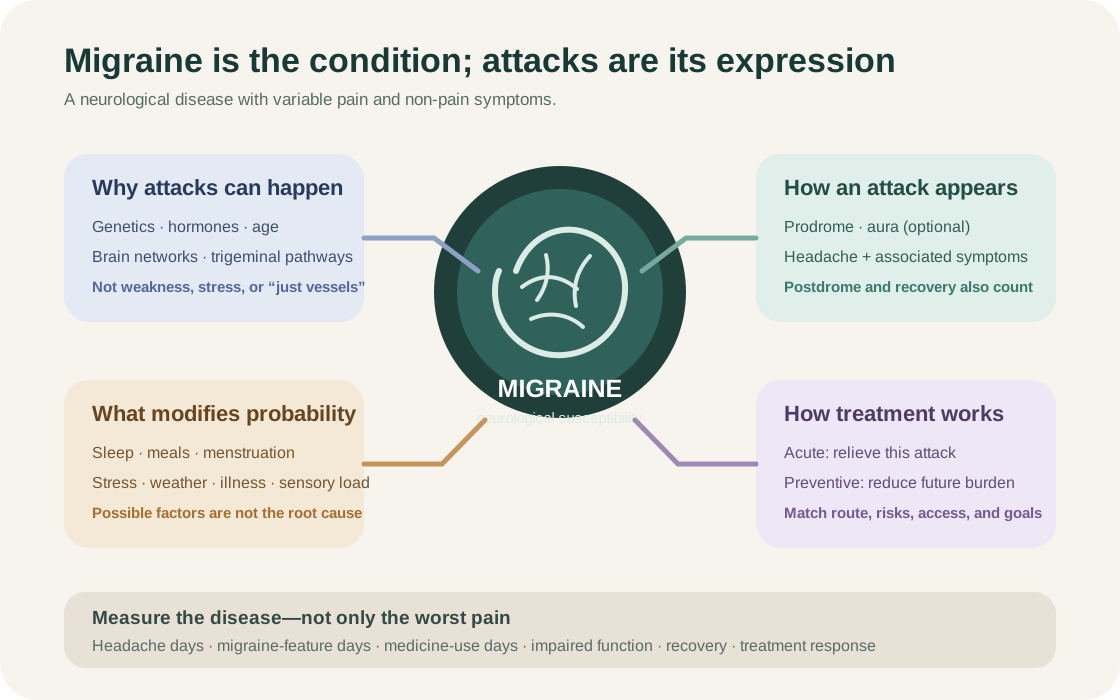
| Layer | What it means |
|---|---|
| Susceptibility | Genetics, hormones, age, and other biology influence how readily the nervous system enters an attack |
| Attack | Prodrome, aura, headache, and postdrome symptoms may overlap or be absent |
| Modifying factors | Sleep, meals, stress, menstruation, weather, illness, sensory load, and other context may alter attack probability for some people |
| Treatment | Acute care aims to stop/relieve an attack; prevention aims to reduce future frequency, severity, duration, or disability |
| Measurement | Headache days, migraine-feature days, medicine-use days, function, and recovery show whether the plan works |
Is migraine a headache or a neurological disease?
Both descriptions can appear in formal sources: migraine is classified as a primary headache disorder and is also understood as a complex neurological disease. “Headache disorder” names the diagnostic family; it does not mean pain is the only symptom.
Migraine can cause nausea, vomiting, light/sound/smell and movement sensitivity, dizziness, cognitive difficulty, fatigue, mood change, neck pain, allodynia, and reversible aura. Some recognized migraine episodes have little or no head pain. WHO ranks migraine among the largest sources of neurological disability worldwide, yet it remains underdiagnosed and undertreated.
How does a migraine attack work?
Migraine is no longer explained as simple blood-vessel dilation. Current models involve interacting brain networks, the trigeminovascular pain system, sensory processing, brainstem and hypothalamic regions, inflammatory signaling around pain-sensitive tissues, and neuropeptides including calcitonin gene-related peptide (CGRP).
When the trigeminal system is activated, pain signals and CGRP-related pathways contribute to headache and sensitization. Sensory-processing changes help explain why normal light, sound, smell, touch, and movement become intolerable. Cortical spreading depolarization is the leading mechanism for migraine aura—a wave of altered cortical activity that can produce evolving visual, sensory, or language symptoms.
These mechanisms are active research areas, not a single complete explanation for every symptom. A normal routine brain scan is compatible with migraine; imaging is used to investigate selected alternative causes, not to visualize an ordinary attack diagnosis.
What causes migraine?
There is no single cause. Migraine susceptibility is partly genetic and involves many genes plus environmental and biological influences. Having a family history increases likelihood but is not required. Hormonal transitions help explain changes around puberty, menstrual cycles, pregnancy/postpartum, and menopause for some people.
Migraine can begin in childhood, adolescence, or adulthood. It often changes over a lifetime: attack symptoms, aura, frequency, and treatment response may all shift. Comorbid sleep disorders, anxiety/depression, epilepsy, other pain disorders, and vascular risks may influence burden or care without being simple causes.
Migraine causes vs. triggers
A trigger does not create the migraine disease; it is a factor that may increase attack probability in a susceptible person. Frequently reported possible factors include:
- too little, too much, or shifted sleep;
- missed meals or fluctuating caffeine;
- menstruation or other hormonal change;
- stress or the let-down after stress;
- alcohol;
- heat, weather, or pressure change;
- intense sensory exposure; and
- illness or unusual physical strain.
Not every preceding event is causal. Fatigue, food craving, neck stiffness, light sensitivity, and mood change can be prodromal symptoms of an attack already underway and then be misidentified as triggers. Track repeated sequences before imposing broad avoidance. The goal is a stable, workable life—not shrinking life around an unproven list.
What are the symptoms of migraine?
Prodrome
Hours or occasionally a day or two before pain, some people notice fatigue, yawning, concentration or mood change, neck discomfort, nausea, sensory sensitivity, appetite/craving, thirst, or urination change.
Aura
Aura affects a minority of people with migraine. Typical aura causes fully reversible visual, sensory, and/or speech-language symptoms that often develop gradually and last minutes. Examples include a spreading shimmering blind spot, tingling that travels from hand toward face, or temporary word-finding trouble. New focal neurological symptoms need urgent assessment.
Headache phase
Migraine without aura typically lasts 4–72 hours untreated in adults. Pain is often moderate/severe, one-sided, pulsating, and worsened by routine activity, accompanied by nausea/vomiting and/or light and sound sensitivity. These are criteria features, not mandatory experiences in every treated attack.
Postdrome
After pain improves, fatigue, brain fog, dizziness, mood change, soreness, and residual sensory sensitivity can continue. The whole attack can therefore last longer than the headache. Explore the full migraine symptoms reference for symptom-by-phase detail.
What types of migraine are there?
The main formal categories include migraine without aura, migraine with aura, and chronic migraine. Aura has visual, sensory, speech/language, motor, brainstem, and retinal diagnostic subtypes, but rare subtypes require careful exclusion of mimics.
Other clinically important contexts include menstrual migraine, vestibular migraine, abdominal migraine and other episodic syndromes associated with migraine, and status migrainosus. Popular labels such as “ocular,” “silent,” and “complex migraine” are ambiguous and need translation into formal symptoms/diagnoses.
Episodic migraine means fewer than 15 headache days per month. Chronic migraine means at least 15 headache days per month for more than three months, including at least eight days with migraine features or another qualifying migraine connection. Read types of migraine for the full classification map.
Migraine vs. a regular headache
“Headache” is a symptom and a broad family of disorders; migraine is one specific disorder. Compared with common tension-type headache, migraine more often causes activity-worsened moderate/severe pain, nausea, and both light and sound sensitivity. Tension-type headache more often feels like bilateral pressing/tightening without nausea.
Cluster headache causes much shorter, extremely severe one-sided orbital/temporal attacks with same-side tearing/nasal/eyelid signs and restlessness. Rhinosinusitis requires a compatible infectious/inflammatory nasal timeline; migraine itself can cause congestion and watery eyes.
No single feature—location, throbbing, nausea, response to a triptan—proves migraine. See migraine vs. headache for a structured comparison.
How migraine is diagnosed
Migraine is a clinical diagnosis. A clinician uses the attack history, symptom combinations, duration, frequency, family/medical context, medicine response, and physical/neurological examination. ICHD-3 criteria create consistent categories; they are not a consumer quiz.
There is no blood test or scan that confirms ordinary migraine. Imaging may be considered for thunderclap onset, abnormal examination, major pattern change, new late-life onset, persistent neurological findings, positional/exertional patterns, cancer/immune/pregnancy context, or another concerning feature. Eye, blood, spinal-fluid, sleep, or other testing is chosen for specific alternatives.
Bring at least four weeks of headache days, associated symptoms, acute-medicine days, and functional impact when possible. A clear history can reduce both missed diagnoses and unnecessary testing.
Acute migraine treatment
Acute treatment aims to relieve pain and the most bothersome associated symptoms, restore function, and prevent recurrence with acceptable adverse effects. Depending on the person and health system, options can include:
- acetaminophen/paracetamol or an NSAID;
- a triptan;
- a gepant;
- lasmiditan in some settings;
- anti-nausea treatment;
- dihydroergotamine in selected contexts;
- a neuromodulation device; or
- non-oral routes when vomiting or rapid escalation makes tablets impractical.
The best first and backup options depend on cardiovascular, pregnancy, kidney/liver, GI, interaction, access, and prior-response context. Opioids and butalbital generally create poor migraine tradeoffs, including dependence and medication-overuse risk. A written plan should say what to take, when, what to do if it fails, and when to seek care.
Preventive migraine treatment
Prevention is considered when attacks are frequent, disabling, prolonged, poorly controlled, contraindicate acute options, or create excessive acute-medicine use. The goal can be fewer migraine days, milder/shorter attacks, better acute response, or more functional days—not necessarily zero attacks.
Options include oral medicines such as certain beta-blockers, antiseizure medicines, and antidepressants; CGRP-targeting monoclonal antibodies or preventive gepants; onabotulinumtoxinA for eligible chronic migraine; neuromodulation; and behavioral therapies including cognitive behavioral therapy, biofeedback, and relaxation training.
The American Headache Society considers CGRP-targeting therapies a first-line prevention option based on current evidence, while NICE and insurers may apply prior-treatment or eligibility rules. Pregnancy plans, side effects, comorbidities, cost, formulation, and preference shape selection. Preventive trials need a defined duration and outcome review.
Daily migraine management
Consistent sleep/wake timing, regular meals, hydration, gradual physical activity, and a stable caffeine pattern can reduce avoidable nervous-system strain for some people. Treat sleep apnea, insomnia, anxiety/depression, and other pain conditions as real coexisting health issues—not personal failings.
Extreme elimination diets, avoiding all exercise, or organizing life around every suspected trigger can increase burden without improving control. Make one evidence-informed change at a time when practical, compare enough weeks, and keep effective medical treatment in the plan.
Can migraine be cured?
There is currently no universal cure, but migraine is treatable. Many people achieve large reductions in attack frequency, severity, duration, or disability with the right acute and preventive plan. Frequency can move between episodic and chronic ranges, and treatment needs can change over life.
“No cure” does not mean “nothing helps.” It means management usually combines attack treatment, prevention when appropriate, medication-overuse avoidance, comorbidity care, and ongoing measurement rather than one permanent fix.
Migraine in children and hormonal life stages
Children may have shorter, more bilateral attacks with prominent pallor, nausea/vomiting, abdominal symptoms, dizziness, irritability, or need for sleep. Behavior and lost activity can communicate burden when pain descriptions are limited.
Puberty, menstruation, pregnancy/postpartum, and perimenopause can change attack patterns. Migraine with aura also changes contraceptive counseling: in U.S. guidance, combined hormonal contraception is generally avoided because of vascular risk. Medication and device safety must be reviewed before conception, during pregnancy/lactation, and when aura status changes.
When migraine-like symptoms need urgent care
Seek emergency assessment for:
- thunderclap onset reaching maximum intensity within a minute;
- new weakness, numbness, facial droop, speech/language trouble, confusion, collapse, or seizure;
- sudden persistent vision loss or severe painful red eye;
- fever with severe headache and marked neck stiffness or impaired awareness;
- severe headache after significant head injury;
- severe new headache during pregnancy/postpartum; or
- a first or substantially changed aura-like event that does not resolve as expected.
Arrange prompt review for steadily increasing frequency, headaches starting after age 50, a major change from baseline, repeated vomiting/dehydration, or frequent acute-medicine use.
What a migraine tracker should record
Record the minimum fields that change care:
- headache day and migraine-feature day;
- attack start/end when knowable;
- pain and non-pain symptoms;
- aura type/timing and full recovery;
- acute medicine, timing, and response;
- functional impact;
- menstrual or other recurring context when relevant; and
- true headache-free versus missing days.
Track patterns before claiming triggers. Review monthly migraine/headache days, medicine-use days by class, impaired days, and recovery—not just pain intensity.
Frequently asked questions
Is migraine just a bad headache?
No. Migraine is a neurological disorder with pain and non-pain symptoms across an attack cycle. Head pain can be mild or absent in some recognized presentations, while nausea, aura, dizziness, or sensory sensitivity may dominate.
What happens in the brain during a migraine?
Migraine involves interacting brain networks, trigeminal pain pathways, altered sensory processing, and signaling molecules including CGRP. Aura is linked to cortical spreading depolarization. It is not simply blood vessels expanding.
What is the main cause of migraine?
There is no single cause. Inherited susceptibility, hormones, nervous-system biology, and environmental context interact. Triggers may alter attack probability but do not create the underlying disease.
How long does a migraine last?
Untreated headache in migraine without aura typically lasts 4–72 hours in adults. Prodrome can begin earlier and postdrome can continue after pain, so the total attack may last longer. Read how long migraines last for the phase timeline.
Is migraine dangerous?
Typical established migraine attacks are not usually medical emergencies, but migraine-like symptoms overlap with stroke, eye disease, infection, and other urgent conditions. Migraine with aura also has vascular-health and contraceptive implications that deserve clinician discussion.
The practical takeaway
Migraine is a treatable neurological disease expressed through recurring, variable attacks—not simply a severe headache. Genetics and nervous-system susceptibility underlie the condition; possible triggers modify attack likelihood. Diagnosis is clinical, acute treatment manages the current attack, prevention reduces future burden, and tracking shows whether the plan works. Learn the personal pattern, but never use a migraine label to dismiss sudden, persistent, or substantially changed neurological symptoms.
For deeper next steps, explore migraine symptoms, types of migraine, and the medical disclaimer.
Sources
- Migraine and other headache disordersWorld Health Organization · Accessed
- MigraineNational Institute of Neurological Disorders and Stroke · Accessed
- Migraine without auraInternational Headache Society · Accessed
- Migraine with auraInternational Headache Society · Accessed
- Headaches in over 12s—RecommendationsNICE · Accessed
- CGRP-targeting therapies are a first-line option for migraine preventionAmerican Headache Society · Accessed
- IHS global practice recommendations for acute pharmacological treatment of migraineCephalalgia · Accessed
- Migraine—From pathophysiology to treatmentThe Journal of Headache and Pain / PubMed Central · Accessed