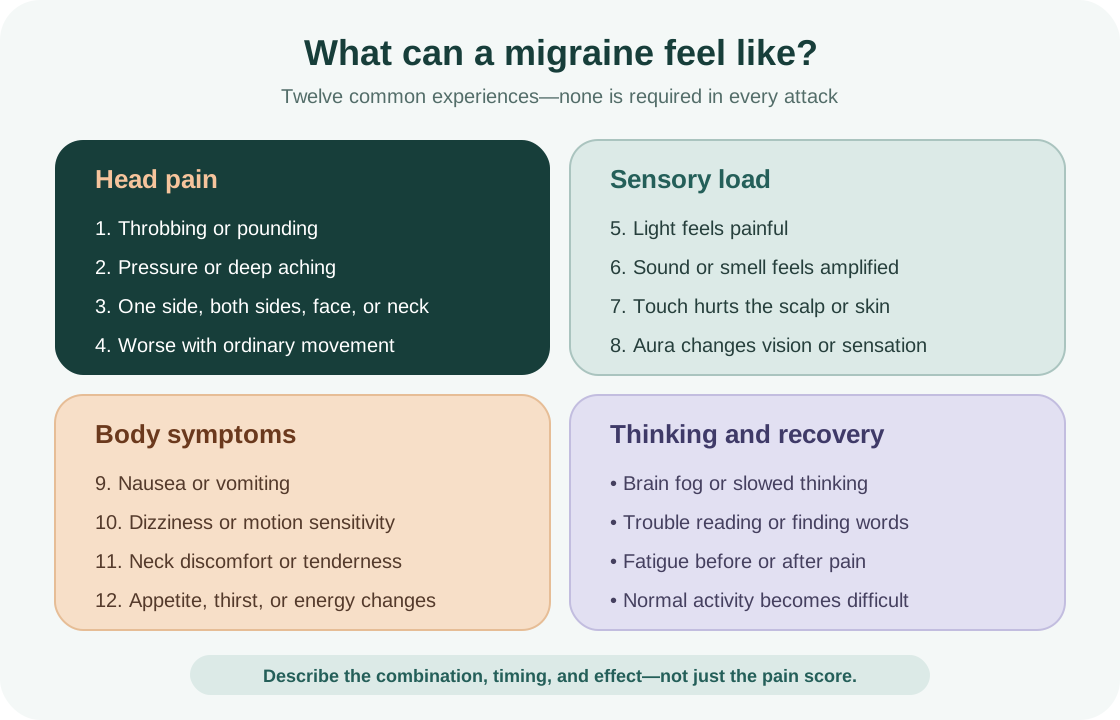
What does a migraine feel like? It can feel like throbbing, pulsing, pressure, or deep aching in one or both sides of the head, often with nausea and painful sensitivity to light, sound, smells, movement, or touch. Some people also experience visual aura, tingling, dizziness, trouble thinking, fatigue, or a washed-out “hangover” after the pain. Migraine can be disabling even when the head pain is not severe.
There is no single migraine feeling, and symptoms can change between attacks. Seek urgent medical help for a sudden extremely severe headache, new weakness or numbness, confusion, fainting, seizure, trouble speaking, vision loss, fever with a stiff neck, headache after an injury, or a major change from your usual pattern.
What does a migraine feel like at a glance?
Migraine is a neurological disorder, not just a synonym for severe head pain. An attack can affect pain processing, vision, sensation, digestion, concentration, energy, and the ability to tolerate an ordinary environment.
| Part of the experience | Words people may use | Details worth recording |
|---|---|---|
| Head pain | Throbbing, pulsing, pounding, pressure, aching, sharp | Side, location, movement sensitivity, start and end time |
| Sensory load | Light feels painful, sounds feel amplified, smells feel overpowering, scalp hurts to touch | Which sense, when it began, and what activity became difficult |
| Stomach and balance | Nauseated, sick, dizzy, unsteady, no appetite | Vomiting, fluid intake, ability to stand or walk safely |
| Aura | Zigzags, flashing lights, spreading blind spot, pins and needles, word difficulty | Exact symptom, gradual or sudden onset, duration, one or both eyes |
| Thinking and energy | Foggy, slowed, confused, exhausted, irritable | Before/during/after pain and effect on familiar tasks |
| Function | “I had to stop,” “I could continue slowly,” “I needed a dark room” | What you could not do that you normally can |
These descriptions are communication tools, not a diagnostic checklist. Other headache and neurological conditions can overlap with them.
1. Throbbing, pulsing, or pounding head pain
Migraine pain is often rhythmic: it may seem to beat with the pulse or pound more strongly during movement. Walking upstairs, bending over, coughing, or ordinary activity can intensify the discomfort. Some people feel each step in their head and instinctively try to stay still.
Pulsing is common enough to appear in the ICHD-3 migraine-without-aura classification, but it is not required. A headache does not need to “feel like a heartbeat” to be migraine.
2. Pressure, aching, or deep steady pain
Migraine can also feel like pressure behind an eye, a heavy ache in the temple, or a deep pain that does not pulse. That can resemble tension-type or “sinus” headache. The associated symptoms—nausea, sensory sensitivity, movement sensitivity, aura, and repeatable attack pattern—often provide more useful context than the pain adjective.
Avoid rejecting migraine because the pain feels like pressure. Equally, do not assume pressure proves migraine: eye, sinus, dental, muscle, and other problems can cause similar sensations.
3. Pain on one side, both sides, the face, or neck
One-sided pain is a familiar migraine pattern, but migraine may affect both sides, move from one side to the other, sit behind an eye, or extend into the face and neck. Children are more likely than adults to have pain on both sides.
The location may change between attacks in the same person. A location map is useful for describing the episode, but it cannot identify the diagnosis by itself.
4. Pain that gets worse with movement
Routine physical activity often aggravates a migraine headache or makes a person avoid movement. This is different from saying exercise always caused it. The key observation is what happened after the pain began: did walking, stairs, bending, or turning the head clearly intensify the symptoms?
Record the functional effect. “I stopped cooking because standing and moving worsened the pain” communicates more than an isolated 7-out-of-10 rating.
5. Light sensitivity that can feel painful
Photophobia is more than preferring a dim room. Daylight, overhead LEDs, a phone screen, glare from a window, or flickering light may feel piercing, painful, or impossible to ignore. Some people close their eyes or seek darkness because even normal brightness becomes intolerable.
Light sensitivity may begin before the strongest head pain and linger afterward. New light sensitivity with eye redness, vision loss, severe eye pain, or another unfamiliar symptom needs assessment rather than an automatic migraine label.
6. Sound, smell, or touch sensitivity
Ordinary sounds may seem much louder or physically uncomfortable. Conversation, dishes, traffic, or a low electronic hum can become difficult to tolerate. Everyday smells—perfume, cooking, cleaning products—may suddenly feel overpowering or worsen nausea.
Touch can also hurt. Brushing hair, wearing glasses, resting on a pillow, or a breeze across the scalp may feel painful. This touch-evoked pain is sometimes called allodynia. Record the real-world example; it is easier for a clinician to understand than a technical label you are unsure about.
7. Nausea, vomiting, or loss of appetite
Migraine can feel like a stomach illness layered on top of head pain. Nausea may make food, water, medicine, smells, and movement hard to tolerate. Vomiting can lead to dehydration and can prevent oral medicine from staying down.
Record whether nausea began before, with, or after the headache; whether vomiting occurred; and whether you could keep fluids down. Inability to drink, very little urination, faintness, or worsening dehydration needs medical guidance. See the practical signs in the dehydration headache guide.
8. Dizziness, motion sensitivity, or feeling unsteady
Some attacks include lightheadedness, a rocking or spinning sensation, motion sensitivity, or difficulty feeling steady. Car travel, scrolling, busy visual patterns, or turning the head may feel unusually uncomfortable.
Dizziness has many possible causes. New severe vertigo, fainting, inability to walk, double vision, weakness, or speech difficulty requires prompt assessment. Describe whether you felt spinning, faint, off-balance, or visually overwhelmed rather than recording only “dizzy.”
9. Aura: visual, sensory, or language changes
Aura affects some people with migraine and usually develops gradually over minutes. It may feel or look like:
- a shimmering zigzag or crescent;
- flashing lights or sparkling dots;
- a blind spot that slowly spreads;
- pins and needles that travel from the hand toward the arm or face;
- temporary numbness; or
- difficulty finding or understanding words.
Each typical aura symptom commonly lasts 5–60 minutes, though several symptoms can occur in sequence. Aura may happen before or during the headache and can occur without head pain.
First-time aura-like symptoms, sudden onset, one-eye vision loss, weakness, or a pattern that differs from previous aura needs medical assessment because stroke, retinal problems, and seizures can look similar.
10. Brain fog or slowed thinking
Migraine can make familiar mental tasks feel unusually hard. A person may reread the same sentence, lose their train of thought, struggle to find a routine word, or feel that decisions take much longer. This can happen before, during, or after head pain.
“Brain fog” is useful shorthand, but examples are better: “I could read individual words but could not follow the paragraph” or “I entered the wrong familiar password three times.” Sudden confusion or speech change should be assessed urgently, particularly when it is new.
11. Early changes before the pain
Hours before head pain, migraine prodrome may feel like unexplained fatigue, frequent yawning, neck stiffness, irritability, thirst, food cravings, increased urination, or difficulty concentrating. People often recognize this phase only after they have tracked several attacks.
An early symptom can be mistaken for a trigger. Craving chocolate before the headache does not necessarily mean chocolate caused it. Capture timing across several migraine and non-migraine days before deciding a pattern is meaningful.
12. A drained or foggy migraine hangover
After the strongest pain fades, postdrome can feel like exhaustion after an illness or a night without sleep. Some people feel weak, tender, dizzy, emotionally flat, irritable, or unable to think at their usual speed. Others feel relief and energy. The full migraine timeline may therefore extend beyond the pain window.
Record when the headache ended separately from when you felt back to normal. That distinction helps show the real impact of the attack.
Can migraine happen without severe head pain?
Yes. Migraine pain can be mild, and some migraine phenomena occur without headache. Aura without a later headache is one example. Nausea, sensory sensitivity, dizziness, and cognitive symptoms can still interfere with daily life even when pain is not the dominant feature.
This does not mean every episode of visual change, dizziness, or nausea is migraine. When head pain is absent, the need to consider other causes becomes especially important. A clinician can review the timing, repeat pattern, examination, and need for testing.
Migraine vs. a common tension-type headache feeling
Tension-type headache is often described as a band, pressure, or squeezing on both sides of the head. It is commonly mild or moderate and is less likely to worsen with routine movement. Migraine more often combines head pain with nausea, light and sound sensitivity, or marked activity limitation.
The overlap is substantial. Migraine can feel like pressure and affect both sides; tension-type headache can be painful. Use the full migraine vs. headache comparison instead of treating one adjective as the answer.
What may help during a familiar migraine attack?
If the episode matches your established pattern and has no warning signs, general comfort measures include:
- reducing bright light, loud sound, strong smells, and screen exposure;
- resting in a quiet, comfortable space;
- sipping fluids, especially after vomiting or limited intake;
- eating a tolerable snack if you have missed a meal;
- trying a cool or warm pack; and
- taking medicine according to its label or your clinician’s existing plan.
Migraine-specific acute and preventive treatments are available, but the appropriate choice depends on individual health history and other medicines. Repeatedly taking more acute medicine without guidance can contribute to medication-overuse headache. Ask a clinician or pharmacist when the current plan is not working.
How to describe a migraine to a doctor
Use concrete observations in this order:
“I first noticed [symptom] at [time]. The pain began [gradually/suddenly] and felt [your words] in [location]. I also had [nausea/sensory/aura/other symptoms]. I could [continue, limit, or stop] normal activity. I took [medicine and time]. Head pain lasted [duration], and I felt back to normal at [time].”
Add frequency: how many headache days and migraine-like days occurred in the last month? Note headache-free days too. If one episode was different, describe the change plainly rather than averaging it into the rest.
When to seek medical help
Seek urgent or emergency care for:
- a sudden headache that reaches extreme intensity within seconds or minutes;
- new weakness, numbness, confusion, fainting, seizure, loss of balance, or trouble speaking;
- new vision loss, persistent double vision, or severe eye pain;
- fever with a stiff neck, rash, confusion, or repeated vomiting;
- headache after a significant head injury;
- a major unexplained change from your usual attack pattern;
- a new headache during pregnancy or soon after birth; or
- a new headache in someone with cancer, immune suppression, or a clotting disorder.
Arrange a routine medical appointment when headaches recur, interfere with work or sleep, are becoming more frequent, or require acute medicine often. Frequent attacks may need a broader plan; see how clinicians distinguish episodic from chronic migraine.
Frequently asked questions
Does migraine always throb?
No. Throbbing or pulsing is common, but migraine can feel like pressure, aching, or steady pain. The associated symptoms and recurring pattern matter more than one adjective.
Does migraine always hurt on one side?
No. Pain may affect one side, both sides, the face, behind an eye, or the neck. It can change sides between or during attacks.
Can migraine feel like sinus pressure?
Yes. Migraine can produce forehead, facial, or behind-the-eye pressure and may include a runny or blocked nose. Fever, thick nasal discharge, and signs of infection point toward a different evaluation, but location alone cannot settle the cause.
Can you have a migraine without nausea?
Yes. Nausea is common but not universal. Some people mainly experience sensory sensitivity, pain, aura, or fatigue.
What does migraine aura feel like?
Aura may appear as gradually spreading visual patterns, tingling or numbness, or temporary language difficulty. First-time, sudden, or different symptoms need assessment rather than assumption.
Why do I feel tired after a migraine?
Fatigue and brain fog can be part of postdrome after the strongest pain fades. Track when the pain ends and when energy and concentration return; new or severe symptoms deserve a broader evaluation.
Your description is more useful than a perfect label
The answer to “what does a migraine feel like?” is a collection of possible experiences, not one defining sensation. Describe the pain, sensory changes, stomach symptoms, aura, thinking, function, timing, and recovery in your own words.
Calmraine can keep those observations together on your iPhone without deciding what caused them or assigning a diagnosis. A detailed, honest record is more useful than forcing an uncertain episode into a category.
Sources
- MigraineMedlinePlus, U.S. National Library of Medicine · Accessed
- Migraine and other headache disordersWorld Health Organization · Accessed
- 1.1 Migraine without auraInternational Headache Society · Accessed
- 1.2 Migraine with auraInternational Headache Society · Accessed
- What Is Migraine?American Migraine Foundation · Accessed
- Headaches in over 12s: diagnosis and managementNICE · Accessed