
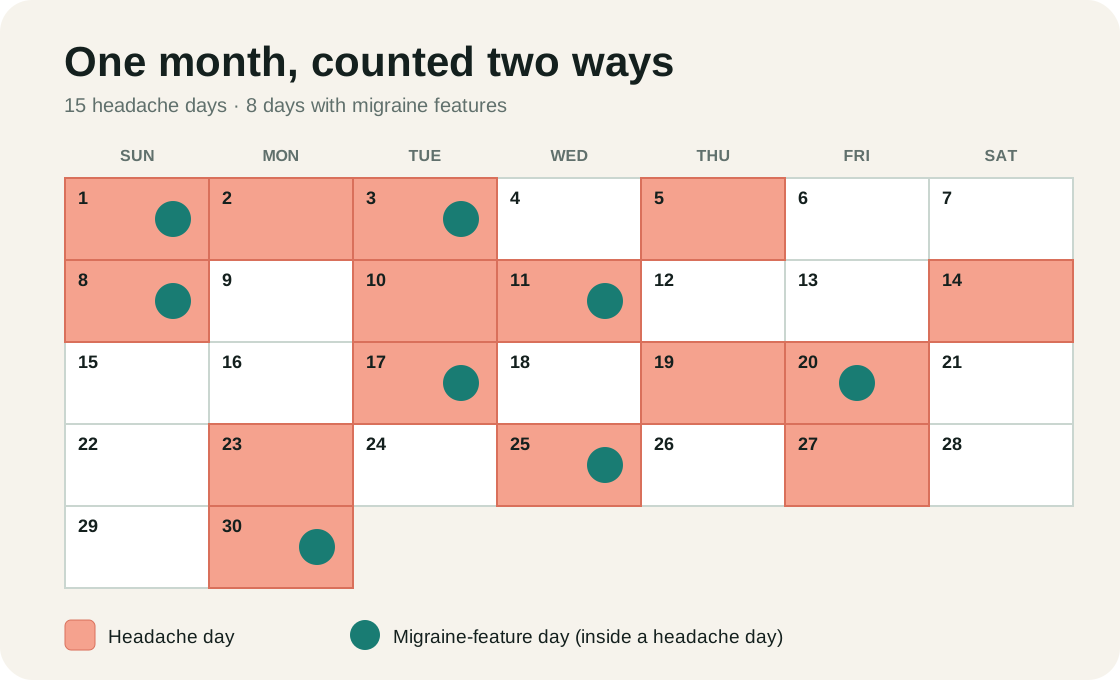
Chronic migraine means having a headache on 15 or more days each month for more than three months, with migraine features on at least eight of those days. It is not simply a migraine attack that feels especially severe, and it does not mean every headache day looks the same. Some days may involve disabling throbbing pain, nausea, and light sensitivity; others may feel like a lower-level background headache.
The distinction matters because chronic migraine is treated as a high-frequency neurological disorder, not as a series of isolated bad days. An accurate headache calendar, including medication-use days and milder pain days, can make diagnosis and treatment decisions much clearer.
What is chronic migraine?
Migraine exists on a frequency spectrum:
- Episodic migraine: headache on fewer than 15 days per month.
- Chronic migraine: headache on at least 15 days per month for more than three months, with migraine features on at least eight days per month.
These are diagnostic boundaries from the International Classification of Headache Disorders (ICHD-3). They do not measure how much a person is suffering. Someone with four profoundly disabling migraine days may need treatment, while someone with chronic migraine may experience a mixture of severe, moderate, and low-level pain.
The eight migraine-feature days do not all have to look identical. Under ICHD-3, they can meet criteria for migraine with aura, have the clinical features of migraine without aura, or be days that the person believes are migraine and that respond to a triptan or ergot medicine. A clinician interprets this history rather than simply adding up boxes in a self-test.
Why “headache days” matter more than attack count
One migraine attack can continue across midnight and create two or more headache days. A treated attack may leave a lower-grade headache the following day. Several distinct attacks can also occur within one calendar day.
For chronic migraine, the core count is the number of calendar days with any headache, not only the number of attacks you could clearly separate.
| Term | What it means in a diary |
|---|---|
| Headache day | Any calendar day with head pain, even if the pain was mild or lasted only part of the day |
| Migraine-feature day | A headache day with migraine-like features or relief from a migraine-specific medicine |
| Attack | A distinct episode with a recognizable start and return toward baseline |
| Medication-use day | A day when an acute or symptom-relief medicine was taken |
| Headache-free day | A day explicitly confirmed to have no head pain—not simply a blank diary entry |
Chronic migraine symptoms
Chronic migraine can include the same symptoms as episodic migraine, but the frequency and day-to-day variation can make the pattern harder to recognize.
Symptoms may include:
- moderate or severe head pain;
- throbbing, pulsating, pressure-like, or mixed pain;
- pain on one side, both sides, behind the eyes, at the temples, or across the head;
- pain that worsens with ordinary movement;
- nausea or vomiting;
- sensitivity to light, sound, smell, or touch;
- neck pain or stiffness;
- dizziness;
- difficulty concentrating or finding words;
- fatigue;
- visual, sensory, or language aura symptoms in some people; and
- a drained or foggy postdrome—the “migraine hangover”—after stronger attacks.
Not every day has to include all these features. Chronic migraine often becomes less tidy than textbook descriptions: the pain can fluctuate, symptoms can fade in and out, and a person may struggle to identify where one attack ended and another began.
What causes migraine to become chronic?
There is no single cause, and developing chronic migraine is not a personal failure. Research has identified factors associated with a greater chance of migraine becoming more frequent. Some can be changed; others cannot.
Commonly discussed factors include:
- a high baseline number of monthly migraine or headache days;
- frequent use of acute headache medicines;
- sleep disorders or inconsistent sleep;
- depression, anxiety, or sustained stress;
- obesity;
- other pain conditions;
- snoring or sleep apnea;
- major life changes or difficult social circumstances; and
- delayed access to effective migraine treatment.
Association does not mean any one factor caused chronic migraine. For example, people may use acute medicine frequently because their migraine is already worsening. That relationship can run in both directions.
Chronification can also reverse. A person may cross below 15 headache days after treatment and later move above it again. The diagnosis is therefore a description of a sustained period, not a permanent identity or a prediction that improvement is impossible.
Chronic migraine and medication-overuse headache
Chronic migraine and medication-overuse headache can occur together. Medication-overuse headache is associated with regular, frequent use of certain acute headache medicines over time. The exact threshold depends on the medicine class, which is why counting medication-use days is more useful than counting tablets alone. Read the complete rebound headache and medication-overuse guide for the 10-day and 15-day class thresholds.
Do not abruptly stop a prescription or frequently used medicine based on an online threshold. Withdrawal can temporarily worsen headaches, and some medicines should not be stopped suddenly. Bring a complete list—including over-the-counter products and combination medicines—to a clinician or pharmacist.
How chronic migraine is diagnosed
There is no blood test or scan that confirms chronic migraine. Diagnosis is based on the history, symptom pattern, examination, frequency over time, and whether another condition better explains the headaches.
A clinician may ask:
- On how many days per month do you have any head pain?
- On how many days are there migraine features such as nausea, movement sensitivity, or light and sound sensitivity?
- How long has the high-frequency pattern lasted?
- Which acute medicines do you take, and on how many days?
- Do you ever have aura or new neurological symptoms?
- Is there a clear return to normal between attacks?
- How do headaches affect work, care responsibilities, sleep, and daily activities?
- Has the pattern changed suddenly or gradually?
Imaging is not automatically required for a familiar migraine pattern with a normal examination. It may be considered when the history or examination raises concern for another cause.
The most useful chronic migraine diary
A diary should make the clinical picture easier, not become another exhausting daily obligation. Record the minimum consistently, then add detail on representative or unusual days.
Daily essentials
- headache: yes or no;
- worst pain intensity;
- migraine features: nausea, light sensitivity, sound sensitivity, or movement sensitivity;
- acute medication taken and response;
- functional impact: normal activity, reduced activity, or unable to function; and
- whether the entry is exact or estimated.
Helpful optional details
- start and end times;
- aura symptoms and duration;
- sleep quality;
- menstrual timing where relevant;
- possible factors such as missed meals, weather changes, heat, illness, or unusual stress;
- preventive medicine taken as planned; and
- notes about work, school, or care responsibilities missed.
Do not let blank days masquerade as headache-free days. If you are reconstructing a month, mark uncertain days as uncertain.
Chronic migraine treatment options
Treatment is usually a combination of acute treatment for attacks, preventive treatment to reduce frequency or severity, management of medication overuse when present, and routines that support a more stable nervous system. The right mix depends on medical history, other conditions, pregnancy plans, side effects, cost, access, and personal preference.
Acute treatment
Acute medicines are taken during an attack or worsening headache. Options may include over-the-counter pain relievers, triptans, gepants, anti-nausea medicines, or other clinician-recommended treatments. Timing matters for many acute treatments, but frequent use can create problems for some medicine classes.
A treatment plan should answer:
- what to take first;
- when to take it;
- what to do if nausea prevents swallowing medicine;
- whether and when a second dose is allowed;
- what rescue option is appropriate; and
- how many medication-use days should prompt a review.
Preventive treatment
Preventive treatment aims to reduce migraine frequency, severity, duration, or disability. Options a clinician may discuss include:
- oral medicines originally developed for blood pressure, epilepsy, or depression that also prevent migraine;
- CGRP-targeting monoclonal antibodies;
- preventive gepants;
- onabotulinumtoxinA injections for eligible adults with chronic migraine;
- neuromodulation devices; and
- behavioral treatments such as cognitive behavioral therapy, biofeedback, or relaxation training.
Preventive treatments often need a fair trial at an appropriate dose or schedule. Improvement may mean fewer headache days, milder attacks, better response to acute treatment, or more functional days—not necessarily zero migraine.
Access rules are not the same as the evidence hierarchy. The American Headache Society now considers CGRP-targeting therapies a first-line prevention option without requiring failure of older medicines first. NICE links CGRP preventives and onabotulinumtoxinA to defined eligibility and prior-treatment criteria in England. Insurance, health-system, pregnancy, and comorbidity constraints can therefore change the practical sequence. A treatment plan should say why an option fits this person, what outcome will be measured, and when it will be reviewed.
Daily foundations
Regularity can reduce avoidable strain on a migraine-sensitive nervous system. Helpful foundations commonly include:
- a consistent sleep and wake schedule;
- regular meals;
- reliable hydration, with a plan for recognizing dehydration symptoms during heat, illness, or exercise;
- gradual, sustainable physical activity between attacks;
- breaks from prolonged screen or sensory exposure;
- stress-management practices that feel realistic; and
- treatment of related problems such as insomnia, sleep apnea, anxiety, or depression.
These habits are treatment supports, not a suggestion that migraine is caused by poor lifestyle choices.
How to know whether treatment is working
Track outcomes that matter to your life, not only attack count:
- monthly headache days;
- monthly migraine-feature days;
- acute medication-use days;
- average or worst pain;
- hours unable to function normally;
- work, school, or family activities missed;
- side effects; and
- confidence that you can manage an attack.
A reduction from 20 headache days to 12 is clinically meaningful even though the person still has frequent migraine. A diary makes that improvement visible.
For chronic migraine, a 30% reduction in monthly headache or migraine frequency is often treated as a meaningful response threshold in guidance, especially when disability is high. NICE uses a 30% frequency-reduction rule when reviewing CGRP inhibitors in chronic migraine and a 30% headache-day reduction after two botulinum-toxin treatment cycles. That percentage is not the only meaningful outcome: tolerability, acute-medicine use, functional hours, and patient priorities still matter.
Preparing for a chronic migraine appointment
Bring enough information to support a decision rather than trying to reconstruct months in the room:
- At least four weeks of headache-day and medication-use data; longer is better when available.
- A complete list of acute and preventive treatments, dose/schedule as actually used, benefit, adverse effects, and why each stopped.
- The number of work, school, household, social, or caregiving days affected.
- Relevant sleep, mood, menstrual, pregnancy, blood-pressure, constipation, weight, and other-pain context.
- The one or two outcomes that would make treatment worthwhile to you.
Ask what the working diagnosis is, whether medication overuse coexists, what change counts as success, how long the trial should last, and what the next step is if the first option fails. That turns “try this and come back” into a measurable care plan.
When to seek care
Arrange a medical appointment if headaches are occurring weekly, acute medicines are needed frequently, the pattern is interfering with daily life, or you suspect you may have chronic migraine. Earlier assessment can help prevent months of guessing and escalating self-treatment.
Seek urgent or emergency care for:
- a sudden headache that reaches maximum intensity within a minute;
- new weakness, numbness, trouble speaking, confusion, fainting, or seizure;
- a severe headache after head injury;
- fever with stiff neck or a rapidly worsening headache;
- new headache during pregnancy or shortly after delivery;
- a major change in a familiar headache pattern; or
- persistent new neurological or visual symptoms.
Frequently asked questions
Can chronic migraine go back to episodic migraine?
Yes. With effective treatment and changes in the factors that can be addressed, some people move below 15 headache days per month. Migraine can fluctuate, so ongoing follow-up is useful even after improvement.
Is chronic migraine a disability?
Chronic migraine can be disabling and may qualify for workplace accommodations or disability support depending on its impact and local rules. A diary of functional limitations and missed activities may support those conversations.
Is a daily headache automatically chronic migraine?
No. Several headache disorders can cause daily or near-daily pain. The onset pattern, symptoms, medicine use, and examination help distinguish them. A new daily headache should be assessed rather than self-labeled.
Do all 15 headache days need to be migraines?
No. Under ICHD-3 criteria, at least eight days need migraine features or another qualifying migraine connection. The remaining headache days can look different.
Should I count an overnight migraine as one day or two?
For monthly headache-day counting, count every calendar day touched by head pain. You may still record it as one continuous attack.
The practical takeaway
Chronic migraine is defined by a sustained 15-plus headache-day pattern, including at least eight migraine-feature days—not by pain severity alone. Count every calendar day with head pain, separately record acute-medicine days and disability, and address medication overuse when it coexists. A useful plan combines effective acute treatment, prevention, realistic daily foundations, and a dated review with agreed success measures. Improvement below 15 days is meaningful, and further functional gains still matter after the diagnostic label changes.
For adjacent context, read types of migraine, how long migraine attacks last, and the medical disclaimer.
Sources
- 1.3 Chronic migraineInternational Headache Society · Accessed
- What is chronic migraine?American Migraine Foundation · Accessed
- Headaches in over 12s—RecommendationsNICE · Accessed
- Chronic daily headachesMayo Clinic · Accessed
- CGRP-targeting therapies are a first-line option for migraine preventionAmerican Headache Society · Accessed
- From transformation to chronification of migraine—Pathophysiological and clinical aspectsThe Journal of Headache and Pain / PubMed Central · Accessed