
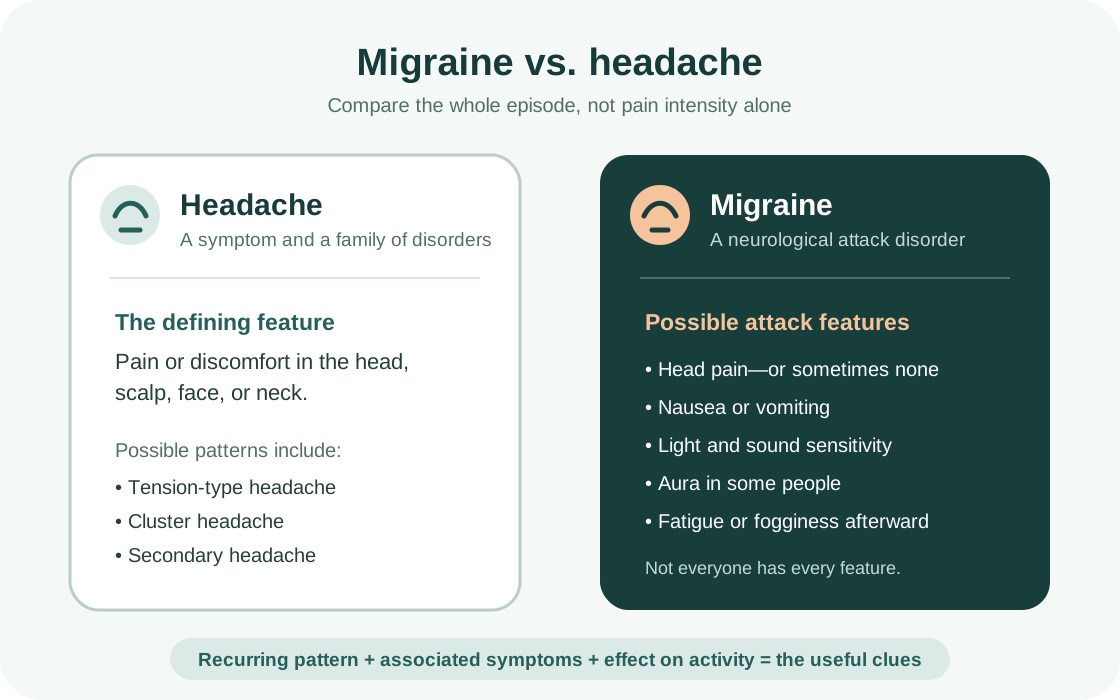
The main difference between migraine vs. headache is that a headache is head pain, while migraine is a neurological disorder that can cause head pain plus nausea, light or sound sensitivity, visual changes, fatigue, and other symptoms. Migraine pain is often throbbing, moderate to severe, and worse with movement, but it can also feel like pressure, affect both sides, or occur without headache. No single symptom proves which one you have—the pattern across repeated episodes matters.
If a headache is sudden and extremely severe, follows a head injury, or comes with new weakness, confusion, fainting, seizure, trouble speaking, fever with a stiff neck, or loss of vision, seek urgent medical help rather than trying to classify it at home.
Migraine vs. headache at a glance
“Headache” is both a symptom and the name for a large family of headache disorders. Migraine is one disorder in that family. Other primary headache disorders include tension-type headache and cluster headache; headaches can also be secondary to another condition, medicine, or injury.
| Feature | Migraine attack | Common non-migraine headache pattern |
|---|---|---|
| Pain quality | Often throbbing or pulsing, but may feel like pressure or aching | Often dull, tight, squeezing, or pressure-like |
| Intensity | Commonly moderate to severe and activity-limiting | Often mild to moderate, but severity varies |
| Location | Often one-sided; can be both sides, facial, or behind an eye | Often both sides or band-like; location varies by type |
| Movement | Routine activity may worsen pain or make the person avoid movement | Movement may have less effect in tension-type headache |
| Nausea | Common; vomiting can occur | Less typical in tension-type headache |
| Light and sound | Sensitivity to light and sound is common | Can occur, but the combination is less typical in tension-type headache |
| Aura | Some people have visual, sensory, or language symptoms | Not a feature of ordinary tension-type headache |
| Duration | Untreated migraine headache often lasts 4–72 hours in adults | Varies widely by headache type and cause |
| After-effects | Fatigue, fogginess, mood change, or neck discomfort may continue | Usually resolves with the headache, depending on the cause |
These are tendencies, not a self-diagnosis scorecard. A mild two-sided headache can still be migraine, and a severe one-sided headache is not automatically migraine.
What does a regular headache feel like?
There is no single “regular headache.” People often use that phrase for tension-type headache, the most common primary headache disorder. It is frequently described as:
- pressure, tightness, or a band around the head;
- pain on both sides;
- mild or moderate discomfort;
- scalp, neck, shoulder, or jaw tenderness; and
- pain that does not clearly worsen with ordinary movement.
Tension-type headache usually does not cause vomiting. Light or sound sensitivity can occur, but both together are less characteristic than they are in migraine.
That familiar pattern is only one possibility. Cluster headache produces extremely severe, short attacks around one eye, often with tearing, redness, a blocked or runny nostril, or eyelid changes on the same side. Medication-overuse headache can develop when acute headache medicine is used too frequently. Infection, injury, eye problems, dehydration, and many other conditions can also cause head pain.
Location alone is a weak classifier. A headache behind one eye might be migraine, cluster headache, an eye problem, or something else. A forehead headache might accompany tension-type headache, migraine, or an infection. The symptoms around the pain carry more information than a point on a head diagram.
What does a migraine feel like?
Migraine is a disorder of recurring attacks. The headache phase is often described as pulsing or throbbing and may become worse with walking, climbing stairs, bending, or other ordinary movement. Many people want to lie still in a dark, quiet room.
Common migraine symptoms include:
- moderate or severe head pain;
- nausea, with or without vomiting;
- sensitivity to light, sound, smells, or touch;
- pain that worsens with routine physical activity;
- neck discomfort;
- dizziness or difficulty concentrating; and
- fatigue before, during, or after the headache.
The International Classification of Headache Disorders describes migraine without aura using a combination of recurring attacks, duration, pain characteristics, and associated symptoms. That combination matters: throbbing alone is not enough, and not every attack matches every “classic” feature.
Some people experience migraine with little or no head pain. This is one reason “migraine” and “headache” are not interchangeable words.
The four possible phases of a migraine attack
A migraine attack can extend beyond the hours when the head hurts. Not everyone has every phase, and the phases can overlap.
1. Prodrome
Hours or sometimes a day before the headache, a person may notice yawning, fatigue, food cravings, mood change, difficulty concentrating, neck stiffness, thirst, or increased urination. These symptoms can be subtle and are easy to mistake for triggers. For example, craving chocolate before pain begins does not necessarily mean chocolate caused the attack.
2. Aura
Aura affects only some people with migraine. Typical aura symptoms develop gradually and may include zigzag lines, flashing lights, a spreading blind spot, tingling that moves across part of the body, or temporary language difficulty. Aura commonly lasts minutes rather than seconds or days.
New visual, sensory, speech, or weakness symptoms need medical assessment because migraine aura can resemble other neurological conditions. Do not assume a first episode is “just migraine,” especially when the onset is sudden or the symptom is different from previous attacks.
3. Headache
The headache phase can last hours to days. In adults, the formal classification for untreated or unsuccessfully treated migraine without aura uses a 4–72-hour range. Treatment can shorten an attack, and children may have shorter episodes. Nausea and sensory sensitivity often peak during this phase.
4. Postdrome
After the strongest pain fades, some people feel drained, foggy, irritable, unusually energetic, dizzy, or tender around the head and neck. This “migraine hangover” can make the total attack feel longer than the pain diary suggests.
Five clues that make migraine more likely
No home checklist diagnoses migraine, but these observations are useful to take to a clinician:
- The headaches recur in a recognizable pattern. Similar attacks have happened more than once, with clearer days between them.
- Normal activity becomes difficult. Walking, stairs, work, screens, or household tasks worsen symptoms or have to stop.
- Nausea or sensory sensitivity accompanies the pain. Light, sound, smells, or touch become unusually uncomfortable.
- Symptoms extend beyond head pain. Prodrome, aura, or postdrome symptoms appear in a repeatable sequence.
- The episode lasts for hours rather than a few minutes. The timing resembles a migraine attack, though duration alone cannot confirm it.
Pain on one side and throbbing can support the pattern, but neither is required. Many people have bilateral pain, pressure-like pain, or attacks that change sides.
Is it possible to have both migraine and other headaches?
Yes. A person can live with migraine and also have tension-type headache, a headache during an illness, or a headache related to medication overuse. Not every headache in someone with migraine is necessarily a migraine attack.
This is where a diary becomes more useful than memory. Instead of recording only “migraine” or “headache,” capture the details that separate episodes:
- start and end time;
- speed of onset;
- pain location and quality;
- nausea, light sensitivity, sound sensitivity, aura, or other symptoms;
- effect on normal activity;
- medicine taken and when;
- sleep, meals, hydration, menstrual timing, weather, and other possible factors; and
- whether the episode was typical or different from usual.
Do not force every possible factor into a cause. A dehydration headache can overlap with migraine, and barometric pressure changes can coincide with sleep, temperature, or routine changes. Repeated comparisons across headache and headache-free days are more informative than blaming the last meal or storm.
What can you do during a possible migraine or headache?
If the episode resembles your established pattern and there are no warning signs, these general comfort measures may help:
- step away from bright light, loud sound, strong smells, or screens if they worsen symptoms;
- rest in a quiet, comfortable space;
- drink fluids gradually, especially after heat, exercise, vomiting, or limited intake;
- eat something if you have missed a meal and can tolerate food;
- try a cool or warm pack, depending on what feels better; and
- use medicine only according to its label or your clinician’s existing plan.
Migraine-specific and preventive treatments are available. The right choice depends on health history, other medicines, attack frequency, pregnancy status, and other individual factors. A pharmacist or clinician can help you choose safely.
If you are using acute headache medicine repeatedly, tell a healthcare professional. Frequent use can contribute to medication-overuse headache, and continuing to escalate doses is not a good long-term strategy.
How doctors tell migraine from other headaches
Migraine is usually diagnosed from the history and a physical and neurological examination—not from a single scan or blood test. A clinician will look for the shape of the pattern: how often attacks occur, how long they last, what the pain feels like, which symptoms accompany it, how much function changes, and whether anything is new.
Imaging is not automatically needed for every familiar headache. It may be used when the history or examination suggests another cause, when the pattern has changed, or when warning signs are present. Bring a concise diary rather than trying to remember three months of attacks in the appointment room.
Ask for help if headaches are frequent, disabling, changing, difficult to control, or causing repeated medicine use. If headache occurs on 15 or more days a month over time, the distinction between episodic and chronic migraine may become relevant, but the formal diagnosis requires more than counting days alone.
When a headache needs urgent medical help
Seek urgent or emergency care for:
- a headache that reaches extreme intensity suddenly;
- a first severe headache or the worst headache you have experienced;
- new weakness, numbness, confusion, fainting, seizure, loss of balance, or trouble speaking;
- new vision loss, persistent double vision, or a painful red eye;
- fever with a stiff neck, rash, confusion, or repeated vomiting;
- headache after a significant head injury;
- a major, unexplained change in your usual headache pattern;
- a new headache during pregnancy or soon after birth, especially with other concerning symptoms; or
- a new headache in someone with cancer, a weakened immune system, or a clotting disorder.
Call local emergency services when symptoms are severe or rapidly worsening. It is safer to have a new neurological symptom assessed than to assume it is migraine aura.
Frequently asked questions
Is a migraine just a severe headache?
No. Migraine is a neurological disorder with recurring attacks. Head pain may be severe, mild, or absent, and symptoms can include nausea, light or sound sensitivity, aura, fatigue, and cognitive changes. A non-migraine headache can also be severe.
Can a normal headache turn into a migraine?
Headache intensity can build over time, but “turning into migraine” is not the best way to describe it. An attack may begin with mild head pain and later reveal a migraine pattern as nausea or sensory sensitivity develops. Another headache can also simply worsen. Record the sequence rather than relabeling the beginning afterward.
Can migraine happen on both sides of the head?
Yes. One-sided pain is common but not required. Migraine can affect both sides, change sides between attacks, or be felt in the face or neck.
Can you have migraine without aura?
Yes. Migraine without aura is a common form. Aura is not required for migraine, and many people never experience it.
Can you have migraine without a headache?
Yes. Some people experience aura or other migraine symptoms without a headache. Because new neurological symptoms can have other causes, a first or unusual episode should be medically assessed.
How long should I track headaches before an appointment?
Start now and bring whatever you have. A few detailed entries are better than waiting months for a perfect diary. If possible, several weeks can show frequency, duration, medicine use, associated symptoms, and headache-free days.
The useful difference is the whole pattern
The simplest migraine vs. headache distinction is this: headache is pain; migraine is an attack disorder that can affect much more than the head. Look at recurrence, duration, nausea, sensory sensitivity, aura, function, and recovery—not just how much it hurts or which side hurts.
Calmraine can record pain, symptoms, possible factors, medicine, notes, and attack timing without deciding the diagnosis for you. That gives you a cleaner history to review yourself or share with a healthcare professional.
Sources
- Migraine and other headache disordersWorld Health Organization · Accessed
- 1.1 Migraine without auraInternational Headache Society · Accessed
- MigraineMedlinePlus, U.S. National Library of Medicine · Accessed
- HeadacheMedlinePlus Medical Encyclopedia · Accessed
- Headaches in over 12s: diagnosis and managementNICE · Accessed