
The different kinds of headaches first divide into two broad groups: primary and secondary. In a primary disorder, the headache condition itself causes the attacks. Migraine, tension-type headache, and cluster headache are examples. A secondary headache comes from another problem, such as infection, injury, a medicine, an eye disorder, or a blood-vessel disorder. This is the structure used by the International Classification of Headache Disorders.
The same person can have more than one headache type, and a secondary headache can feel like a familiar primary one. Location alone cannot name the type. Onset, duration, frequency, symptoms, recent context, examination, and change from usual all matter.
Get urgent medical help for a headache that reaches maximum intensity suddenly; follows a significant injury; or occurs with new weakness, speech difficulty, confusion, seizure, fainting, fever with neck stiffness, sudden vision loss, a very painful red eye, or another major neurological change.
Different kinds of headaches: a practical map
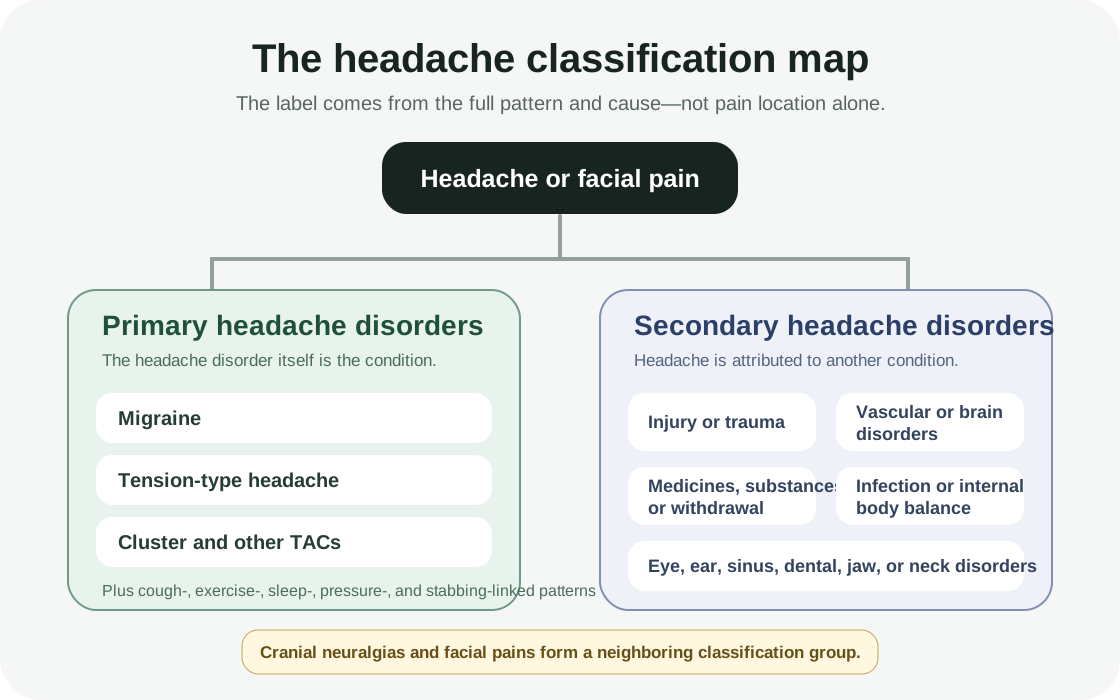
The International Classification of Headache Disorders has three main parts:
- primary headache disorders;
- secondary headache disorders; and
- painful cranial neuropathies, other facial pains, and other headaches.
Within those parts are many diagnoses and subtypes. There is no single useful answer to “how many headache types are there?” because the classification is hierarchical and updated over time. For a reader, the more useful question is: what pattern should I describe, and is anything about it new or concerning?
Primary vs. secondary headache: what the words mean
| Classification | Meaning | Examples |
|---|---|---|
| Primary headache disorder | The headache disorder is the disease itself | Migraine, tension-type headache, cluster headache, primary stabbing headache |
| Secondary headache disorder | Headache is attributed to another disorder or exposure | Head injury, infection, medication overuse, withdrawal, glaucoma, stroke-related headache |
| Cranial neuralgia or facial pain | Pain follows or involves a cranial nerve or facial-pain syndrome | Trigeminal neuralgia, occipital neuralgia, other neuropathic facial pains |
“Primary” does not mean imaginary, minor, or harmless to daily life. Migraine and cluster headache can be profoundly disabling. “Secondary” does not automatically mean an emergency; caffeine-withdrawal headache and medication-overuse headache are secondary disorders too. The distinction describes the relationship to another condition, not pain intensity.
Common primary headache types compared
This table describes classic patterns, not a self-diagnosis checklist. Real attacks can vary.
| Type | Typical pain and timing | Features that often travel with it |
|---|---|---|
| Migraine | Often 4–72 hours untreated; may be one- or two-sided, throbbing or pressure-like, moderate to severe, and worse with routine movement | Nausea, light/sound sensitivity; some people have aura |
| Tension-type headache | Often 30 minutes to several days; usually bilateral pressure or tightening, mild to moderate, not worsened by normal activity | No vomiting; light or sound sensitivity may occur, but not both in the classic episodic criteria |
| Cluster headache | Severe or very severe one-sided orbital, above-eye, or temple pain lasting 15–180 minutes, recurring up to several times daily during a cluster period | Same-side tearing, red eye, blocked/runny nose, eyelid change; marked restlessness or agitation |
| Other trigeminal autonomic cephalalgias | Shorter or continuous one-sided attacks, depending on the disorder | Same-side eye/nose autonomic signs; exact duration and treatment response distinguish subtypes |
| Other primary headache disorders | May be triggered by cough, exercise, sexual activity, cold stimulus, pressure, or occur as brief stabs or a new daily persistent pattern | Some require a clinician to exclude a secondary cause before the primary diagnosis is safe |
A comparison table can show what clinicians ask about, but it cannot apply formal diagnostic criteria or exclude another cause. New cough-, exercise-, or sexual-activity headache, for example, warrants assessment rather than a reassuring label from a chart.
Migraine: more than a one-sided throbbing headache
Migraine is a neurological disorder with recurrent attacks. Pain may be one-sided, but it can also be bilateral. It may throb, pulse, press, or ache. The pattern often includes nausea, vomiting, light or sound sensitivity, and worsening with routine movement.
Some people have migraine aura: fully reversible visual, sensory, speech, or other neurological symptoms that usually develop gradually. Most migraine attacks do not include aura. Symptoms can also begin before head pain and continue afterward, so the full attack is often longer than the headache phase.
Migraine is frequently confused with tension, sinus, neck, or eye-strain headache because pressure, nasal symptoms, neck pain, and visual discomfort can occur during migraine. The migraine versus headache guide compares the complete pattern.
Tension-type headache: pressure without a simple tension cause
Tension-type headache is commonly described as a band, pressure, or tightening on both sides of the head. It is usually mild to moderate and does not worsen with ordinary walking or stairs. Nausea and vomiting are not part of the classic pattern.
The name can be misleading. Stress or muscle tenderness may be present, but the diagnosis does not mean a person is “too tense,” and relaxing the shoulders is not a diagnostic test. Frequency matters: ICHD-3 separates infrequent episodic, frequent episodic, and chronic forms.
Neck tightness can occur with tension-type headache, migraine, prolonged posture, or a neck disorder. The symptom should be recorded without assuming the neck caused the head pain.
Cluster headache and other trigeminal autonomic cephalalgias
Cluster headache causes excruciating one-sided pain around or above an eye or at the temple. Attacks typically last 15–180 minutes and may recur from once every other day up to eight times a day during an active cluster period. People are often restless or unable to lie still.
Same-side features may include tearing, eye redness, nasal congestion or discharge, eyelid swelling or drooping, a smaller pupil, facial sweating, or a sense of ear fullness. These autonomic signs distinguish the group from “any severe headache near an eye,” but similar eye symptoms can also come from urgent eye disease.
Other trigeminal autonomic cephalalgias include paroxysmal hemicrania, short-lasting unilateral neuralgiform headache attacks, and hemicrania continua. Their attack duration, frequency, continuity, and medicine response differ. They need clinician diagnosis; do not borrow another person’s prescription because the pain location sounds similar.
Other primary headache disorders
ICHD-3’s “other primary” section includes several distinctive patterns:
- primary cough headache associated with coughing or straining;
- primary exercise headache brought on by strenuous physical activity;
- headache associated with sexual activity;
- cold-stimulus headache, including “brain freeze”;
- external-pressure headache from sustained pressure on the scalp;
- primary stabbing headache, with brief spontaneous stabs;
- nummular headache, felt in a small coin-shaped scalp area;
- hypnic headache, which begins only during sleep and wakes the person; and
- new daily persistent headache, remembered from a distinct onset and continuous within 24 hours.
The word primary in these names is earned after the pattern and exclusions are considered. A first abrupt headache with exertion, cough, or sexual activity can resemble vascular emergencies and should be medically assessed.
Secondary headache types: the cause sits outside the headache disorder
ICHD-3 groups secondary headaches by what they are attributed to:
Head or neck injury
Headache may begin after concussion, a more severe head injury, or neck trauma. Symptoms can be immediate or delayed. Worsening headache, repeated vomiting, increasing confusion, unusual drowsiness, seizure, weakness, or unequal pupils after injury needs emergency care.
Blood-vessel disorders
Stroke, bleeding around the brain, artery dissection, cerebral venous thrombosis, and inflammation of arteries can produce headache. A sudden maximal headache, new neurological deficit, or new headache in pregnancy/postpartum needs urgent assessment. Pain quality alone cannot rule these conditions in or out.
Non-vascular brain or pressure disorders
Changes in pressure around the brain, tumors, seizures, and other intracranial conditions can cause headache. Progressive change, vomiting without another explanation, papilledema, new neurological signs, or a headache strongly affected by posture can prompt further evaluation.
Substances, medicines, and withdrawal
Alcohol, carbon monoxide, some medicines, substance withdrawal, and frequent use of acute headache medicine can all be associated with secondary headache. Medication-overuse headache is especially important because the medicine used for short-term relief can become part of a frequent-headache cycle.
Do not stop a prescribed medicine abruptly based on a list. Record the product, dose, time, reason, and total days used, then review it with a clinician or pharmacist. The caffeine-withdrawal headache guide explains one common withdrawal pattern.
Infection or internal-body imbalance
Viral illness, meningitis, high altitude, fasting, sleep apnea, high blood pressure in specific crisis contexts, low oxygen, and other homeostasis disorders can include headache. Fever plus neck stiffness or altered alertness is an emergency sign. Morning timing alone is not enough to choose among sleep, medicine, migraine, jaw, or other causes; use the morning-headache guide for a structured comparison.
Eye, ear, sinus, dental, jaw, or neck disorders
Glaucoma, corneal inflammation, true acute rhinosinusitis, dental disease, temporomandibular disorders, and some neck conditions can refer pain into the head. Location is useful, but “behind my eye,” “in my sinuses,” or “from my neck” is a description—not proof of the source.
Medication-overuse headache can coexist with migraine
Medication-overuse headache is classified as secondary, but it commonly occurs in someone who already has migraine or another primary headache disorder. ICHD-3 explicitly allows both diagnoses. This is an example of why a person does not always fit one box.
Clinicians look at headache frequency, the underlying headache pattern, and the number of days per month each acute medicine is used. Thresholds differ by medicine class, and combination products can complicate the count. A safe review includes prescriptions, over-the-counter products, caffeine-containing pain medicines, and medicines taken for other pain.
The solution is not necessarily to stop everything suddenly. Withdrawal can temporarily worsen headache, and some medicines need tapering or supervision. A clinician can build a withdrawal, rescue, and prevention plan around the person’s risks and underlying disorder.
Facial pain and cranial neuralgias are a neighboring group
Sharp, electric, burning, or touch-triggered pain may arise from a cranial nerve rather than a primary headache disorder. Trigeminal neuralgia, glossopharyngeal neuralgia, and occipital neuralgia are examples. Dental, jaw, sinus, eye, and ear disorders can create overlapping facial or head pain.
Words such as “stabbing” or “electric” help communicate the sensation but do not confirm a neuralgia. Clinicians also ask about the exact distribution, duration of each burst, trigger zones, numbness, rash, weakness, dental work, and neurological examination.
Why location charts are not diagnosis charts
Migraine can occur at the temple, forehead, back of the head, around an eye, or on both sides. Tension-type headache can include neck discomfort. Cluster headache and glaucoma can both hurt near one eye. Rhinosinusitis and migraine can both include facial pressure and nasal symptoms.
Use location as one field in a larger episode fingerprint:
- one side, both sides, or changing sides;
- exact starting point and spread;
- surface tenderness versus deeper pain;
- eye, jaw, tooth, ear, neck, or scalp symptoms; and
- whether the location stays consistent across attacks.
A different location from usual can matter, but it must be interpreted with onset, symptoms, context, and examination.
Red flags: when a headache needs faster evaluation
The SNNOOP10 review collects red and orange flags that can raise suspicion for secondary headache. These are prompts for clinical evaluation, not a prediction that something dangerous is present.
Seek emergency care for:
- sudden headache that reaches maximum intensity within a minute;
- headache with new weakness, numbness, speech trouble, confusion, seizure, fainting, or reduced consciousness;
- fever with neck stiffness, marked drowsiness, or a rapidly worsening headache;
- sudden vision loss or a very painful red eye with blurred vision or halos;
- severe or worsening headache after a significant head injury; or
- headache during pregnancy or after delivery with new neurological symptoms, seizure, severe blood-pressure symptoms, or major pattern change.
Arrange prompt assessment for a new progressive pattern; a major change in familiar headaches; headache consistently triggered by cough, strain, exercise, or position; new headache with cancer or immune-system disease; or increasing headache and acute-medicine days.
How clinicians work out a headache type
There is no single blood test or scan for most primary headache disorders. Diagnosis is built from a detailed history and examination. Imaging or other tests are selected when the history, exam, or red flags suggest a secondary cause—not simply because pain is severe.
A useful visit covers:
- age at first onset and what changed recently;
- sudden versus gradual onset;
- duration of each untreated and treated attack;
- headache days and truly headache-free days per month;
- location, quality, severity, and movement response;
- nausea, sensory sensitivity, autonomic, neurological, neck, jaw, eye, and systemic symptoms;
- pregnancy/postpartum status, injuries, illnesses, and other conditions;
- every acute and preventive medicine, caffeine, and substance exposure; and
- family history and effect on work, school, sleep, driving, and care responsibilities.
ICHD-3 notes that a severely affected person may receive several diagnoses at the same time—for example, migraine without aura, migraine with aura, and medication-overuse headache.
Build an episode fingerprint instead of guessing a label
| Dimension | What to record |
|---|---|
| Onset | Exact date/time, sudden or gradual, first-ever/usual/changed, activity at onset |
| Duration | Start, peak, easing, end, and whether normal function returned |
| Frequency | Headache days, attack count, headache-free days, and clusters or continuous periods |
| Pain | Location, side, quality, severity, movement effect, surface tenderness |
| Associated features | Nausea, light/sound sensitivity, eye/nose signs, restlessness, fever, neck/jaw symptoms |
| Neurological features | Visual, sensory, speech, strength, balance, or awareness change with exact timing |
| Context | Injury, illness, cycle timing, sleep, meals, altitude, medicines, caffeine, and procedures |
| Response | Action or medicine, time taken, two-hour function, recurrence, and side effects |
Include counterexamples: similar sleep loss without headache, the same food on a headache-free day, or a headache that began before the suspected trigger. These details help separate repeatable patterns from memorable coincidences.
Frequently asked questions
What are the most common kinds of headaches?
Migraine and tension-type headache are among the most common primary disorders. Medication-overuse headache is an important secondary disorder, particularly in people with frequent headache and regular acute-medicine use. “Common” does not determine which type an individual has.
Can I have two headache types?
Yes. A person can have migraine with and without aura, tension-type headache alongside migraine, or a primary disorder plus medication-overuse or post-traumatic headache. Record each pattern rather than forcing every episode into one label.
Is a headache type determined by where it hurts?
No. Location contributes to a diagnosis but overlaps heavily. Timing, associated symptoms, movement response, autonomic signs, recent context, examination, and change from usual are also needed.
Is every severe headache migraine?
No. Migraine can be severe, but cluster headache, urgent eye disease, vascular disorders, infection, and other conditions can also cause severe head pain. Sudden onset and accompanying signs are more useful for urgency than a 1–10 score alone.
Is a secondary headache always dangerous?
No. Secondary means attributed to another disorder or exposure. The range includes withdrawal and medication overuse as well as emergencies. The cause and clinical context determine urgency.
When should frequent headaches be assessed?
Arrange an appointment when headaches are increasing, changing, interfering with life, requiring acute medicine more often, or difficult to identify. Seek urgent care for the red-flag patterns above rather than waiting for a routine diary review.
The next useful decision
Do not start by choosing a label from pain location. First check urgency, then describe the episode fingerprint and compare repeated patterns. A clinician can decide whether the evidence supports a primary headache diagnosis, a secondary evaluation, more than one diagnosis, or simply more observation.
Keep patterns separate without diagnosing them
Calmraine can record headache timing, pain, symptoms, medicines, possible factors, and function in one private timeline. It does not classify headache disorders or tell you whether a headache is primary or secondary. Explore the migraine tracker features.
Sources
- The International Classification of Headache DisordersInternational Headache Society · Accessed
- Classification outlineInternational Headache Society · Accessed
- Migraine and other headache disordersWorld Health Organization · Accessed
- Headache: Hope Through ResearchNational Institute of Neurological Disorders and Stroke · Accessed
- Headaches in over 12s: diagnosis and management—RecommendationsNICE · Accessed
- HeadacheMedlinePlus · Accessed
- Red and orange flags for secondary headaches in clinical practice: SNNOOP10 listNeurology / PubMed Central · Accessed
- How to use the classificationInternational Headache Society · Accessed