
A tension headache—formally called tension-type headache—is usually a mild or moderate pressure or tightening on both sides of the head that is not worsened by ordinary activity. It generally does not cause vomiting. Light or sound sensitivity may occur, but the classic episodic pattern does not include both together.
The name does not prove that emotional stress, poor posture, or tight muscles caused the pain. Diagnosis depends on the repeated symptom and frequency pattern, while treatment depends heavily on how often headaches occur and how much acute medicine is being used.
Get urgent medical help for a sudden extremely severe headache; headache with new weakness, speech difficulty, confusion, seizure, fainting, fever with neck stiffness, sudden vision loss, a painful red eye, or a significant head injury. A new progressive or substantially changed pattern also needs assessment rather than a “tension” label.
Tension-type headache frequency map
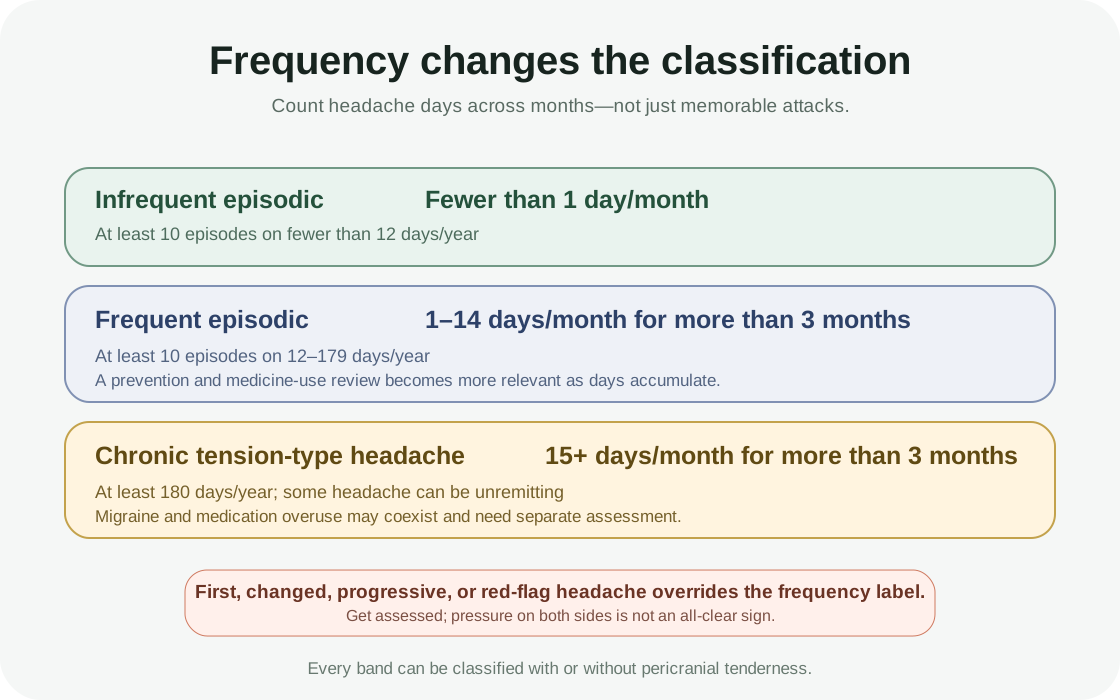
ICHD-3 divides tension-type headache by frequency:
- Infrequent episodic: fewer than 1 headache day per month on average—at least 10 episodes occurring on fewer than 12 days per year.
- Frequent episodic: 1–14 headache days per month on average for more than 3 months—at least 10 episodes occurring on 12–179 days per year.
- Chronic: at least 15 headache days per month on average for more than 3 months—at least 180 days per year.
- Probable tension-type headache: the pattern misses one required feature or the frequency history is not yet complete.
“Chronic” is a frequency classification, not a synonym for severe pain or one headache that lasted several days.
Tension headache symptoms
The classic episodic pattern combines several features:
- pain on both sides of the head;
- pressing or tightening rather than pulsing quality;
- mild or moderate intensity;
- no worsening with walking, climbing stairs, or routine movement;
- no nausea or vomiting; and
- either light sensitivity or sound sensitivity may occur, but not both in the formal episodic criteria.
People often describe a band, weight, clamp, dull ache, tight cap, or pressure across the forehead, temples, back of the head, or neck. Scalp or neck tenderness can occur. None of these words diagnoses the disorder by itself.
Chronic tension-type headache allows mild nausea, light sensitivity, or sound sensitivity, but no more than one of those features and no moderate or severe nausea or vomiting. When nausea, both light and sound sensitivity, and movement-aggravated pain travel together, migraine becomes more likely.
What a tension headache can feel like
Tension-type headache often allows a person to keep moving, but “mild or moderate” does not mean irrelevant. Sustained pressure can impair concentration, patience, sleep, and screen tolerance. A frequent pattern can accumulate more disability than occasional severe attacks.
Pain may build gradually and last from 30 minutes to several days. Chronic tension-type headache can be unremitting. A continuous new daily headache from a clearly remembered day needs separate evaluation because several primary and secondary disorders can create that timeline.
Tenderness around the scalp, jaw, neck, or shoulders may accompany the episode. Record the tenderness and movement restriction without assuming the muscles generated the headache.
Tension headache vs. migraine
| Feature | Tension-type pattern | Migraine pattern |
|---|---|---|
| Pain quality | Pressing or tightening | Pulsating, throbbing, pressure, or ache |
| Side | Usually both sides | One or both sides |
| Intensity | Mild or moderate | Moderate or severe, sometimes mild |
| Routine activity | Usually does not worsen pain | Often worsens pain or is avoided |
| Nausea/vomiting | Not in episodic TTH; only mild nausea allowed in chronic TTH | Nausea and vomiting can occur |
| Light/sound | At most one in classic episodic TTH | Both commonly occur together |
| Aura | Not part of TTH | Occurs in some migraine attacks |
The overlap is real. Migraine does not always throb or stay on one side, and tension-type headache can involve sensory sensitivity. The same person can have both disorders. The migraine versus headache comparison shows why several features must be considered together.
Is a tension headache caused by stress or tight muscles?
The cause is not fully understood. The old “muscle-contraction headache” model is too simple. Research suggests peripheral pain sensitivity and pericranial tenderness may matter more in episodic tension-type headache, while altered central pain processing may become more important in chronic forms.
Stress, poor sleep, long visual tasks, missed meals, jaw clenching, and sustained posture are commonly reported around headaches. They can also accompany migraine or occur without headache. Treat them as possible contributors to test, not a verdict.
A useful comparison is: “Three deadlines coincided with headache, but two equally stressful days did not.” That pattern is more informative than “stress caused it.”
Pericranial tenderness: with or without
Every episodic and chronic tension-type category can be subclassified with or without pericranial tenderness. In clinical classification, tenderness is assessed by manual palpation of muscles around the head and neck.
This does not mean finding a sore spot at home confirms tension-type headache. Migraine, jaw disorders, neck disorders, sleep-related clenching, and ordinary muscle soreness can also produce tenderness. Forceful self-palpation or repeated massage can aggravate pain and adds little diagnostic value.
Immediate tension headache relief
For a familiar, previously assessed mild or moderate pattern without red flags:
- Pause the visual or sustained-position task for several minutes.
- Unclench the jaw, lower raised shoulders, and change position gently rather than forcing a stretch.
- Drink and eat normally if a meal or fluid has been missed; avoid treating every episode as dehydration.
- Reduce glare and noise to a comfortable level without isolating in total darkness unless needed.
- Use the acute medicine in your established plan or according to the product label, after checking personal contraindications.
- Record whether function improved at two hours and whether pain returned.
These steps address common amplifiers. They do not prove the type or cure an underlying frequent-headache pattern.
Acute medicines: useful, but count the days
NICE recommends considering aspirin, paracetamol, or an NSAID for acute tension-type headache, taking account of preference, other health conditions, and adverse-event risks. Aspirin should not be offered to people under 16 because of the association with Reye’s syndrome. NICE advises against opioids.
Choice is not interchangeable for everyone. NSAIDs and aspirin can affect the stomach, kidneys, bleeding, blood pressure, pregnancy, and other medicines. Paracetamol can harm the liver if the labeled total dose is exceeded or multiple products contain it. Ask a pharmacist or clinician when risks are unclear.
Count medicine days, not tablets. Increasing use can contribute to medication-overuse headache, which may coexist with tension-type headache or migraine. Do not escalate dose or frequency because the label “tension” sounds low-risk.
When frequent or chronic headache needs a plan
Arrange an assessment when headache occurs repeatedly, interferes with function, requires acute medicine more often, changes pattern, or is difficult to distinguish from migraine. A four-week diary can establish frequency and guide next steps.
Management may include:
- confirming the diagnosis and screening for secondary causes;
- reviewing all acute medicines and caffeine-containing combinations;
- addressing sleep, vision, jaw, neck, mood, or workplace factors when actually present;
- physical or behavioral approaches selected for the person;
- preventive treatment when frequency and disability justify it; and
- a plan to reduce medication overuse safely when relevant.
NICE says clinicians may consider up to 10 acupuncture sessions over 5–8 weeks for prevention of chronic tension-type headache. That is one guideline option, not proof that acupuncture is necessary or effective for every person. Evidence for massage, manipulation, trigger-point procedures, supplements, and devices varies and is often limited.
Posture, screens, jaw tension, and sleep
Long screen sessions can combine reduced blinking, uncorrected vision, glare, sustained near focus, and static posture. Fixing the workstation may reduce an amplifier even when the underlying headache is migraine or tension-type. Use the eye-strain headache guide for a controlled setup check.
Jaw clenching or temporomandibular disorders can refer pain to the temples and head. Report jaw clicking, locking, chewing pain, tooth wear, or morning jaw soreness rather than assuming a headache category.
Poor sleep can lower pain tolerance and increase headache burden. Snoring, witnessed breathing pauses, morning headache, and daytime sleepiness need sleep-apnea consideration rather than generic relaxation advice. The sleep-deprivation headache guide separates short sleep from sleep-disorder clues.
Red flags and pattern changes
Seek emergency care for sudden maximal headache, new neurological deficit, seizure, fainting, severe confusion, fever with neck stiffness, sudden vision loss, a very painful red eye, or severe/worsening symptoms after head injury.
Arrange prompt assessment for:
- a first new headache pattern or major change from usual;
- steadily progressive frequency or severity;
- new headache during pregnancy or after delivery;
- headache brought on by cough, strain, exercise, or position;
- new headache with cancer or immune-system disease;
- a new continuous daily headache; or
- increasing acute-medicine days.
A pressure quality or bilateral location does not cancel these warning signs.
Use a four-week feature-contrast record
| Record | Why it matters |
|---|---|
| Headache days and headache-free days | Separates infrequent, frequent, and chronic patterns |
| Start/end and continuous vs. episodic | Shows duration and recovery |
| Pressure, pulse, side, severity | Compares pain phenotype without forcing a label |
| Movement effect | Helps distinguish a migraine pattern |
| Nausea/vomiting, light, and sound separately | Prevents sensory symptoms from being collapsed |
| Scalp, jaw, neck, and eye symptoms | Preserves competing contributors |
| Acute medicine and caffeine days | Identifies medication-overuse risk |
| Function at baseline and two hours | Measures what treatment changed |
| Possible factor plus counterexample | Tests stress, sleep, posture, meals, or screens more honestly |
Do not record only severe days. Mild pressure days count toward frequency and can change whether the pattern is classified as episodic or chronic.
Frequently asked questions
How long does a tension headache last?
Episodic tension-type headache can last from 30 minutes to 7 days under ICHD-3 criteria. Chronic tension-type headache can last hours, days, or be unremitting. A new continuous daily headache needs assessment rather than automatic classification.
Where is tension headache pain located?
It is usually bilateral and may involve the forehead, temples, sides, back of the head, or neck. Location overlaps with migraine and secondary causes, so a “band” feeling is not diagnostic.
Can tension headache cause nausea?
Episodic tension-type headache criteria exclude nausea and vomiting. Chronic tension-type headache can include mild nausea, but not moderate/severe nausea or vomiting. Strong nausea, movement sensitivity, and both light/sound sensitivity point more toward migraine.
Can I have migraine and tension-type headache?
Yes. The same person can meet criteria for both, and individual attacks may be difficult to classify. Separate records and medicine-day counts help a clinician identify the patterns.
Does massage cure tension headache?
Massage may feel soothing, but evidence does not show that all tension-type headache is caused by tight muscles or that massage changes the disorder’s course. Avoid forceful manipulation, especially with injury, neurological symptoms, or unexplained new pain.
When is a tension headache chronic?
Chronic tension-type headache means at least 15 headache days per month on average for more than 3 months. It is based on days and duration, not how “chronic” the pain feels.
The useful next step
For occasional familiar pressure, use a safe established relief plan and record the response. For repeated headaches, count every headache day, separate migraine features, and audit acute-medicine use. If the pattern is new, changing, frequent, or disabling, get an assessment before treating “tension” as the explanation.
Count the days behind the label
Calmraine can keep headache days, pain, symptoms, possible factors, medicines, and function together in one private timeline. It does not diagnose tension-type headache. Explore the migraine tracker features.
Sources
- Tension-type headacheInternational Headache Society · Accessed
- Infrequent episodic tension-type headacheInternational Headache Society · Accessed
- Frequent episodic tension-type headacheInternational Headache Society · Accessed
- Chronic tension-type headacheInternational Headache Society · Accessed
- Headaches in over 12s: diagnosis and management—RecommendationsNICE · Accessed
- Headache: Hope Through ResearchNational Institute of Neurological Disorders and Stroke · Accessed
- Hallmarks of primary headache: part 2—Tension-type headacheThe Journal of Headache and Pain / PubMed Central · Accessed