A sleep deprivation headache can follow a short, broken, unusually timed, or poor-quality night of sleep. It may feel like a dull pressure or trigger a full migraine attack with throbbing pain, nausea, and light or sound sensitivity. Headache and sleep also affect each other: early migraine symptoms can disturb sleep before the head pain becomes obvious.
One bad night followed by pain does not prove that sleep loss was the only cause. Seek urgent medical care for a sudden extremely severe headache, new weakness or numbness, confusion, trouble speaking, fainting, seizure, fever with a stiff neck, new vision loss, or headache after significant injury.
What a lack-of-sleep headache feels like
There is no single pain quality that identifies sleep deprivation. Common reports include:
- dull pressure across the forehead or temples;
- a heavy, tight, or “foggy” head;
- neck, scalp, or jaw tension;
- tired or burning eyes;
- difficulty concentrating and slower reaction time;
- irritability, low energy, or strong sleepiness; and
- a migraine-like attack with pulsing pain, nausea, and sensitivity to light, sound, smell, or movement.
The surrounding context is more useful than location alone. Note how sleep differed from usual, whether pain was already present at bedtime, and whether migraine symptoms such as yawning, mood change, food cravings, neck stiffness, or light sensitivity began before the poor sleep.
Why lack of sleep can contribute to headache
Sleep and pain regulation share several brain systems. Disrupted sleep can alter pain sensitivity, stress responses, mood, attention, and the balance of signaling chemicals involved in wakefulness and migraine. At the same time, pain and migraine symptoms can delay sleep, cause awakenings, or make sleep feel unrefreshing.
Reviews consistently describe the relationship as bidirectional. People with migraine report more insomnia symptoms, daytime sleepiness, and sleep disorders, but the studies differ in design and cannot show that every poor night directly causes the next attack. A 2026 review of objective sleep measurements also found no single sleep-stage pattern that functions as a migraine biomarker.
The practical conclusion is not “sleep explains everything.” It is that stabilizing sleep is worth testing while keeping other factors visible.
Too little, too much, or irregular sleep?
All three can matter:
| Sleep change | Possible headache link | What to record |
|---|---|---|
| Too little sleep | Greater sleep pressure, pain sensitivity, fatigue, and loss of routine | Bed/wake time, estimated sleep, reason it was short |
| Broken sleep | Repeated awakenings may reduce restorative sleep even when total time looks adequate | Number/duration of awakenings and what caused them |
| Sleeping much later | Weekend schedule shift, delayed caffeine or meals, or sleeping through early migraine symptoms | Usual versus actual wake time, caffeine and meal timing |
| Shifted timing | Circadian mismatch, night work, travel, or rotating shifts | Work schedule, light exposure, naps, and sleep window |
| Long but unrefreshing sleep | Sleep apnea, insomnia, illness, depression, medicine effects, or migraine-related fatigue | Snoring/gasping, dry mouth, daytime sleepiness, medicines |
Adults generally need at least seven hours, but a population recommendation is not a diagnostic threshold. Your stable, refreshing pattern and daytime function matter more than forcing one exact number.
What to do after one bad night
If the headache is familiar, mild or moderate, and has no warning signs:
- Protect safety first. Do not drive or operate machinery if you are fighting sleep, drifting off, or reacting slowly.
- Return to your usual wake time if practical. Sleeping far into the day may make the next night harder.
- Get daylight early. Outdoor light after waking helps anchor the body clock and can improve alertness.
- Eat and drink normally. A poor night often disrupts breakfast, hydration, and caffeine timing; correct those without forcing food or water.
- Use your established headache plan. Follow the label or clinician instructions for medicines you already use safely.
- Reduce sensory load. A dim, quiet room and a break from screens may help if migraine symptoms are present.
- Choose gentle movement. A short walk or easy mobility can reduce stiffness; skip demanding exercise if it worsens pain or dizziness.
- Plan recovery sleep, not punishment. Aim for the next normal sleep opportunity rather than staying awake to “reset” yourself.
A brief daytime nap may improve alertness, but a long or late nap can delay the next night’s sleep. If you nap, allow time for post-nap grogginess to clear before driving or critical work.
How to relieve a sleep deprivation headache
There is no special medicine that proves a headache came from poor sleep. Relief depends on the headache pattern.
For a mild familiar headache, start with food, normal fluids, quiet, and the next suitable sleep opportunity. If you have migraine, an acute treatment tends to work best when used according to the plan you developed with a clinician rather than waiting until pain is severe.
Be careful with caffeine. It may temporarily improve alertness or help some headache medicines, but late or escalating use can disrupt the following night, and a missed regular amount can cause withdrawal. The caffeine headache guide separates those roles.
Avoid using alcohol, sedating antihistamines, someone else’s sleeping tablets, or unreviewed supplements to force sleep. Persistent insomnia and frequent headache need a plan that addresses both conditions.
A seven-day sleep stabilization plan
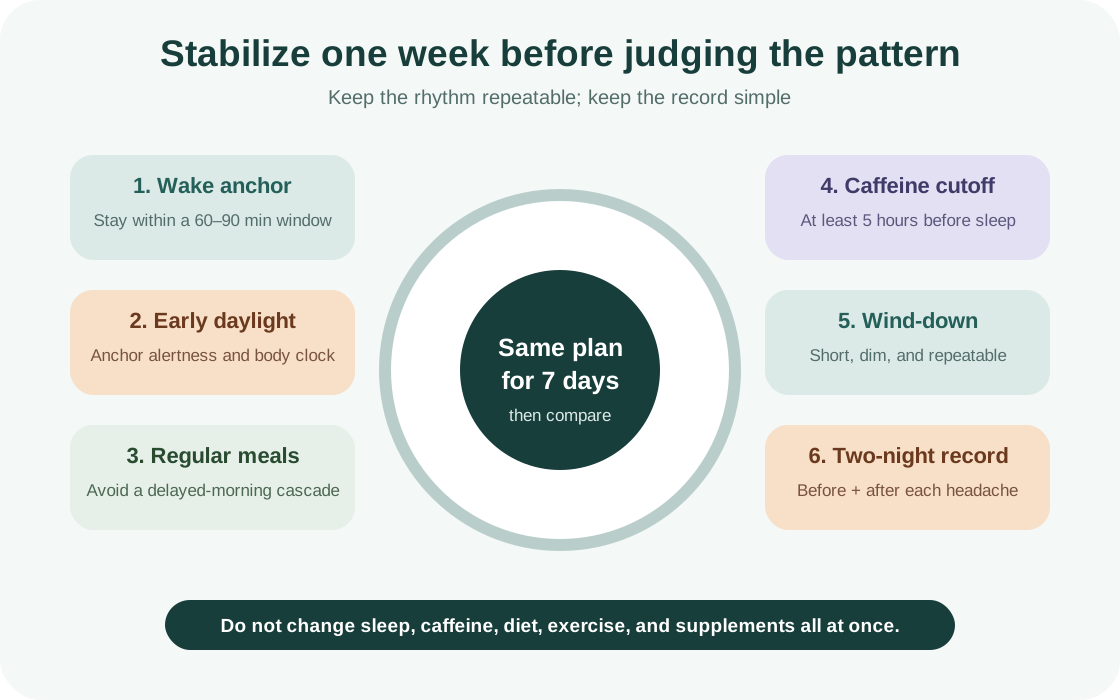
For one week, keep the experiment simple:
- Anchor the wake time. Keep it within roughly the same 60–90 minute window, including days off when possible.
- Use early daylight. Spend time outside or near bright natural light after waking.
- Keep meals regular. Avoid turning a late wake-up into missed food and a delayed caffeine cycle.
- Set a caffeine cutoff. CDC/NIOSH advises avoiding caffeine for at least five hours before planned sleep, and longer if you are sensitive.
- Create a short wind-down. Dim lights, stop work, and choose a repeatable low-stimulation activity.
- Make the room sleep-friendly. Cool, dark, quiet, and free of unnecessary alerts.
- Record estimates, not sleep-score perfection. Bedtime, approximate sleep onset, awakenings, final wake, and how refreshed you felt are enough.
Do not change bedtime, caffeine, exercise, supplements, and diet all at once. If headaches improve, you will not know which change mattered.
Sleep deprivation, tension-type headache, or migraine?
Sleep loss is a context, not a headache diagnosis.
| Pattern | Features that may fit |
|---|---|
| Fatigue-related mild headache | Dull pressure, tired eyes, brain fog, improves with food, rest, or recovery sleep |
| Tension-type headache | Pressing or tightening pain, usually mild or moderate, not strongly worsened by routine movement |
| Migraine | Moderate or severe pain, often pulsing, nausea, light/sound sensitivity, worse with activity, possible aura or postdrome |
| Caffeine withdrawal | Delayed or missed regular caffeine, next-day headache, fatigue and concentration problems |
| Sleep-disorder context | Loud snoring, gasping, frequent awakenings, dry mouth, morning headache, or excessive daytime sleepiness |
Use a migraine versus headache comparison to describe the episode, not to diagnose it at home.
Oversleeping and the weekend headache
Sleeping late can coincide with headache for several reasons. The wake-time shift changes circadian timing, breakfast and caffeine may be delayed, a long time in one neck position can add discomfort, or an attack that began overnight may keep you in bed longer.
Instead of assuming “too much sleep caused it,” compare:
- usual and weekend wake times;
- actual sleep duration versus time spent in bed;
- caffeine and meal delays;
- pain or migraine symptoms present before sleep;
- whether you woke because of pain and went back to sleep; and
- weekends with the same schedule but no headache.
A consistent wake window is often a cleaner experiment than deliberately restricting sleep.
Shift work, travel, and unavoidable sleep loss
Sometimes the schedule cannot be made ideal. Focus on reducing variability within the constraint:
- keep a repeatable main sleep window across similar shifts;
- use a dark, quiet room and silence nonessential notifications;
- plan rather than accidentally drift into naps;
- place caffeine early enough that it does not undermine the main sleep period;
- eat on a workable schedule instead of relying on stimulants;
- allow recovery time before driving home; and
- record the first night after a shift sequence as well as the work nights.
Severe sleepiness is a safety issue. If you struggle to stay awake while driving, stop somewhere safe and use alternative transport or rest. Opening a window or turning up music is not a reliable countermeasure.
When a sleep disorder may be part of the pattern
Poor sleep hygiene is not the explanation for every problem. Talk with a healthcare professional if you regularly have:
- loud snoring, breathing pauses, choking, or gasping during sleep;
- morning headache with dry mouth or unrefreshing sleep;
- excessive daytime sleepiness despite enough time in bed;
- difficulty falling or staying asleep for weeks;
- an urge to move the legs or uncomfortable leg sensations at night;
- unusual movements, dream enactment, sleepwalking, or injury during sleep;
- a body clock that is consistently misaligned with work or school; or
- headaches that frequently wake you from sleep.
Sleep apnea and other disorders require assessment; a consumer wearable cannot rule them out.
Track two nights around every headache
Use this sequence:
| Night before | Headache day | Following night |
|---|---|---|
| Intended and actual bed/wake times, estimated sleep, awakenings and reasons, pain before bed | Onset, symptoms, function, nap, medicines, caffeine, meals, illness | Bed/wake times, whether pain disturbed sleep, and return toward usual |
Also record poor-sleep days without headache and headaches after apparently normal sleep. That prevents a compelling single episode from becoming a rigid trigger rule. The full migraine trigger tracking method shows how to compare repeated exposures and counterexamples.
When to seek medical care
Arrange care when headaches are becoming more frequent, regularly wake you, occur with severe snoring or gasping, persist despite a stable sleep opportunity, or require acute medicine on multiple days most weeks.
Seek urgent help for a sudden “worst headache,” new neurological symptoms, seizure, fainting, fever with neck stiffness, new vision loss, severe pregnancy-related headache, headache after significant injury, or dangerous inability to stay awake.
Frequently asked questions
How long does a sleep deprivation headache last?
It may improve after food, rest, treatment, or recovery sleep, but there is no fixed duration. Migraine triggered around sleep loss can last much longer than ordinary fatigue. Persistent or worsening pain needs assessment.
Can one night of bad sleep cause a headache?
Yes, one short or broken night can precede headache, particularly in someone prone to migraine. It may also combine with missed meals, stress, caffeine change, or an attack already beginning.
Will sleeping get rid of the headache?
Sleep helps some migraine attacks and fatigue-related headaches, but pain can also prevent restorative sleep. A headache that persists after recovery sleep should not automatically be blamed on deprivation.
Can sleeping too much cause a headache?
Sleeping much later than usual can coincide with headache, but delayed caffeine or meals, schedule shift, illness, depression, sleep apnea, or migraine-related fatigue may explain the association.
Should I nap after losing sleep?
A short, planned nap may improve alertness. Long or late naps can delay nighttime sleep, and post-nap grogginess can temporarily impair performance. Naps do not replace a stable main sleep period.
Why do I wake with a headache even after enough sleep?
Time in bed does not guarantee restorative sleep. Migraine, sleep apnea, teeth grinding, medicine effects, caffeine withdrawal, and other conditions can produce morning headache. Recurring symptoms deserve assessment.
Restore the pattern, then judge the relationship
After poor sleep, protect safety, use your established headache plan, and return toward a stable wake time, regular meals, early daylight, and an appropriate caffeine cutoff. Track the night before and after the headache so pain-driven sleep disruption is not mistaken for a one-way trigger.
Calmraine can keep sleep timing, pain, migraine symptoms, medicines, and possible factors on one timeline. It does not diagnose a sleep disorder, but it can make a recurring two-way pattern easier to discuss.
Sources
- Sleep Disorders and Migraine: Review of Literature and Potential Pathophysiology MechanismsHeadache / PubMed Central · Accessed
- Migraine and sleep disorders: a systematic reviewThe Journal of Headache and Pain / PubMed Central · Accessed
- Sleep macro- and microstructure in migraine and cluster headache: a systematic reviewThe Journal of Headache and Pain / PubMed Central · Accessed
- The Relationship Between Sleep, Headache, and PainAmerican Migraine Foundation · Accessed
- Sleep Deprivation and Deficiency—How Sleep Affects Your HealthNational Heart, Lung, and Blood Institute · Accessed
- Sleep Apnea—SymptomsNational Heart, Lung, and Blood Institute · Accessed
- Improve Sleep: Tips to Improve Your Sleep When Times Are ToughCDC/NIOSH · Accessed