
A temple headache can come from migraine, tension-type headache, jaw-muscle or temporomandibular disorder (TMD), cluster headache, eye problems, or a secondary condition such as giant cell arteritis. Pain on one side versus both sides helps describe the pattern but does not identify it by itself.
Migraine commonly causes one-sided throbbing temple pain with nausea, light or sound sensitivity, and worsening with activity. Tension-type headache more often produces pressure across both temples without nausea or marked activity worsening. Jaw-related pain may increase with ordinary chewing or clenching and travel from the jaw or chewing muscles into the temple. Cluster headache causes short, extremely severe one-sided attacks around the temple or eye with tearing, nasal symptoms, or restlessness.
A new persistent temple headache after age 50—especially with scalp tenderness, jaw or tongue pain while chewing, vision change, fever, weight loss, or shoulder/hip stiffness—needs same-day medical assessment for giant cell arteritis. Sudden vision loss, weakness, speech difficulty, confusion, or a thunderclap headache needs emergency care.
Temple headache causes at a glance
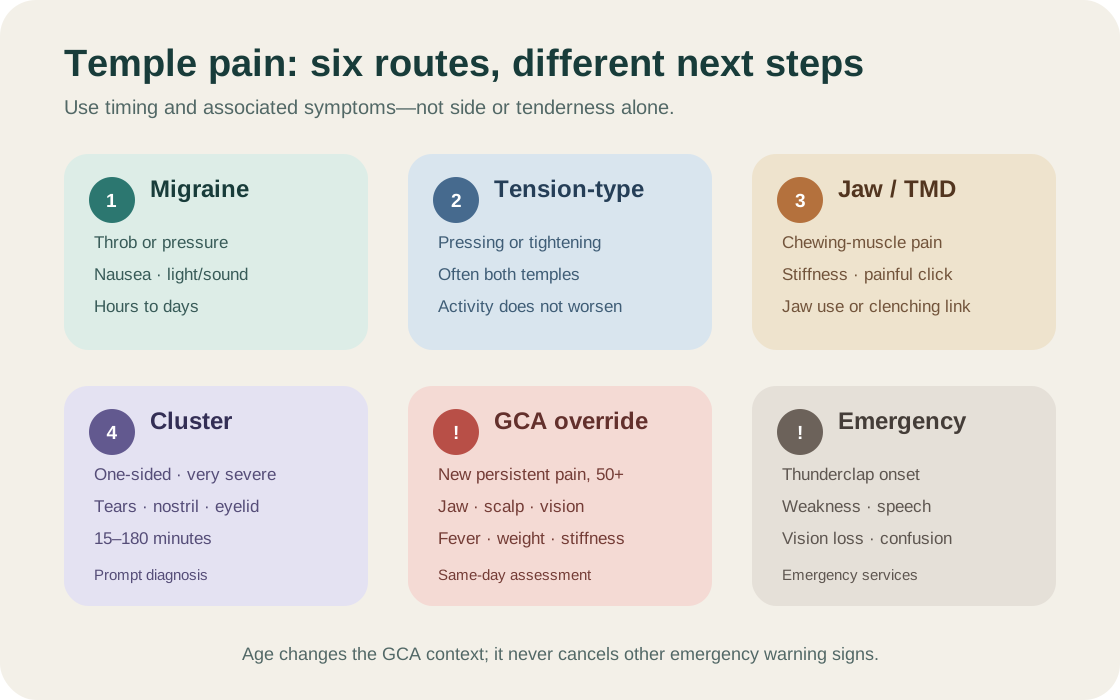
| Pattern | Typical clues | Common time course |
|---|---|---|
| Migraine | One or both temples, often throbbing; nausea; light/sound sensitivity; worse with activity | 4–72 hours untreated in the typical adult pattern |
| Tension-type headache | Pressure or tightening, often both sides; mild/moderate; routine activity does not worsen it | 30 minutes to 7 days for episodic attacks |
| TMD or jaw-muscle pain | Jaw/chewing-muscle tenderness, stiffness, painful clicking or limited movement; may spread to temple | Often linked to jaw use or clenching; may recur or persist |
| Cluster headache | Extremely severe strictly one-sided temple/orbital pain; tearing/red eye, nasal symptoms, eyelid change, restlessness | 15–180 minutes, recurring during cluster periods |
| Giant cell arteritis | Usually age 50+; new persistent headache, scalp tenderness, jaw claudication, visual/systemic symptoms | Develops over days to months; needs urgent treatment |
The table describes classic patterns, not rules. Migraine can be bilateral, tension-type headache can be one-sided, and jaw pain can coexist with migraine.
Migraine in the temple
Migraine is a common explanation for recurrent temple pain. The pain can throb, pulse, press, or ache and may switch sides between attacks. What makes migraine distinctive is the complete attack rather than the artery-like sensation under a fingertip.
Look for:
- nausea or vomiting;
- light and sound sensitivity;
- avoidance of walking, bending, or routine activity because it worsens pain;
- visual, sensory, or language aura in some attacks;
- a duration of hours to days; and
- fatigue, cognitive slowing, or sensory sensitivity after the pain eases.
Temple throbbing does not mean a blood vessel is dangerously swollen. Migraine pain involves a complex nervous-system process; visible or palpable superficial vessels are not a home diagnostic test. If the pattern is recurrent, the migraine-versus-headache guide helps organize migraine features for an appointment.
Tension-type headache across both temples
Tension-type headache usually feels like pressing or tightening rather than pulsing. It often affects both temples or forms a band across the forehead, sides, or back of the head. The pain is typically mild or moderate, is not aggravated by ordinary activity, and is not accompanied by nausea or vomiting.
People can have either light sensitivity or sound sensitivity, but not the strong combination typical of migraine criteria. Stress, long static postures, sleep disruption, and pericranial tenderness may accompany attacks, but tension-type headache is not simply proof that scalp muscles are “too tight.”
The tension headache guide explains infrequent, frequent, and chronic patterns and why frequent pain needs a broader plan than repeated painkillers.
Jaw clenching, TMD, and temple pain
The temporalis is a chewing muscle that covers the temple and helps close the jaw. Jaw-muscle pain or a temporomandibular disorder can therefore refer pain directly into one or both temples.
NIDCR lists jaw-joint or chewing-muscle pain, facial or neck spread, stiffness, limited movement or locking, and painful clicking or grating among TMD symptoms. A painless click is common and does not need treatment by itself.
Jaw involvement becomes more plausible when ordinary chewing, prolonged clenching, gum, or waking with jaw fatigue consistently accompanies the temple pain. Dental pain, bite changes, and limited opening also deserve a dental or orofacial-pain assessment.
Do not confuse ordinary jaw-muscle pain with jaw claudication, the fatigue or pain that develops while chewing because inflamed arteries cannot supply enough blood in giant cell arteritis. New chewing-related jaw pain after 50 with scalp, visual, or systemic symptoms is urgent, not a reason to trial a mouthguard.
Cluster headache at the temple or eye
ICHD-3 defines cluster headache as severe or very severe, strictly one-sided orbital, supraorbital, and/or temporal pain lasting 15–180 minutes untreated. Attacks can occur as often as eight times a day and often arrive in bouts lasting weeks or months.
Same-side features may include tearing or red eye, blocked or runny nostril, eyelid swelling or drooping, a smaller pupil, facial sweating, or marked restlessness. The pain is not merely “a strong migraine,” and the informal phrase “cluster migraine” blurs two disorders with different acute treatments.
A first cluster-like pattern needs prompt diagnosis. Prescribed high-flow oxygen and fast-acting triptan formulations can be effective; ordinary oral painkillers are often too slow. New pupil or eyelid change outside an established pattern still requires urgent evaluation for eye, nerve, or vascular causes.
Giant cell arteritis and temporal arteritis
Giant cell arteritis (GCA), also called temporal arteritis, is inflammation of medium and large arteries. NIAMS states that it almost always occurs in people over age 50. It can reduce blood flow to the eye and cause irreversible vision loss, so treatment is often started urgently when clinicians strongly suspect it.
Warning features include:
- a new, persistent headache at one or both temples;
- scalp tenderness when brushing hair, wearing a hat, or resting on a pillow;
- jaw or tongue pain/fatigue during ordinary chewing or talking;
- transient dimming, double vision, or loss of vision;
- fever, fatigue, reduced appetite, or unexplained weight loss; and
- new aching and morning stiffness in the shoulders, neck, or hips, which can indicate related polymyalgia rheumatica.
Not everyone has every feature, and the artery may not look visibly abnormal. Below age 50, GCA is much less likely, but age never cancels sudden visual, neurological, or severe headache warning signs.
Why giant cell arteritis is urgent
NIAMS warns that temporary visual symptoms can progress to permanent vision loss within hours or days. NHS guidance describes temporal arteritis as serious and emphasizes urgent treatment.
Seek same-day medical assessment for a new persistent temple headache after 50 or any temple/scalp pain with jaw claudication, visual disturbance, or systemic symptoms. Sudden vision loss warrants emergency care.
Clinicians may check inflammatory blood markers such as ESR and CRP, blood counts, the temporal arteries, eye and neurological function, and arrange ultrasound, imaging, and/or temporal-artery biopsy. No individual blood test rules GCA in or out by itself. Do not start leftover steroids or delay care to see whether an ordinary painkiller works.
Eye, dental, sinus, and nerve causes
The temple receives referred pain from nearby structures. Other possibilities include:
- Eye conditions: acute glaucoma, uveitis, corneal disease, or an uncorrected visual problem can cause temple or brow pain. A painful red eye, halos, reduced vision, or marked light pain needs urgent eye assessment.
- Dental disease: a cracked tooth, infection, grinding, or bite-related muscle overload can refer pain toward the temple or ear.
- Rhinosinusitis: confirmed sinus inflammation can cause facial or forehead pain, but recurring temple-only pain without a respiratory-illness pattern is less convincing.
- Neuralgia: short electric or stabbing pains may arise from cranial nerves and require a different evaluation from hours-long migraine.
- Neck-related referral: upper-neck structures can refer pain toward the side of the head, but a neck-pain association alone does not prove a cervicogenic headache.
The headache-behind-the-eyes guide expands the urgent eye distinctions.
What one-sided versus both-temple pain means
One-sided temple pain is common in migraine, cluster headache, TMD, dental pain, and GCA. Both-temple pain occurs in tension-type headache, migraine, jaw clenching, systemic illness, and GCA. Side does not reliably separate benign from serious causes.
More useful differentiators are:
- sudden versus gradual onset;
- minutes, hours, days, or continuous pain;
- nausea and sensory sensitivity;
- tearing/nasal/eyelid signs on the same side;
- ordinary-chewing jaw fatigue or pain;
- scalp tenderness noticed naturally;
- eye redness or vision change;
- fever, weight loss, or shoulder/hip stiffness; and
- whether the pattern is new after age 50.
Avoid repeatedly pressing the temple or chewing to provoke symptoms. That does not diagnose an inflamed artery and can create tenderness in otherwise normal tissue.
How to relieve a temple headache
If there are no urgent warning signs and the episode matches a previously assessed primary-headache or jaw pattern, relief should match the likely cause.
For an established migraine or tension-type plan:
- take the agreed acute medicine early and at the correct dose;
- reduce light, sound, and activity for migraine, or change posture and take a movement break when prolonged static work is involved;
- eat and drink normally if meals or fluids were missed;
- try a cool or warm pack according to preference, protecting the skin; and
- avoid combining products with duplicate acetaminophen/paracetamol or NSAIDs.
For mild jaw-muscle/TMD symptoms, NIDCR recommends starting conservatively: temporarily choose softer foods, reduce gum chewing and clenching habits, use clinician-guided gentle exercises, and consider heat or cold. Avoid irreversible bite changes, aggressive manipulation, or surgery as an early response. A dentist or orofacial-pain clinician can check persistent locking, limited opening, or dental disease.
Frequent acute medicine use can contribute to medication-overuse headache. Recurring temple pain needs diagnosis and prevention, not just a stronger rescue routine.
When to seek urgent help
Call emergency services for:
- a sudden headache reaching maximum intensity within seconds or minutes;
- sudden vision loss, new weakness/numbness, facial droop, speech difficulty, confusion, seizure, or fainting;
- a new unequal pupil or drooping eyelid with severe head/eye/neck pain;
- severe headache after significant head injury; or
- headache with fever, stiff neck, rash, or reduced consciousness.
Seek same-day medical or urgent eye assessment for:
- new persistent temple pain after age 50;
- jaw/tongue pain with chewing, scalp tenderness, visual symptoms, or polymyalgia-like stiffness;
- a painful red eye, halos, or reduced vision;
- a first cluster-like series of severe short attacks; or
- rapidly worsening or substantially changed headache.
Pregnancy/postpartum status, cancer, immune suppression, clotting/bleeding risk, or a recent infection lowers the threshold for urgent assessment of a new headache.
How doctors evaluate temple pain
An evaluation usually begins with the exact onset, duration, frequency, age at pattern change, medicine use, associated symptoms, and neurological examination. The clinician may examine the eyes and pupils, scalp and temporal arteries, jaw movement and chewing muscles, teeth, neck, blood pressure, and systemic signs.
Testing is selected from the pattern rather than ordered automatically. It may include blood tests for inflammation or systemic illness, eye examination, dental imaging, vascular ultrasound, temporal-artery biopsy, or brain/vascular imaging. Stable recurrent migraine or tension-type headache with a normal examination often does not require imaging; red flags or a new older-age pattern can change that decision.
A useful temple-headache record
| Field | Record |
|---|---|
| Time | Start, peak, end, sudden/gradual, continuous/episodic |
| Pain | Left/right/both; pressure, throbbing, stabbing, burning; severity and spread |
| Migraine pattern | Nausea, light/sound sensitivity, activity effect, aura |
| Eye/autonomic | Redness, tearing, eyelid/pupil change, nasal symptoms, vision change |
| Jaw/scalp | Natural chewing/talking pain, stiffness/locking, dental symptoms, scalp sensitivity |
| Systemic | Measured fever, appetite/weight change, shoulder/hip morning stiffness |
| Treatment | Medicine and time, benefit, adverse effects, return to baseline |
Counterexamples are valuable: a temple headache without jaw symptoms, a jaw flare without headache, or a short tearing-eye attack unlike the usual migraine. Record what happened; do not force every episode into one label.
Frequently asked questions
What causes a headache in one temple?
Migraine, cluster headache, TMD or chewing-muscle pain, dental disease, eye conditions, neuralgia, and giant cell arteritis can all be one-sided. Duration and associated nausea, sensory, eye, jaw, and systemic symptoms are more informative than side alone.
Why are both temples throbbing?
Migraine can affect both sides, and some people perceive tension-type or jaw-muscle pain as throbbing. Illness, medication effects, and other secondary causes also occur. A new persistent pattern—especially after 50 or with visual/jaw/systemic symptoms—needs assessment.
Can stress cause temple headaches?
Stress can accompany migraine, tension-type headache, sleep disruption, posture changes, or jaw clenching, but it should not be treated as a complete diagnosis. Track whether attacks also occur without stress and whether the phenotype matches migraine, tension-type, or jaw pain.
Can high blood pressure cause temple pain?
Most ordinary blood-pressure elevation does not cause a location-specific headache. Very high pressure with vision change, weakness, confusion, chest pain, or breathlessness can be an emergency. Measure correctly and seek care based on established readings and symptoms, not temple pulsing alone.
Should I massage a temple headache?
Gentle touch may feel soothing in an established tension or jaw-muscle pattern, but aggressive temple massage is not a diagnosis or treatment for GCA and can worsen tenderness. Do not massage a new painful artery-like area with visual, jaw, scalp, or systemic warning signs; seek urgent care.
The practical takeaway
Temple headache is a location, but the surrounding pattern offers real direction. Migraine, tension-type headache, and jaw-muscle/TMD pain are common; cluster headache has a short severe autonomic signature; and new persistent temple pain after 50 with jaw, scalp, visual, or systemic symptoms demands urgent GCA assessment. Use cause-specific relief only after urgent patterns are excluded, and record timing, eye signs, jaw symptoms, and migraine features separately.
For the wider taxonomy, read different kinds of headaches and the medical disclaimer.
Sources
- Polymyalgia rheumatica and giant cell arteritisNational Institute of Arthritis and Musculoskeletal and Skin Diseases · Accessed
- Temporal arteritisNHS · Accessed
- Giant cell arteritis—Symptoms and causesMayo Clinic · Accessed
- Temporomandibular disordersNational Institute of Dental and Craniofacial Research · Accessed
- Headaches in over 12s—RecommendationsNICE · Accessed
- Migraine and other headache disordersWorld Health Organization · Accessed
- Cluster headacheInternational Headache Society · Accessed