
A headache behind the eyes most often comes from a headache disorder such as migraine, but eye strain, cluster headache, sinus inflammation, and eye or optic-nerve conditions can produce pain in the same area. The location alone cannot identify the cause. The useful clues are whether the pain is one-sided or bilateral, how long it lasts, what it feels like, and whether vision, eye appearance, nausea, light sensitivity, nasal symptoms, or neurological function changes with it.
Migraine commonly causes throbbing or pressure-like pain behind one eye or both eyes with nausea, movement sensitivity, and light or sound sensitivity. Eye strain tends to build during prolonged near work and improve with a break. Cluster headache causes short, extremely severe attacks around one eye with same-side tearing, redness, nasal symptoms, or eyelid change. A painful red eye, reduced vision, halos, unequal pupils, injury, or pain with eye movement needs prompt eye assessment.
Seek emergency help for sudden vision loss; a very painful red eye with blurred vision, halos, nausea, or vomiting; chemical exposure or penetrating injury; a new unequal pupil or drooping eyelid; or eye-area pain with weakness, confusion, speech difficulty, fever and stiff neck, or a sudden severe headache.
Common causes of a headache behind the eyes
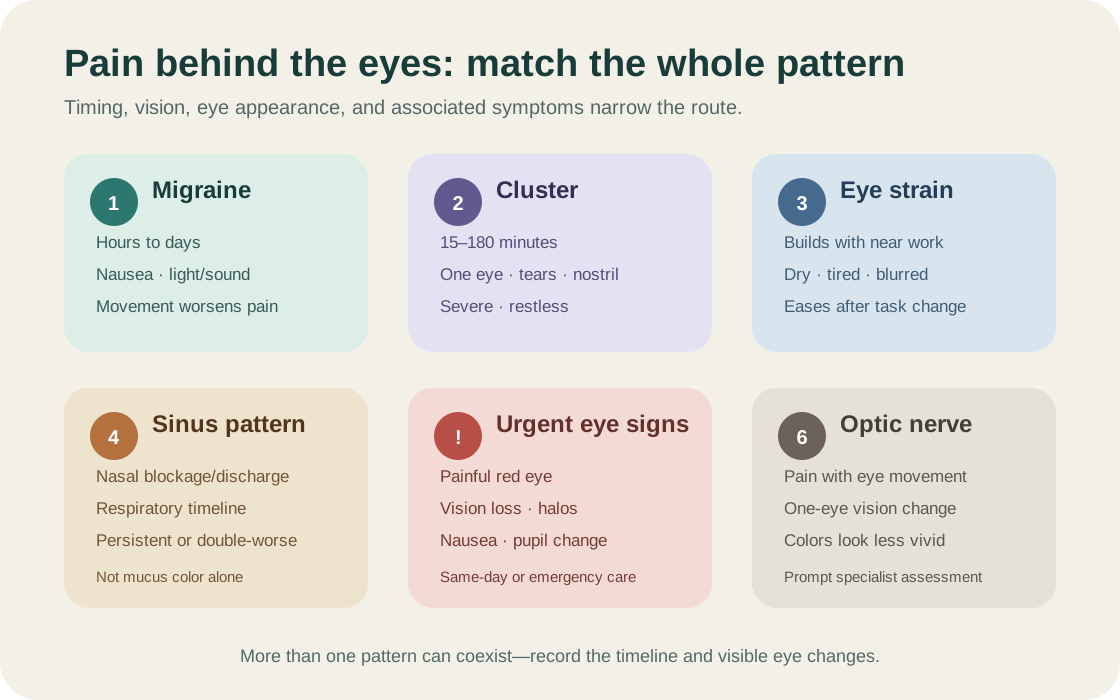
| Pattern | Clues that often travel with the pain | Typical time course |
|---|---|---|
| Migraine | Nausea, light/sound sensitivity, worse with activity, possible aura | Usually 4–72 hours untreated; can be shorter or longer in some contexts |
| Cluster headache | Extremely severe one-sided orbital pain, tearing/redness, runny or blocked nostril, drooping/swollen eyelid, restlessness | 15–180 minutes, often recurring at similar times during a cluster period |
| Digital eye strain | Tired or burning eyes, blur, focusing difficulty, dry eye, neck/shoulder discomfort after near work | Builds during visual tasks and often eases after changing the task or environment |
| Rhinosinusitis | Nasal blockage or discharge plus respiratory-illness pattern, reduced smell, facial pressure | Tracks the sinus illness; bacterial patterns often persist or worsen again after initial improvement |
| Eye inflammation or pressure emergency | Redness, reduced vision, severe light pain, halos, nausea, pupil change | Often acute or progressively worsening; needs urgent examination |
| Optic-nerve problem | One-eye vision or color change, pain often worse with eye movement | Vision change may develop over hours or days |
More than one condition can coexist. A person with migraine can also have dry eye, an outdated glasses prescription, BPPV, sinusitis, or an inflammatory eye condition.
Migraine pain behind one or both eyes
The World Health Organization includes pain behind the eye among common migraine locations. Migraine pain is often one-sided, pulsating, moderate or severe, and aggravated by routine activity, but it can also feel like steady pressure or affect both sides.
Features that make migraine more plausible include:
- nausea or vomiting;
- light and sound sensitivity;
- wanting to stay still because movement worsens pain;
- a recurring attack lasting hours to days;
- visual, sensory, or language aura in some attacks; and
- post-attack fatigue, cognitive slowing, or residual sensitivity.
Watery eyes, eyelid swelling, or nasal congestion do not rule migraine out. Cranial autonomic symptoms can occur during migraine, which is one reason it gets mislabeled as a sinus or cluster headache. Read the migraine-versus-headache guide for a fuller pattern comparison.
Cluster headache behind one eye
Cluster headache has a much tighter signature than “bad pain behind the eye.” ICHD-3 describes severe or very severe, strictly one-sided orbital, supraorbital, or temporal attacks lasting 15–180 minutes untreated. Attacks can occur from once every other day to eight times a day during an active cluster period.
The affected side may also show one or more of:
- a red or tearing eye;
- blocked or runny nostril;
- eyelid swelling or drooping;
- a smaller pupil;
- forehead or facial sweating; or
- marked restlessness or agitation.
People with migraine often prefer stillness; people in a cluster attack frequently pace or cannot keep still. That contrast is useful but not diagnostic. A first suspected cluster headache needs prompt clinical diagnosis because effective acute treatments—such as prescribed high-flow oxygen and certain fast-acting migraine-specific medicines—differ from ordinary headache care. “Cluster migraine” is not a formal hybrid diagnosis.
Eye strain and screen-related pain
Digital eye strain can cause aching around or behind the eyes, headache, intermittent blur, dry or burning eyes, focusing difficulty, and neck or shoulder tension. It is more likely when symptoms build during prolonged reading, computer work, close focusing, glare, or an ergonomically awkward task and ease after a meaningful break.
Useful same-day adjustments include:
- Look away from near work and focus at a comfortable distance for a few minutes.
- Blink fully and frequently; dry eye often worsens during concentrated screen use.
- Increase text size and reduce glare rather than squinting or leaning closer.
- Place the screen roughly an arm’s length away with the top at or slightly below eye level.
- Use an up-to-date glasses or contact-lens prescription intended for the working distance.
- Break up long visual sessions instead of relying on one recovery break at the end.
Blue light is not the only—or usually the main—variable. Glare, contrast, dry eye, uncorrected vision, focusing demand, posture, and a migraine-sensitive nervous system can matter more. The eye-strain headache guide gives a complete workstation and symptom-reset plan.
Sinus pressure behind the eyes
The sinuses sit around the nose, cheeks, forehead, and between the eyes, so rhinosinusitis can produce pressure in this region. A convincing sinus-related pattern usually includes nasal obstruction or discharge and a respiratory-illness timeline, not isolated recurring eye pressure.
Acute bacterial rhinosinusitis becomes more likely when symptoms persist at least 10 days without improvement or worsen again after initial improvement. Fever, reduced smell, dental or facial discomfort, and purulent drainage can contribute to the clinical picture; mucus color by itself does not diagnose bacteria.
Migraine commonly includes nasal and eye symptoms, so recurring “sinus headaches” with nausea, light sensitivity, and activity intolerance deserve migraine assessment. See the detailed sinus headache versus migraine guide before repeatedly using antibiotics or decongestants for an unconfirmed cause.
Acute angle-closure glaucoma
Acute angle closure is an eye emergency caused by a sudden rise in pressure inside the eye. The American Academy of Ophthalmology’s EyeWiki lists acute impaired vision, red eye, eye or periocular pain, colored halos, headache, nausea, and vomiting among its typical features.
The pain may be interpreted as a headache behind one eye. What changes the picture is the combination of a painful red eye and visual disturbance, sometimes with a mid-dilated or unequal pupil. Immediate assessment matters because persistent visual loss can occur without urgent pressure-lowering treatment.
Do not treat this pattern as migraine, wait for sleep to fix it, or use someone else’s eye drops. Some prescription and over-the-counter medicines can precipitate angle closure in susceptible eyes, so bring or photograph the medicine list for the treating team.
Uveitis and other inflammatory eye pain
Uveitis is inflammation inside the eye. The National Eye Institute lists blurry vision, floaters, eye pain, red eye, and light sensitivity as early symptoms and warns that untreated disease can cause vision loss.
Corneal infection, scleritis, and other inflammatory conditions can also create deep or severe eye pain. Contact-lens wear raises the importance of a painful red eye because corneal infection can progress quickly. Remove lenses and seek urgent eye advice rather than masking pain with redness-relief drops.
Pain when looking at light can occur in migraine, but true eye redness, reduced vision, discharge, a corneal spot, or severe focal eye pain shifts the evaluation toward an eye examination.
Optic neuritis and pain with eye movement
Optic neuritis is inflammation of the optic nerve. Mayo Clinic describes a dull ache behind one eye that commonly worsens with eye movement, accompanied by temporary reduction of vision in that eye. Colors may look less vivid, and a central or peripheral visual-field area may be missing.
Eye-movement pain alone is not specific enough to diagnose optic neuritis. The important cluster is new pain plus one-eye vision, color, brightness, or field change developing over hours or days. That pattern needs prompt ophthalmology or neuro-ophthalmology assessment. Bilateral vision loss, double vision, weakness, numbness, or coordination problems increases neurological urgency.
Do not repeatedly move the eye to “test” it or compare online color charts as a substitute for examination.
Other possible causes
Pain behind the eyes can also accompany:
- tension-type headache or neck-related referred pain;
- dry eye, refractive error, or focusing/eye-alignment problems;
- viral illness, fever, dehydration, or medication withdrawal;
- dental or jaw pain referred toward the orbit;
- trigeminal autonomic headache disorders other than cluster headache;
- increased pressure around the brain, especially with vision obscurations or pulse-synchronous ear noise; or
- rarer orbital, vascular, inflammatory, infectious, or neurological disease.
Long lists are not useful without pattern. A clinician narrows them using onset, duration, recurrence, eye findings, neurological examination, age, immune status, pregnancy/postpartum context, injury, and medication history.
Does one eye versus both eyes identify the cause?
No. Migraine can be one-sided or bilateral. Eye strain often affects both eyes but can feel asymmetric. Cluster headache is strictly one-sided during an attack. Acute glaucoma, optic neuritis, corneal disease, and many injuries may begin in one eye.
Record laterality because it is useful, but do not use it as the deciding test. More informative questions are:
- Is the eye actually red, swollen, or visibly different?
- Is vision dim, blurry, doubled, missing, or color-altered?
- Does the pain pulse, stab, burn, ache, or feel like pressure?
- Did it reach maximum intensity suddenly or build gradually?
- Does movement worsen the headache, or does moving the eye itself hurt?
- Are tearing and nasal symptoms on the same side?
- How long does each untreated episode last?
How to relieve a headache behind the eyes
If there are no urgent eye or neurological warning signs and the episode matches a previously assessed headache pattern, choose relief based on that pattern.
For an established migraine plan:
- treat early with the medicine and dose agreed with your clinician;
- reduce light, sound, motion, and visual workload temporarily;
- drink normally and have a regular meal if one was missed;
- use a cool or warm compress according to preference; and
- avoid stacking products that contain the same pain-relief ingredient.
For probable task-related eye strain, stop the near task, restore comfortable lighting and viewing distance, blink, and address dry-eye or prescription issues with an eye professional. For a respiratory-illness sinus pattern, fluids, saline nasal care using safe water, and appropriate pain relief may help; decongestants are not suitable for everyone.
Cluster headache, acute glaucoma, uveitis, optic neuritis, and infection need diagnosis-specific treatment. Ordinary painkillers are often too slow for cluster attacks and can delay care for an eye emergency. Frequent use of acute headache medicine can also contribute to medication-overuse headache, so recurring episodes need a prevention plan rather than endless rescue dosing.
When to seek medical or eye care
Use emergency services for sudden vision loss, chemical or penetrating injury, a painful red eye with impaired vision/halos/nausea, new pupil or eyelid asymmetry, stroke-like symptoms, or a thunderclap headache.
Arrange prompt same-day or urgent eye assessment for:
- new eye pain with any reduction in vision or color;
- pain with eye movement plus visual change;
- a red painful eye, especially with contact-lens wear;
- marked light pain, floaters, or unexplained visual disturbance;
- eye swelling, fever, or pain after surgery/procedure; or
- symptoms that are rapidly worsening or not returning to baseline.
Arrange routine primary-care, optometry, or headache assessment when attacks recur, disrupt work or sleep, require medicine repeatedly, or differ from a known pattern. Primary care can coordinate the initial headache evaluation; an optometrist or ophthalmologist checks eye structure and vision; neurology/headache care is useful for migraine, cluster, or other recurrent headache disorders.
What an evaluation may include
The clinician may check visual acuity, pupils, color vision, eye movements, eye pressure, the cornea and front of the eye, the retina and optic nerve, visual fields, and neurological function. Headache history adds duration, untreated frequency, autonomic symptoms, migraine features, medicine use, and family history.
Imaging is not routine for every stable headache behind the eyes. It becomes more relevant when the examination is abnormal, the onset is sudden, the pattern changes substantially, neurological or systemic warning signs appear, or an orbital/optic-nerve cause is suspected. A normal glasses check alone does not exclude migraine, cluster headache, or neurological disease.
A high-value episode record
Use one row per episode:
| Field | What to capture |
|---|---|
| Timeline | Exact start, peak, end, and whether onset was sudden or gradual |
| Pain | One/both sides; behind/inside/around eye; pressure, throbbing, stabbing, burning, ache |
| Eye findings | Redness, tearing, swelling, drooping, pupil difference, discharge, contact lenses |
| Vision | Blur, dimming, double vision, missing area, halos, flashes, floaters, color change |
| Headache features | Nausea, activity effect, light/sound sensitivity, aura, restlessness |
| Context | Screen/near work, respiratory illness, injury, medicine change, sleep, meals |
| Response | Treatment and time taken, benefit, adverse effects, full return to baseline |
A photo of visible eye redness or swelling can help if it resolves before an appointment, but photography should never delay urgent care.
Frequently asked questions
Why do I feel pressure behind both eyes?
Migraine, visual-task strain, dry eye, refractive or focusing problems, respiratory illness, and tension-type headache can all feel like bilateral pressure. Persistent pressure with vision changes, a red eye, fever, swelling, or a changed headache pattern needs assessment.
Can dehydration cause pain behind the eyes?
Dehydration can occur alongside headache, fatigue, thirst, darker urine, illness, heat exposure, or missed intake, but the behind-eye location does not prove dehydration. Replace ordinary fluid losses sensibly and seek care for severe dehydration, persistent vomiting, or eye/neurological warning signs.
Can high blood pressure cause a headache behind the eyes?
Routine mild-to-moderate blood-pressure elevation usually does not explain a specific headache location. Very high blood pressure with neurological symptoms, chest pain, breathlessness, confusion, or visual changes can be an emergency. Measure correctly and follow established clinical thresholds rather than diagnosing from pressure behind the eyes.
Are headaches behind the eyes always migraines?
No. Migraine is common, but cluster headache, eye strain, rhinosinusitis, acute glaucoma, uveitis, optic neuritis, and other causes can overlap there. The surrounding symptoms and timeline determine the next step.
What kind of doctor should I see?
Choose urgent eye or emergency care for red-eye, vision-loss, injury, or neurological warning patterns. For recurring stable pain without those features, primary care or an eye professional can begin the evaluation and refer to ophthalmology, neurology, or a headache specialist as needed.
The practical takeaway
A headache behind the eyes is a useful location description, not a diagnosis. Migraine is common; eye strain, cluster headache, sinus disease, and eye/optic-nerve conditions have recognizable but overlapping patterns. Match relief to an established cause, record the pain and eye findings separately, and act quickly when vision, eye appearance, pupils, neurological function, or headache onset changes.
For sensory-light symptoms, read the photophobia guide. This page is informational and should be used with the medical disclaimer.
Sources
- Eye painNHS · Accessed
- Red eyeNHS · Accessed
- Headaches in over 12s—RecommendationsNICE · Accessed
- Migraine and other headache disordersWorld Health Organization · Accessed
- Cluster headacheInternational Headache Society · Accessed
- Drug-induced acute angle closure glaucomaAmerican Academy of Ophthalmology EyeWiki · Accessed
- UveitisNational Eye Institute · Accessed
- Optic neuritis—Symptoms and causesMayo Clinic · Accessed