
A true sinus headache is facial pain or headache caused by rhinosinusitis. A recurring “sinus headache” without a clear respiratory illness may instead be migraine or another primary headache disorder. Migraine can cause forehead or cheek pressure, a stuffy or runny nose, watery eyes, and pain that worsens when bending over. The International Headache Society criteria require evidence that rhinosinusitis and the headache are linked.
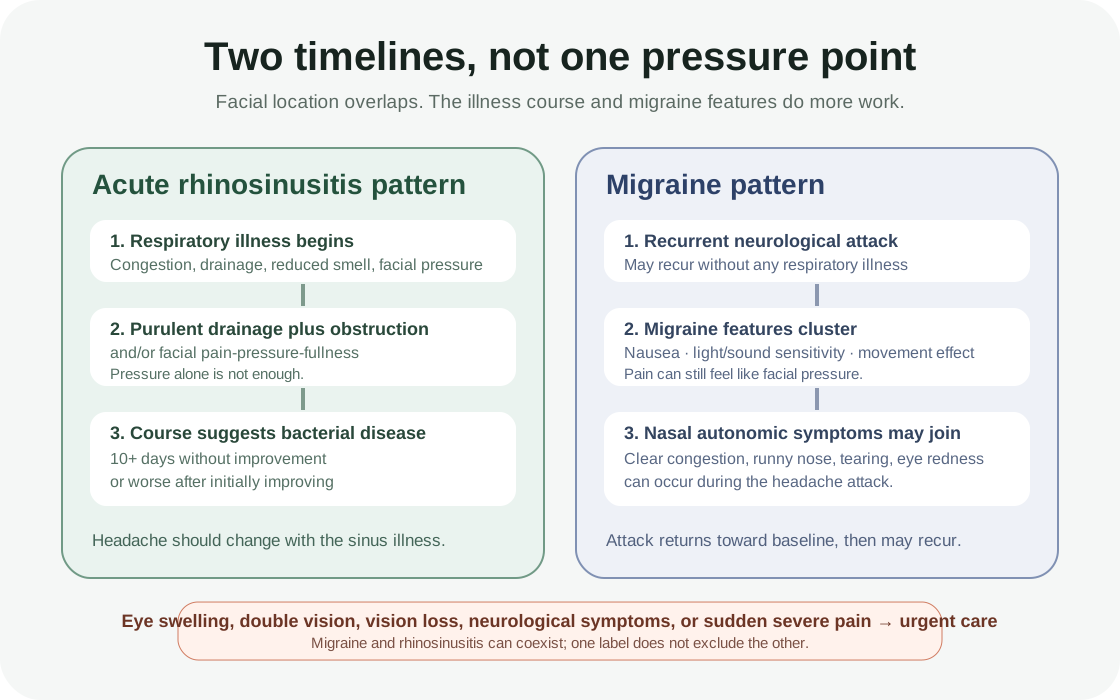
Acute rhinosinusitis is more likely when the timeline follows a respiratory illness and includes thick or discolored drainage, nasal blockage, or facial pressure. Migraine is more likely when attacks repeat with nausea, light or sound sensitivity, pain made worse by movement, or similar episodes without infection.
Get urgent help for sudden extreme headache, new weakness or speech difficulty, confusion, seizure, fainting, sudden vision loss, a very painful red eye, swelling around an eye, double vision, severe neck stiffness, or rapidly worsening illness. Eye swelling or vision symptoms during sinusitis can signal an orbital complication.
Sinus headache vs. migraine at a glance
| Feature | Headache attributed to acute rhinosinusitis | Migraine |
|---|---|---|
| Typical context | Upper-respiratory illness with nasal symptoms | Recurrent neurological attacks, sometimes with no obvious trigger |
| Nasal discharge | Purulent drainage is part of the clinical pattern | Clear runny nose or congestion can accompany attacks |
| Smell | Reduced smell can occur with nasal inflammation | Smell sensitivity or odor intolerance is more typical |
| Head pain | Facial, forehead, dental, or cheek pressure/pain | One or both sides; forehead, face, eye, temple, or neck; pressure or throbbing |
| Nausea | Possible with illness but not a defining feature | Common migraine feature |
| Light/sound sensitivity | Not a defining sinusitis pattern | Common, especially together |
| Movement | Bending may increase facial pressure | Routine movement commonly worsens migraine |
| Course | Improves or worsens with the rhinosinusitis | Repeated attacks lasting hours to days, with return toward baseline |
No single row establishes the diagnosis. Migraine and rhinosinusitis can also occur at the same time, and nasal inflammation may trigger or worsen a migraine attack.
What “sinus headache” actually means
“Sinus headache” is everyday language, not one formal diagnosis. ICHD-3 recognizes headache attributed to acute rhinosinusitis and headache attributed to chronic or recurring rhinosinusitis. Both require evidence of sinus disease plus evidence that the head or facial pain tracks that disease.
For acute rhinosinusitis, useful causal evidence includes headache beginning with the sinusitis, worsening or improving as it worsens or resolves, pressure-related tenderness, or pain localized to the affected side in one-sided disease. Imaging changes alone are not enough because sinus abnormalities can appear without causing pain.
For chronic rhinosinusitis, ICHD-3 warns that imaging or endoscopy findings alone do not secure the headache diagnosis. Headache and facial pain must change with congestion and other sinus symptoms.
Why migraine feels like sinus pressure
The trigeminal nerve carries sensation from the forehead, eyes, cheeks, nose, teeth, and much of the head. Migraine activation can therefore be felt in “sinus” locations. It can also activate autonomic pathways that produce tearing, eye redness, nasal congestion, or a runny nose.
This explains why the following can all occur in migraine:
- pressure between or behind the eyes;
- cheek, forehead, or upper-tooth discomfort;
- a blocked or dripping nose;
- watery eyes;
- worsening when bending, walking, or climbing stairs; and
- sensitivity to weather, odors, or bright light.
The symptoms are real; the disputed part is the cause. A 2021 systematic review found migraine and tension-type headache accounted for many people seeking care for self-described sinus headache. It also found substantial variation and bias across studies, so there is no honest universal percentage.
Acute viral vs. bacterial rhinosinusitis
Most acute rhinosinusitis begins with a viral respiratory infection. The 2025 AAO-HNS guideline says clinicians should diagnose acute bacterial rhinosinusitis when the acute-rhinosinusitis pattern:
- persists without improvement for at least 10 days after upper-respiratory symptoms begin; or
- worsens within 10 days after initially improving, often called double worsening.
The required symptom pattern includes purulent nasal drainage accompanied by nasal obstruction, facial pain-pressure-fullness, or both. Facial pressure alone does not satisfy that definition.
Colored mucus by itself does not prove bacterial infection. Viral illness can also produce thick or colored discharge, while migraine can coexist with an ordinary cold. The trajectory—improving, persistent, or double-worsening—matters more than one tissue color.
Can chronic sinusitis cause headache?
Chronic rhinosinusitis can be associated with head or facial pain, but congestion, reduced smell, drainage, and inflammatory findings usually carry more diagnostic weight than headache alone. Pain should fluctuate with the sinus disease for ICHD attribution.
Constant “sinus pressure” with normal nasal evaluation should reopen the differential: migraine, tension-type headache, medication overuse, jaw disorders, dental disease, neuralgia, eye disease, and other causes may need consideration.
Conversely, a migraine diagnosis does not rule out allergies or chronic rhinosinusitis. Treat each documented condition rather than forcing every symptom into one box.
Symptoms that favor migraine
Migraine becomes more plausible when facial pressure occurs with:
- nausea or vomiting;
- both light and sound sensitivity;
- pain aggravated by routine movement;
- moderate or severe functional impairment;
- aura or other familiar migraine phases;
- repeated attacks with normal periods between them;
- menstrual, sleep, weather, or other recurring context; or
- similar attacks when there is no purulent drainage or respiratory illness.
Migraine does not require one-sided throbbing. It can feel like steady bilateral forehead pressure. Use the migraine versus headache guide to compare the complete symptom pattern rather than one adjective.
Symptoms that support rhinosinusitis
Rhinosinusitis becomes more plausible when there is:
- purulent nasal drainage plus obstruction and/or facial pain-pressure;
- a clear respiratory-illness onset;
- reduced smell;
- symptoms that persist beyond 10 days without improvement or worsen after improving;
- facial/dental tenderness that tracks the illness;
- fever or marked systemic illness in context; or
- examination, nasal endoscopy, or other findings supporting inflammation.
Headache alone, facial pain alone, or an incidental scan finding is not enough. A clinician may also consider dental infection, allergy, structural obstruction, or another ENT condition.
Other causes of “sinus” facial pain
Not every non-sinus headache is migraine. Other possibilities include:
- tension-type headache, often bilateral pressure without nausea or movement aggravation;
- cluster headache or another trigeminal autonomic cephalalgia, with severe one-sided eye/temple pain, restlessness, and same-side eye/nose signs;
- temporomandibular or dental disorders, with chewing pain, tooth sensitivity, jaw locking, or localized tenderness;
- eye disease, especially a painful red eye, halos, blur, or vision loss;
- trigeminal neuralgia, with brief electric-shock facial pain triggered by touch or movement; and
- medication-overuse headache, when frequent acute treatment becomes part of a recurring pattern.
The headache-types guide maps these categories without using location as a diagnosis chart.
How clinicians tell the difference
A useful evaluation starts with two synchronized histories: nasal illness and headache. The clinician may examine the nose, eyes, mouth, teeth, jaw, neck, and nervous system.
For uncomplicated acute rhinosinusitis that meets clinical criteria, the AAO-HNS guideline recommends against routine imaging unless a complication or alternative diagnosis is suspected. CT can show inflammation, but it cannot prove that an incidental change caused recurring headache.
When migraine is possible, clinicians ask about attack duration, nausea, sensory sensitivity, movement response, disability, aura, frequency, and acute-medicine use. A normal sinus scan does not by itself diagnose migraine; it redirects attention to the complete headache pattern.
Sinus headache relief when an infection is likely
The appropriate plan depends on whether the illness is viral, suspected bacterial, chronic, allergic, dental, or complicated.
For symptomatic relief of viral or bacterial acute rhinosinusitis, the 2025 AAO-HNS guideline says clinicians may recommend pain relievers, topical intranasal steroids, and/or nasal saline irrigation. Individual risks still matter, and topical decongestant overuse can cause rebound congestion.
If using a sinus-rinse device, the FDA says to use only distilled, sterile, previously boiled and cooled, or appropriately filtered water—not straight tap water. Clean and dry the device according to its instructions.
Antibiotics do not treat viral rhinosinusitis. For uncomplicated suspected bacterial rhinosinusitis, the current guideline supports either watchful waiting with reliable follow-up or antibiotics, depending on the clinical decision. Seek reassessment if symptoms worsen or fail to improve as expected rather than taking leftover antibiotics.
Relief when migraine is more likely
For a familiar, previously assessed migraine pattern, use the acute plan agreed with your clinician. This may include a migraine-specific medicine, a pain reliever, an anti-nausea medicine, hydration/food when needed, and a lower-stimulation recovery space.
Do not use response as a diagnostic test. Migraine medicines can reduce trigeminal pain even when nasal symptoms are present, and general pain relievers can help several conditions. Likewise, temporary improvement after a decongestant does not prove sinus disease.
If recurrent “sinus headaches” continue despite repeated cold, allergy, antibiotic, or sinus treatments, ask for a headache-focused reassessment. Repeated ineffective treatment is evidence that the working label needs review.
Decongestants and combination products need an audit
Many “sinus headache” products combine a pain reliever, decongestant, antihistamine, and sometimes caffeine. This creates three common problems:
- the same pain reliever may be duplicated in another product;
- decongestants may be unsuitable with certain blood-pressure, heart, pregnancy, prostate, or medicine contexts; and
- frequent use of pain-reliever or caffeine combinations can contribute to medication-overuse headache.
Record the brand and active ingredients, dose, and days used. A pharmacist can spot duplication and contraindications more reliably than packaging terms such as “sinus,” “daytime,” or “maximum strength.”
Make two synchronized timelines
| Day/time | Nasal and illness timeline | Headache timeline |
|---|---|---|
| Onset | Cold/illness start, drainage, blockage, smell, fever | Pain start, location, quality, movement effect |
| Course | Improving, unchanged, or double-worsening | Continuous or episodic, peak, end, recurrence |
| Associated features | Cough, sore throat, dental pain, eye swelling | Nausea, light/sound sensitivity, aura, tearing |
| Treatment | Saline, nasal medicine, antibiotic if prescribed | Acute headache medicine and two-hour response |
| Baseline | Nasal symptoms resolved or persisted | Full return to usual or residual symptoms |
Add counterexamples: a cold without headache, the same facial pressure without discharge, or a migraine-pattern attack when breathing is clear. These comparisons help separate association from causation.
When to see an ENT, headache clinician, dentist, or eye doctor
- ENT or primary care: persistent/double-worsening acute symptoms, recurrent confirmed sinusitis, reduced smell, chronic obstruction/drainage, or suspected structural disease.
- Headache clinician or neurology: recurring attacks with nausea/sensory sensitivity, normal sinus evaluations, increasing headache days, aura, treatment failure, or medication-overuse concern.
- Dentist/oral specialist: localized tooth pain, chewing pain, swelling, drainage, jaw locking, or pain after dental work.
- Eye professional/emergency care: painful red eye, eye swelling, double vision, reduced eye movement, halos, or vision loss.
Coordination matters when migraine and rhinitis or rhinosinusitis coexist. Treating one does not automatically resolve the other.
Frequently asked questions
Where does a sinus headache hurt?
Pain may be felt in the forehead, cheeks, between or behind the eyes, upper teeth, or face. Migraine can occupy every one of these locations, so location alone cannot distinguish them.
Can migraine cause nasal congestion?
Yes. Migraine can activate autonomic pathways that cause congestion, runny nose, tearing, or eye redness. Clear nasal symptoms during a recurrent migraine-pattern attack do not automatically mean sinus infection.
Does green or yellow mucus mean I need antibiotics?
No. Mucus color alone does not distinguish viral from bacterial rhinosinusitis. Persistence beyond 10 days without improvement or worsening after initial improvement is more important, along with the full symptom pattern and examination.
Can a sinus infection trigger migraine?
Yes. ICHD-3 notes that nasal or sinus pathology can trigger or worsen migraine. In that situation both the infection timeline and migraine-pattern symptoms may be present.
Why does bending over worsen both?
Bending can increase awareness of inflamed sinus pressure, but movement also commonly aggravates migraine. This feature is not a reliable tie-breaker.
Should I get a sinus CT for recurring headaches?
Not routinely. Current adult-sinusitis guidance advises against imaging uncomplicated acute rhinosinusitis unless a complication or alternative diagnosis is suspected. Recurring headache needs a clinical evaluation that decides whether sinus, neurological, dental, eye, or other testing is appropriate.
The practical takeaway
Facial pressure plus a stuffy nose is not enough to diagnose a sinus headache. Follow two timelines: respiratory/nasal illness and the full headache attack. Persistent or double-worsening purulent nasal symptoms support rhinosinusitis; recurrent nausea, sensory sensitivity, and movement-aggravated attacks support migraine. When the pattern stays unclear or treatment repeatedly fails, reopen the diagnosis.
Keep the illness and headache timelines together
Calmraine can record facial pain, nasal context, migraine symptoms, medicines, and function in one private timeline. It does not diagnose sinusitis or migraine. Explore the migraine tracker features.
Sources
- Headache attributed to acute rhinosinusitisInternational Headache Society · Accessed
- Headache attributed to chronic or recurring rhinosinusitisInternational Headache Society · Accessed
- Clinical Practice Guideline: Adult Sinusitis Update—Summary GuideAmerican Academy of Otolaryngology—Head and Neck Surgery · Accessed
- Etiology of “Sinus Headache”—Moving the Focus from Rhinology to NeurologyBrain Sciences / PubMed Central · Accessed
- Migraine vs. Sinus Headache: What’s the Difference?American Migraine Foundation · Accessed
- Headaches in over 12s: diagnosis and management—RecommendationsNICE · Accessed
- Is Rinsing Your Sinuses With Neti Pots Safe?U.S. Food and Drug Administration · Accessed