Photophobia is discomfort or pain caused or worsened by light. It can make sunlight, office lighting, headlights, or a normal screen feel harsh. Despite the name, photophobia does not usually mean fear of light. It is a symptom—not a diagnosis—and migraine is only one possible cause.
Get urgent medical help for light sensitivity with sudden vision loss, a very painful or red eye, a sudden extremely severe headache, new weakness or trouble speaking, confusion, seizure, fever with neck stiffness, chemical exposure, or a significant eye or head injury. New contact-lens-related redness, pain, or vision change also needs prompt eye assessment.
What photophobia feels like
People describe photophobia in different ways:
- aching, burning, stabbing, or pressure in or around the eyes;
- an urge to squint, close the eyes, turn away, or shield the face;
- headache or nausea that intensifies in brighter light;
- discomfort when moving from a dim room into daylight;
- difficulty tolerating glare, flicker, reflections, or high-contrast screens; or
- a lower light tolerance than usual, even when a room is not objectively bright.
The sensation may seem to involve one eye, both eyes, the head, or all three. That location is useful to report, but it cannot identify the cause. MedlinePlus describes photophobia as eye discomfort in bright light; clinical use also includes pain or worsening headache from light.
When light sensitivity needs urgent assessment
Photophobia can accompany familiar migraine, but a new pattern should not automatically be filed under migraine. Seek urgent or same-day care when it occurs with:
- a red, painful eye, especially with blurred vision, halos, nausea, or vomiting;
- sudden loss or major change of vision, a curtain-like shadow, or severe eye pain;
- fever, neck stiffness, marked drowsiness, confusion, or a rapidly worsening headache;
- new neurological symptoms, including weakness, facial droop, speech difficulty, seizure, or loss of consciousness;
- a sudden “worst” or peak-intensity headache;
- a recent eye injury, head injury, chemical splash, procedure, or surgery; or
- contact-lens use with pain, redness, discharge, or changed vision.
UCLA Health lists eye inflammation, corneal disease, glaucoma, migraine, meningitis, and recent eye procedures among possible contexts for light sensitivity. This range is why pain, redness, vision, fever, injury, and neurological symptoms matter more than the word photophobia alone.
A practical photophobia response map
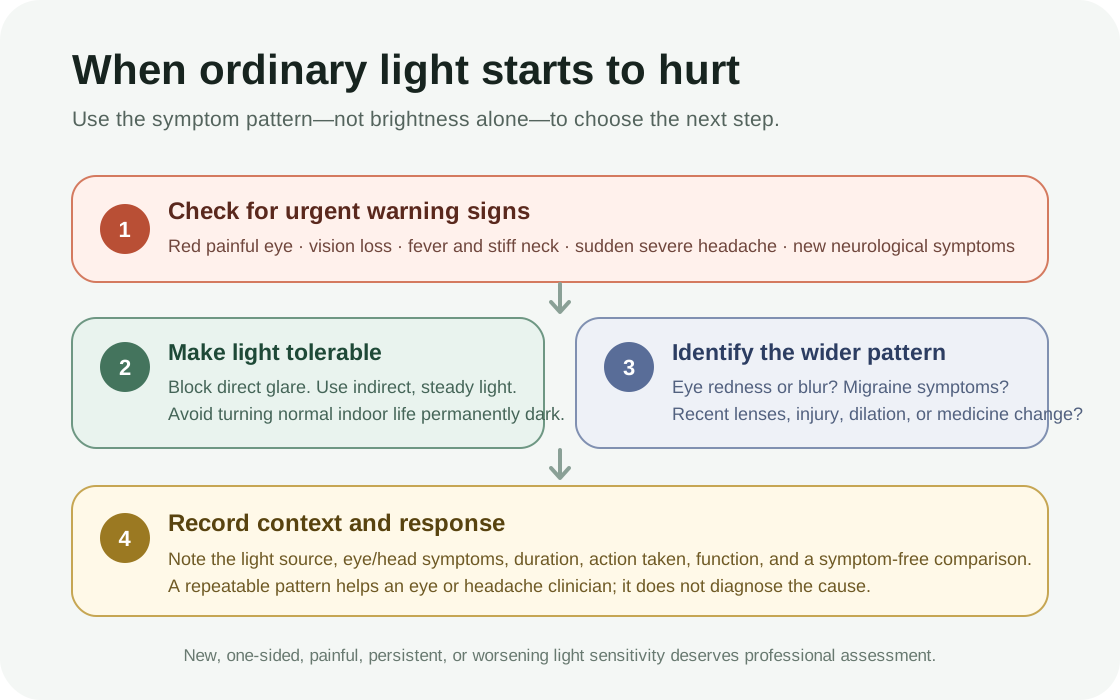
The safest first move is not to diagnose the symptom. Check for warning signs, make the environment tolerable, and notice whether this resembles an established pattern. Persistent, unexplained, one-sided, or progressively worsening sensitivity deserves an eye or medical assessment even without an emergency sign.
Photophobia, photosensitivity, aura, and glare are different
These terms are often mixed together:
| Term | What it usually means |
|---|---|
| Photophobia | Light causes or worsens eye discomfort, pain, headache, or nausea |
| Photosensitivity | Often a skin reaction to sunlight or a medicine-related sensitivity; not a synonym for eye pain |
| Migraine aura | Fully reversible visual, sensory, speech, or other neurological symptoms that typically develop over minutes |
| Glare sensitivity | Difficulty seeing or discomfort from reflected, scattered, or high-contrast light |
| Digital eye strain | Tired, dry, sore eyes, blur, or headache associated with prolonged screen/near work |
Photophobia can occur during migraine with or without aura. Seeing zigzags, flashing shapes, or a spreading blind spot is not simply “light sensitivity.” The eye-strain headache guide explains why screen discomfort also needs a different evaluation from aura or migraine.
Common causes of photophobia
Several systems can produce similar light discomfort. Common clinical categories include:
Migraine and other headache disorders
Light sensitivity is a characteristic migraine symptom and may appear before, during, or after head pain. It can also occur in some other headache disorders. A familiar combination of nausea, activity-sensitive headache, sound sensitivity, and recurrent attacks makes migraine more plausible, but still does not prove it.
Eye surface and corneal problems
Dry eye, corneal scratches, infections, contact-lens complications, and other surface irritation can make blinking and light painful. Redness, foreign-body sensation, discharge, one-eye predominance, or reduced vision increases the need for an eye exam.
Inflammation or pressure inside the eye
Uveitis and some forms of glaucoma can cause photophobia with eye pain, redness, blurred vision, halos, headache, or nausea. These conditions need professional examination; they cannot be ruled out by turning down the lights.
Temporary eye and medicine effects
Dilating drops, eye procedures, and some medicines can increase light sensitivity. Ask the prescriber or eye clinic how long an expected effect should last. Do not stop a prescribed medicine based on a symptom list without getting advice.
Brain injury, infection, and neurological illness
Concussion and other traumatic brain injuries can change sensory tolerance. Meningitis is a less common but urgent context when photophobia appears with fever, neck stiffness, severe headache, confusion, or reduced alertness. Neurological reviews also describe photophobia in several movement, pain, and sensory disorders, but the symptom does not distinguish among them.
Why migraine can make normal light hurt
Migraine changes how the nervous system processes sensory input. Research links retinal light signals with brain networks involved in pain, vision, and alertness. This helps explain why light can intensify headache even when the eye itself is structurally healthy.
The mechanism is not as simple as “blue light causes migraine.” Different wavelengths, brightness, contrast, flicker, visual pattern, and individual sensory thresholds may all matter. Laboratory findings do not establish one universally harmful color or one universally therapeutic tint.
In ICHD-3, photophobia and phonophobia are one associated-symptom option within a larger migraine-without-aura pattern. If you are unsure whether the overall episode resembles migraine, compare the full symptom cluster in what migraine feels like rather than counting light sensitivity alone.
Immediate relief without living in darkness
During a severe episode, a darker, quiet room may be the most tolerable place. For day-to-day management, aim to remove harshness while preserving usable ambient light:
- Block direct glare. Turn away from an uncovered bulb or window, close a sheer blind, move a reflective object, or use a brimmed hat outdoors.
- Use indirect, steady lighting. A lamp bounced off a wall is often easier than a bright overhead source. Replace visibly flickering or failing bulbs.
- Match the screen to the room. A bright screen in a dark room creates strong contrast. Lower it to a comfortable—not barely visible—level and increase text size instead.
- Reduce reflections. Reposition the display, clean smudges, use a matte surface where practical, and avoid working with a bright window directly behind the screen.
- Take visual-task breaks. Blink, look into the distance, and change posture. This helps eye-strain contributors even when it does not treat migraine itself.
- Follow an established migraine plan. If this is a familiar attack, use the acute plan agreed with your clinician rather than improvising a new medicine or supplement.
If ordinary indoor light remains intolerable between episodes, an eye exam and headache review are more useful than progressively darkening every room.
Why dark glasses indoors can backfire
Dark sunglasses are sensible outdoors in bright sunlight. Wearing very dark lenses throughout normal indoor life is different. Neuro-ophthalmology reviews warn that prolonged darkness may encourage dark adaptation—the visual system becomes more sensitive as it adjusts to low light—potentially making normal environments harder to tolerate.
That does not mean forcing exposure through severe pain. It means using the least-dark environment that is tolerable and returning toward normal ambient light gradually as an episode settles. People recovering from eye surgery, concussion, or a specific eye disorder should follow their clinician’s guidance rather than a general rule.
Do FL-41 or tinted lenses help photophobia?
FL-41 is a rose-colored tint designed to filter parts of the visible spectrum. Small studies in migraine, blepharospasm, and chronic ocular pain suggest that certain tints may reduce discomfort for some people. The evidence is promising but limited: studies are small, populations and lens specifications differ, and no single tint has been shown to work for everyone.
A sensible trial is reversible:
- first confirm that an eye condition does not need treatment;
- compare the tint with a neutral lens under the same ordinary task;
- judge function and comfort, not the marketing name alone;
- avoid a lens so dark that it prevents normal indoor activity; and
- choose a returnable or professionally fitted option before spending heavily.
Tinted lenses are a comfort aid, not a diagnosis or migraine preventive treatment. An optometrist or ophthalmologist can also check prescription accuracy, ocular surface health, and whether another lens property—not color—is affecting comfort.
Blue-light glasses and green light: what the evidence says
Blue-light-filtering glasses are heavily marketed for screen headache. A Cochrane review found that these lenses probably make little or no difference to short-term digital eye-strain symptoms compared with non-blue-light-filtering lenses. Screen brightness, glare, uncorrected vision, dry eye, viewing distance, and long uninterrupted near work are often more actionable.
Green-light research in migraine is emerging, with small studies suggesting certain low-intensity exposures may be better tolerated than white or other colors. It is not yet a standardized home treatment, and a green bulb or app cannot reproduce a research protocol. Treat “one wavelength fixes photophobia” as a stronger claim than current evidence supports.
Build a lower-glare screen and room setup
Use this order so you can tell what helps:
- correct the brightest direct source first;
- set screen brightness near the surrounding room level;
- enlarge type and increase spacing instead of leaning closer;
- use a calmer page theme if high contrast is uncomfortable;
- move the display roughly an arm’s length away, adjusted for vision needs;
- schedule brief changes of visual distance during long tasks; and
- change one variable at a time for several comparable sessions.
Night Shift, dark mode, and warm color settings may feel better, but comfort is personal. Dark mode can worsen halation or blur for some people, especially with astigmatism. The useful setting is the one that improves reading and function without requiring more squinting or closer viewing.
What an eye or headache assessment may include
An eye professional may check visual acuity, pupils, eye pressure when appropriate, the cornea and ocular surface, inflammation inside the eye, and the retina or optic nerve. A clinician evaluating migraine will ask about timing, headache features, nausea, sound sensitivity, aura-like symptoms, medicines, injuries, and whether the pattern has changed.
Bring the glasses, contacts, drops, or device settings used when symptoms occur. Include recent medicine changes and eye procedures. A normal eye exam does not make the pain imaginary; it helps redirect the investigation toward migraine, neurological, or sensory-processing causes.
Use a seven-day light-context record
Do not deliberately recreate a painful exposure. Record naturally occurring episodes and comparable symptom-free periods.
| Detail | What to capture |
|---|---|
| Start and end | Time, sudden or gradual onset, and return to usual |
| Light context | Sunlight, headlights, overhead light, screen, reflections, transitions, or no obvious source |
| Sensation | Eye/head location, one or both sides as perceived, pain versus discomfort, and severity |
| Other features | Redness, tearing, blur, halos, nausea, headache, sound sensitivity, aura-like symptoms, fever, or neck stiffness |
| Recent context | Contact lenses, eye exam/dilation, injury, illness, sleep change, or medicine change |
| Action and response | Glare removed, screen adjusted, usual plan used, and function 30–60 minutes later |
| Counterexample | Similar light without symptoms, or similar symptoms in different light |
The counterexample is important. If the same screen is comfortable on one day and painful during a migraine on another, the device may be an amplifier rather than the sole cause. Use neutral wording—“symptoms followed 40 minutes of work”—rather than “the screen triggered it” until a pattern is repeatable.
Frequently asked questions
Can photophobia happen without a headache?
Yes. Eye-surface problems, inflammation, medicines, eye procedures, concussion, and other conditions can cause light sensitivity without a simultaneous headache. Migraine-related photophobia can also persist before or after the main pain phase. New or unexplained symptoms still deserve assessment based on severity and accompanying signs.
Is photophobia always migraine?
No. Photophobia is common in migraine, but it is also associated with eye and neurological conditions. Migraine is identified from a broader recurring pattern, not one symptom. The migraine versus headache guide shows the features clinicians consider together.
Can photophobia affect only one eye?
It can feel one-sided. One red, painful, or vision-impaired eye raises concern for a local eye problem and should be assessed promptly. Covering each eye to self-diagnose the cause is unreliable and should not delay care.
How long does light sensitivity last?
Duration depends on the cause. It may last hours around migraine, until dilating drops wear off, or longer with an untreated eye or neurological condition. Ask for evaluation when it is new, worsening, persistent between attacks, or not resolving in the expected period after a procedure.
Should I buy special glasses for light sensitivity?
First identify whether an eye condition, wrong prescription, dry eye, or migraine pattern needs attention. A reversible trial of a light tint may help comfort, but no tint works universally. Very dark indoor lenses can make adaptation harder.
Are screens damaging my eyes when they hurt?
Discomfort does not automatically mean retinal damage. Screens can contribute to glare, dry eye, sustained near-focus strain, or migraine symptom amplification. Sudden vision change, severe pain, marked redness, trauma, or neurological symptoms require assessment regardless of screen use.
The useful next step
Treat photophobia as information. Remove harsh glare, keep some tolerable ambient light, follow your established care plan, and record the full episode rather than only the brightest object in the room. If the symptom is new, one-sided, painful, persistent, or paired with eye, fever, injury, or neurological warning signs, get professional assessment.
Record the symptom without turning it into a verdict
Calmraine can keep light sensitivity beside headache timing, pain, medicines, and function in one private migraine record. It does not identify the cause or replace an eye or medical assessment. Explore the migraine tracker features.
Sources
- PhotophobiaMedlinePlus · Accessed
- Photophobia (Light Sensitivity)Cleveland Clinic · Accessed
- Migraine without auraInternational Headache Society · Accessed
- Photophobia in neurologic disordersTranslational Neurodegeneration · Accessed
- Shedding Light on PhotophobiaJournal of Neuro-Ophthalmology / PubMed Central · Accessed
- Migraine, photophobia, and blue light: A review of the current literatureSurvey of Ophthalmology / PubMed Central · Accessed
- Light SensitivityUCLA Health · Accessed
- Blue-light filtering spectacle lenses for visual performance, sleep, and macular health in adultsCochrane · Accessed