Common migraine triggers include changes in sleep, missed meals, dehydration, stress or the let-down after stress, hormonal changes, alcohol, caffeine changes, bright or flickering light, strong smells, weather changes, and intense exertion. But triggers are personal, often combine, and do not cause every attack. A headache diary is more useful than avoiding every item on a long internet list.
Some supposed triggers are actually early migraine symptoms. A food craving, neck stiffness, tiredness, mood change, or light sensitivity may appear before the head pain because the attack has already begun. Track the sequence before deciding what to eliminate.
Seek urgent medical help for a sudden extremely severe headache, new weakness or numbness, confusion, fainting, seizure, trouble speaking, vision loss, fever with a stiff neck, headache after an injury, or a major change from your usual pattern. A trigger explanation cannot make warning signs safe.
To test a small number of suspected factors prospectively, use the private migraine trigger experiment planner. It records exposure and timing without declaring a cause.
Common migraine triggers at a glance
Migraine triggers are exposures or changes that may make an attack more likely in a susceptible person. The same exposure may trigger one attack but not another, and several smaller factors may matter more together than alone.
| Possible trigger category | Examples worth noticing | Common complication |
|---|---|---|
| Sleep change | Too little, oversleeping, shift work, jet lag, weekend schedule change | Fatigue may already be prodrome |
| Meals and hydration | Skipped or delayed meals, fasting, vomiting, heat, low fluid intake | Craving or thirst may be an early symptom |
| Stress pattern | Acute stress, prolonged strain, relaxation after a deadline | Stress is frequent, so coincidence is easy |
| Hormonal change | Menstrual-cycle timing, pregnancy/postpartum change, perimenopause | Patterns vary across life and need several cycles |
| Caffeine | A larger amount than usual, sudden reduction, inconsistent timing | Caffeine can also relieve pain or cause withdrawal |
| Alcohol | Wine, beer, spirits, dehydration, disrupted sleep | Several factors change together |
| Sensory exposure | Bright/flickering light, glare, loud sound, strong odors | Sensitivity may be part of the attack already |
| Weather | Pressure, temperature, humidity, wind, storm systems | Multiple weather variables move together |
| Physical load | Intense exercise, heat, altitude, unusual exertion | First exertion headache needs assessment |
| Routine change | Travel, long screen sessions, missed breaks, unusual schedule | Sleep, meals, posture, and stress may all shift |
This is a starting list, not a list of things every person with migraine should avoid.
A trigger is not the same as the cause of migraine
Migraine is a neurological disorder. A trigger does not create that underlying susceptibility; it may help set off an attack under certain conditions. You did not cause migraine because you slept late, felt stressed, ate the “wrong” food, or walked into bright sunlight.
Four labels keep the evidence honest:
- Exposure: the event happened before a headache.
- Association: the exposure and headache repeatedly occurred together in a record.
- Possible trigger: the pattern is consistent enough to test or discuss.
- Established personal pattern: repeated observations and counterexamples support a practical plan, ideally reviewed with a clinician.
One exposure followed by one migraine is a lead, not proof. Memory gives more weight to dramatic pairings than to all the times the same exposure happened without headache.
Common early migraine symptoms mistaken for triggers
The prodrome or premonitory phase can begin hours before head pain. A systematic review found wide variation in how studies define and measure these symptoms, which is one reason cause-and-effect claims are difficult.
Possible early symptoms include:
- food cravings or appetite change;
- thirst or increased urination;
- repeated yawning;
- fatigue or unusual energy;
- neck stiffness;
- mood change or irritability;
- trouble concentrating;
- sensitivity to light, sound, or smell; and
- nausea or mild dizziness.
Imagine craving chocolate at 2 p.m. and developing head pain at 4 p.m. Chocolate may be a trigger, the craving may be prodrome, both may be related to a missed lunch, or the timing may be coincidence. A single episode cannot settle it.
The practical fix is to record the first unusual change, not just the presumed trigger. The migraine phase timeline can help separate “before the pain” from “before the attack.”
Do foods trigger migraines?
Some people report repeatable food-related patterns, but broad food lists are unreliable. Commonly discussed candidates include alcohol, aged or fermented foods, processed meats, artificial sweeteners, and foods containing monosodium glutamate. The problem is that meal timing, portion, caffeine, alcohol, hydration, sleep, and context often change together.
Before eliminating a food, ask:
- Did the food precede several similar attacks?
- Did you also eat it on headache-free days?
- Did attacks occur when you did not eat it?
- Was the meal late, unusually small, or accompanied by alcohol?
- Were you already craving the food or feeling other prodrome symptoms?
Avoid removing multiple food groups at once. Restrictive diets can create nutritional and social costs and make it impossible to know which change mattered. Discuss a time-limited, one-change experiment with a clinician or dietitian when nutrition needs extra care.
Sleep changes and migraine
Both too little sleep and a major change from the usual schedule are commonly reported before attacks. Oversleeping on weekends, night shifts, insomnia, travel, caring for a child, or sleep disrupted by pain can all complicate the pattern.
Track bedtime, wake time, awakenings, and how restored you felt. Do not record only “bad sleep.” A headache on waking may have begun during sleep, and fatigue can be prodrome rather than the cause. Frequent snoring, gasping, morning headaches, or severe daytime sleepiness deserve medical assessment for a sleep disorder.
A realistic goal is consistency, not perfect sleep.
Stress—and the let-down after stress
Stress is one of the most commonly reported migraine factors, but it is also nearly universal. Some people notice attacks during a demanding period; others experience a “let-down” attack when the deadline passes or the weekend begins.
Instead of rating the whole day as stressed or not stressed, capture:
- the event or demand;
- when it began and ended;
- sleep and meal changes around it;
- physical tension or long screen time;
- the first migraine symptom; and
- whether a similar stress day passed without headache.
Stress management can still support well-being when stress is not a proven trigger; that does not make migraine psychological.
Hormonal changes and menstrual timing
Hormone fluctuations can influence migraine for some people. Menstrual-related patterns are usually assessed across repeated cycles, not one period. Track the first day of bleeding, headache days, migraine features, aura, medicine use, and functional impact.
Hormonal contraception, pregnancy, the postpartum period, and perimenopause can change migraine patterns and may affect treatment safety. Do not start, stop, or change hormonal medicine based on a trigger chart. Discuss new aura, major pattern changes, pregnancy, and contraceptive decisions with a qualified clinician.
Caffeine can help, trigger, or cause withdrawal
Caffeine is unusually complicated because it can play several roles:
- a small, familiar amount may help some acute headaches;
- a larger amount than usual may precede an attack;
- a sudden reduction can produce a withdrawal headache;
- caffeine late in the day can disrupt sleep; and
- caffeine appears in some headache medicines.
Record the product, approximate amount, and time. “Had coffee” is less useful than “one usual cup at 8 a.m.” Avoid abrupt large changes if daily caffeine use is high; a clinician or pharmacist can help plan a reduction.
Weather, light, screens, smells, and sound
Environmental factors can be difficult to avoid and difficult to isolate. A storm may combine pressure, temperature, humidity, wind, indoor time, disrupted sleep, and stress. The barometric pressure headache guide shows how to compare these variables without treating weather as proven from one forecast.
Bright light, flicker, glare, screens, strong perfume, smoke, and loud sound may precede attacks. They can also become painful because sensory sensitivity has already begun. Record whether the exposure was present before any symptom, or whether it only became unbearable after fatigue, nausea, or pain started.
Screen breaks, glare reduction, ventilation, and appropriate hearing protection can reduce discomfort without permanent isolation from normal environments.
Dehydration, missed meals, heat, and exercise
Fluid loss, delayed meals, heat, and exertion often travel together. A long outdoor workout may include sweating, sunlight, caffeine, missed food, and an altered sleep schedule. Calling the entire event “exercise trigger” hides the parts that can be changed.
Plan regular access to food and fluids, especially during heat and travel. Do not force excessive water; individual needs vary, and too much can be dangerous. The dehydration headache guide covers body signs and safer fluid replacement.
A first severe headache during exertion, sex, coughing, or straining needs prompt medical assessment, especially when onset is sudden. Do not test a suspected exertion trigger by deliberately recreating a severe event.
The trigger threshold idea
Many people find that no single factor explains every attack. A useful model is that several factors may accumulate while migraine susceptibility also changes. Short sleep alone may not lead to an attack; short sleep plus missed lunch, heat, and menstrual timing might.
This “threshold” model is a practical way to avoid all-or-nothing thinking, not a calculator. There is no validated personal score where three triggers equal one migraine. Use it to look for combinations and routine changes, not to predict attacks with certainty.
How to track migraine triggers without tracking everything
Start with a four-week core record:
- headache or migraine-like day, including start and end;
- pain intensity, location, and quality;
- nausea, sensory sensitivity, aura, and other symptoms;
- effect on normal activity;
- medicine and timing;
- sleep timing;
- meals and fluids;
- menstrual timing when relevant; and
- one or two suspected factors chosen in advance.
Do not add 40 checkboxes. A diary that is too burdensome will be incomplete exactly when attacks are worst.
Use four boxes to test a suspected trigger
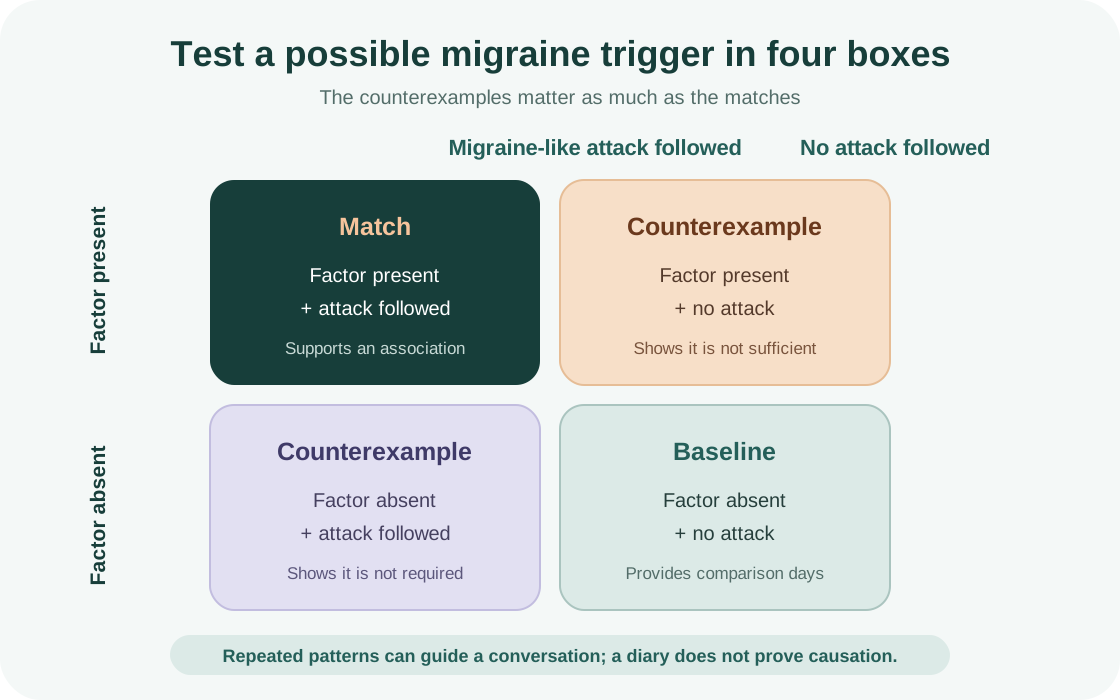
For one defined factor, count examples in four boxes:
| Migraine-like attack followed | No attack followed | |
|---|---|---|
| Factor was present | Supports an association | Important counterexample |
| Factor was absent | Shows the factor is not required | Baseline comparison |
If you record only “factor present + migraine,” every common exposure will look convincing. The other three boxes are what make the diary informative.
Predefine the factor and time window. “Poor sleep” might mean less than your usual duration; “weather change” might mean a specific pressure shift; “alcohol” needs product, amount, and time. Do not change the definition after seeing the outcome.
How to test one change safely
When the record suggests a manageable factor:
- Choose one change rather than several.
- Keep the definition and observation window consistent.
- Continue recording headache-free days.
- Give the test enough time to include normal variation.
- Review benefit, burden, and counterexamples.
- Discuss medically significant changes with a clinician.
Do not deliberately expose yourself to something that caused a severe reaction, and do not alter prescribed medicine, hormones, a medically necessary diet, or safe hydration limits as an experiment.
What to do when a trigger is unavoidable
Weather, hormones, work deadlines, travel, and other people’s perfume are not always controllable. Focus on the parts of the day you can support:
- keep meals and fluids accessible;
- protect sleep timing where practical;
- carry medicine according to your established plan;
- use screen, glare, or sound adjustments when they reduce symptoms;
- build recovery time around predictable high-load events; and
- ask for workplace or school accommodations when migraine is disabling.
Trigger management should expand usable life, not shrink it to a list of forbidden situations.
When to discuss triggers with a clinician
Bring the diary when attacks are frequent, disabling, changing, or hard to control; when you use acute medicine often; or when avoidance is becoming restrictive. A clinician can look for medication overuse, sleep disorders, hormonal patterns, another headache type, or a need for preventive treatment.
Seek urgent care for sudden extreme headache, new neurological symptoms, fever with stiff neck, headache after significant injury, severe dehydration, new headache during pregnancy or postpartum, or a major unexplained pattern change. The fact that a familiar “trigger” occurred does not rule out another cause.
Frequently asked questions
What is the biggest migraine trigger?
There is no universal biggest trigger. Sleep changes, stress, missed meals, hormones, alcohol, caffeine changes, sensory exposure, and weather are commonly reported, but personal patterns differ.
Can a trigger cause a migraine immediately?
Timing varies by factor and person. Some exposures may be followed quickly; others occur many hours earlier. A very wide window increases false matches, so define the window before reviewing the diary.
Why do I get a migraine only sometimes after the same trigger?
Susceptibility changes, other factors may combine, or the exposure may not be causal. Counterexamples are expected and are useful evidence.
Should I avoid all common migraine trigger foods?
No. Broad elimination without a repeatable personal pattern can be burdensome and nutritionally risky. Track normal intake first and test one suspected food with professional guidance when needed.
Can migraine happen with no trigger?
Yes. Many attacks appear spontaneous, and failing to identify a trigger does not mean you tracked badly or caused the attack.
Can neck pain be a migraine trigger?
Neck strain may be relevant in some episodes, but neck stiffness or discomfort can also be an early migraine symptom. Record whether it began before other symptoms and whether it occurs on headache-free days.
Find patterns without turning life into a restriction list
Migraine triggers are best treated as hypotheses. Start with common categories, record only a manageable set, include days when the factor did not lead to migraine, and test one practical change at a time.
Calmraine can keep pain, symptoms, sleep, food or hydration notes, weather, menstrual timing, and custom possible factors together on your iPhone. It preserves observations without claiming a factor caused or predicted an attack.
Sources
- HeadacheNational Institute of Neurological Disorders and Stroke · Accessed
- Migraine and other headache disordersWorld Health Organization · Accessed
- Premonitory symptoms in migraine: systematic review and meta-analysisThe Journal of Headache and Pain / PubMed Central · Accessed
- Methodological issues in studying trigger factors and premonitory features of migraineHeadache / PubMed · Accessed
- Analysis of trigger factors using a smartphone headache diaryPLOS ONE / PubMed Central · Accessed
- Headaches in over 12s: diagnosis and managementNICE · Accessed