
Menstrual migraine is migraine that repeatedly occurs from two days before menstruation starts through the first three days of bleeding. Attacks often last longer, recur more easily, and respond less completely than migraine at other times. Treatment can include standard acute migraine medicine, short-term “mini-prevention” around predictable periods, ongoing prevention, or carefully selected hormonal strategies.
New weakness, trouble speaking, persistent one-eye vision loss, confusion, seizure, fainting, or a sudden extremely severe headache needs urgent medical assessment even if it happens during a period. New neurological symptoms during pregnancy or after delivery also need prompt care.
Use the free menstrual migraine pattern tracker to compare period and headache timing across three cycles without diagnosing the pattern.
The menstrual migraine window: day −2 through day 3
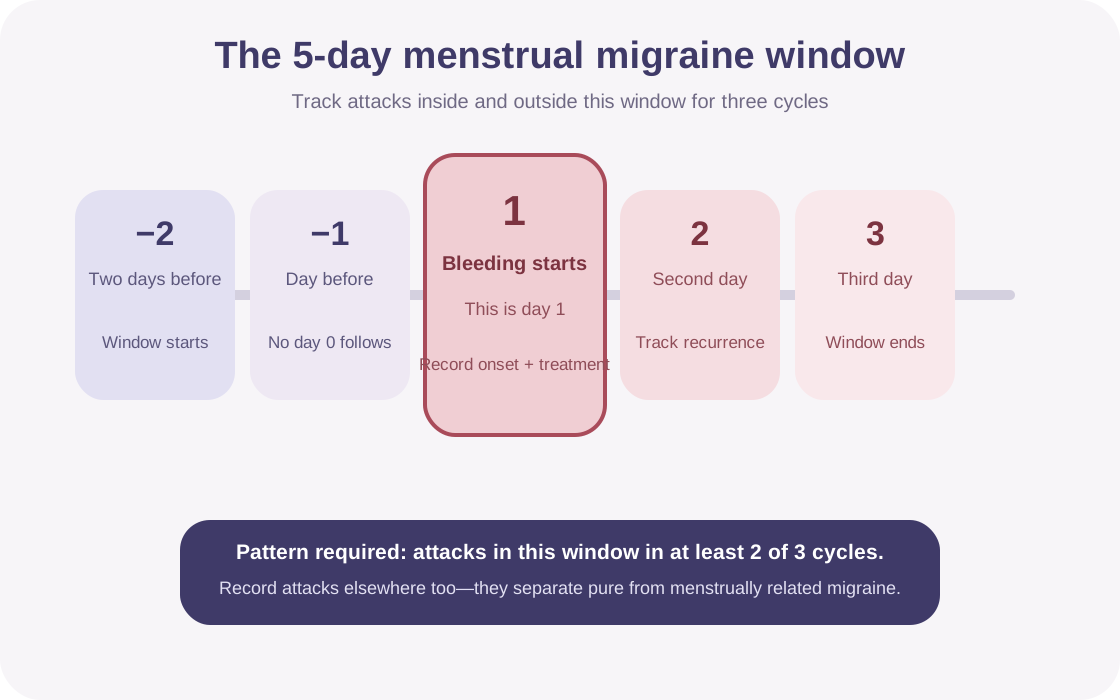
The ICHD-3 appendix defines the five-day window as:
- day −2: two days before bleeding;
- day −1: the day before bleeding;
- day 1: first day of bleeding;
- day 2: second day; and
- day 3: third day.
The pattern must occur in at least two of three cycles and meet criteria for migraine without aura. The appendix includes both natural menstruation and withdrawal bleeding from cyclical hormones in its definition.
These criteria help classification. They do not mean an attack on day 4 is not migraine, or that migraine with aura cannot occur around a period. They mean the named ICHD menstrual-migraine subtypes are specifically defined around migraine without aura in this window.
Pure menstrual migraine vs. menstrually related migraine
| Pattern | Meaning |
|---|---|
| Pure menstrual migraine without aura | Attacks occur in the day −2 to day 3 window and not at other cycle times |
| Menstrually related migraine without aura | Attacks occur in the window and also at other times of the cycle |
| Period-associated headache without established migraine | Headache timing is present, but the migraine pattern or repeated-cycle evidence is not yet established |
This distinction matters for treatment. If attacks occur only in a predictable five-day window, short-term prevention may make sense. If migraine also occurs throughout the month, an ongoing preventive plan may provide more value than repeatedly covering one window.
Menstrual migraine symptoms
Symptoms are those of migraine without aura:
- moderate or severe headache;
- pulsing or throbbing pain, although pressure can occur;
- pain that may be one-sided or bilateral;
- worsening with routine movement;
- nausea or vomiting;
- sensitivity to light, sound, smell, or touch;
- neck pain, fatigue, brain fog, mood change, or food cravings before pain; and
- exhaustion or cognitive symptoms after the headache eases.
Menstrual attacks are often reported as more disabling, longer-lasting, and more prone to recurrence than non-menstrual attacks. Period cramps, heavy bleeding, nausea, sleep disruption, and fatigue can add to the functional burden without being migraine symptoms themselves.
If the pattern is not yet clear, use the migraine versus headache comparison to record pain, nausea, sensory sensitivity, movement response, and function without assuming every period headache is migraine.
Why periods can trigger migraine
The leading explanation is the fall in estrogen before menstruation. Estrogen interacts with pain pathways and migraine biology; a rapid drop may lower the threshold for an attack in susceptible people. Prostaglandins released around menstruation may also contribute to pain and nausea.
Hormones are not the only variables in the window. Sleep, missed meals, iron deficiency from heavy bleeding, stress, caffeine timing, and acute medicine use may change at the same time. A repeated cycle pattern is stronger evidence than one attack during one period.
How menstrual migraine is diagnosed
NICE recommends a headache diary over at least two menstrual cycles when menstrual-related migraine is suspected. Three cycles are even more useful because the ICHD pattern is based on two of three.
Record every migraine day, including attacks outside the menstrual window. A clinician will also ask about:
- aura or other neurological symptoms;
- attack duration and recurrence;
- pain and associated symptoms;
- level of disability;
- medicines, timing, effect, and side effects;
- natural versus hormone-withdrawal bleeding;
- cycle predictability;
- contraception, pregnancy plans, or perimenopause; and
- cardiovascular, clotting, gastrointestinal, kidney, and other medicine risks.
An e-diary validation study found that remembered “menstrual migraine” and prospectively recorded criteria did not always agree. Memory tends to emphasize the worst attacks, which is why outside-window days matter.
Treating an acute menstrual migraine attack
The first step is an effective standard migraine rescue plan. Depending on the person, a clinician may recommend:
- an NSAID such as ibuprofen or naproxen;
- a triptan;
- a triptan combined with an NSAID when either alone is insufficient;
- an anti-nausea medicine;
- a non-oral formulation when vomiting or gastric slowing makes tablets unreliable; or
- another migraine-specific acute medicine when triptans are unsuitable or ineffective.
The 2023 network meta-analysis found several acute treatments effective, with sumatriptan performing strongly in the available trials. That does not make one drug or dose best for everyone; heart/vascular disease, pregnancy, other medicines, side effects, and prior response change the choice.
Use acute treatment at the point specified in your plan—often early in the headache phase—and record response at two hours, ability to function, recurrence within 24 hours, and whether a second dose or rescue treatment was needed. Do not combine medicines unless the plan or label allows it.
Short-term prevention for predictable periods
Mini-prevention means taking a preventive treatment only around the expected menstrual window. It works best when cycles and attacks are predictable.
NICE says that when menstrual-related migraine does not respond adequately to standard acute treatment, clinicians may consider:
- frovatriptan 2.5 mg twice daily, or
- zolmitriptan 2.5 mg twice or three times daily
on the days migraine is expected. NICE notes that this use was off-label in the UK as of June 2025. A 2023 network meta-analysis of 14 randomized trials also found frovatriptan 2.5 mg twice daily ranked highest among studied short-term preventive regimens.
This is a clinician-prescribed strategy, not a schedule to start from an article. The start day, number of days, cardiovascular suitability, interactions, and total triptan days across the month must be reviewed. An inaccurately predicted window can expose you to medicine without covering the attack.
Other clinician-guided mini-prevention approaches may include a scheduled NSAID or, in selected cases, magnesium or perimenstrual estrogen. Evidence, contraindications, and product dosing differ. NSAIDs can affect the stomach, kidneys, blood pressure, bleeding, and pregnancy; estrogen is not appropriate for everyone and can produce delayed attacks when stopped.
When ongoing prevention makes more sense
Consider discussing month-long preventive treatment when:
- migraine occurs outside the menstrual window;
- cycles are too irregular to predict;
- mini-prevention repeatedly misses the attack;
- acute or short-term medicines create too many treatment days;
- attacks remain disabling despite a good rescue plan; or
- migraine days are frequent enough to justify broader prevention.
Options can include oral preventives, CGRP-targeting medicines, injections, neuromodulation devices, and behavioral approaches. The right choice depends on attack frequency, other conditions, pregnancy potential, cost, access, and preferences.
The purpose is not simply fewer pain scores. A useful preventive plan should reduce migraine days, disability, rescue use, recurrence, and disruption to work, school, caregiving, sleep, and exercise.
Hormonal contraception and menstrual migraine
Hormonal contraception can improve, worsen, or have no effect on migraine. Continuous or extended combined hormonal contraception may reduce withdrawal bleeding and estrogen drops for some people with menstrual migraine without aura.
Migraine aura changes the safety discussion. ACOG states that combined estrogen-progestin methods should not be used by people with migraine with aura because of stroke risk. CDC’s U.S. Medical Eligibility Criteria likewise treats combined hormonal contraception differently for migraine with versus without aura, while progestin-only and nonhormonal methods have different risk profiles.
Before starting or changing contraception, clearly report:
- whether you have ever had aura;
- smoking status;
- age;
- blood pressure;
- clot, stroke, or cardiovascular history;
- postpartum status;
- current medicines; and
- pregnancy goals.
Do not stop contraception abruptly based only on an article. Arrange a timely review, and seek urgent care for new focal neurological symptoms.
Irregular cycles, perimenopause, and hormone therapy
Mini-prevention becomes harder when the window cannot be predicted. Perimenopause can bring irregular bleeding and larger hormone fluctuations, so migraine may become less predictable or temporarily worse. After natural menopause, attacks improve for many people as hormone levels stabilize, but not for everyone.
Hormone replacement therapy can improve, worsen, or leave migraine unchanged. Formulation, route, dose stability, aura, clot risk, menopause symptoms, and the need for uterine protection all matter. A migraine diary should record hormone starts, stops, dose changes, bleeding, aura, and headache—not just “menopause.”
Unexpected heavy bleeding, bleeding after menopause, or symptoms of anemia need separate medical evaluation rather than being folded into a migraine explanation.
Pregnancy, trying to conceive, and breastfeeding
Plans that are reasonable outside pregnancy may not be appropriate while trying to conceive, pregnant, or breastfeeding. NSAIDs, triptans, preventives, supplements, and hormones each have timing- and product-specific considerations.
Review the plan before conception when possible. If pregnancy is possible, tell every prescriber and pharmacist. Do not stop an effective prescribed preventive abruptly unless instructed, because uncontrolled migraine and medicine withdrawal also carry consequences.
New severe headache, new neurological symptoms, high blood pressure symptoms, or a different headache during pregnancy or after delivery needs prompt assessment.
Lifestyle support that is actually relevant
Lifestyle changes do not cancel a hormone-linked neurological disorder, but they can reduce additional stress on the same window:
- keep sleep and wake times stable;
- avoid long gaps between meals;
- keep caffeine timing and amount consistent;
- prepare acute medicine and menstrual supplies before the window;
- schedule lower-flexibility commitments thoughtfully when possible;
- address heavy bleeding, severe cramps, or suspected anemia; and
- plan hydration, food, and a quiet recovery space for work or travel.
Do not add several supplements and diet restrictions at once. If the treatment changes, keep other variables stable long enough to judge it.
Use a three-cycle treatment grid
| Record | Day −2 | Day −1 | Day 1 | Day 2 | Day 3 | Outside window |
|---|---|---|---|---|---|---|
| Migraine onset and end | ||||||
| Aura/other symptoms | ||||||
| Acute/mini-prevention medicine | ||||||
| Two-hour response and recurrence | ||||||
| Function and bleeding context |
Track treatment-free cycles when they occur, not only cycles after starting a plan. This shows baseline variation and whether an apparent improvement is larger than the usual month-to-month change.
When to seek specialist help
Ask for a headache or neurology review when diagnosis is unclear, acute treatments repeatedly fail, attacks last several days, aura is new or changing, mini-prevention is unsuitable, or headache occurs on many days throughout the month.
Gynecology or reproductive-health input is useful when contraception, heavy or irregular bleeding, endometriosis, fertility treatment, perimenopause, or hormone therapy is part of the decision. Coordinated care matters because a hormone plan and migraine plan can affect each other.
Frequently asked questions
How long does menstrual migraine last?
Individual attacks follow migraine duration patterns, often 4–72 hours when untreated, but menstrual attacks may last longer or recur across the five-day window. The migraine duration guide explains how to distinguish one continuous attack from recurrence. A continuous attack beyond 72 hours warrants medical advice.
What is the best treatment for menstrual migraine?
There is no single best treatment. Standard acute therapy comes first; predictable attacks may benefit from short-term triptan or NSAID prevention; frequent or irregular attacks may need ongoing prevention; hormonal strategies suit selected people.
Can menstrual migraine happen without a headache?
Aura can occur without headache, but the ICHD menstrual-migraine appendix categories are defined around migraine without aura attacks. New aura-like symptoms still need medical assessment.
Does magnesium prevent menstrual migraine?
Limited evidence supports magnesium as one possible mini-prevention approach, but formulation, dose, kidney function, gastrointestinal effects, pregnancy, and interactions matter. Discuss it rather than assuming every supplement is harmless.
Can birth control stop menstrual migraine?
Continuous hormonal contraception can reduce estrogen-withdrawal attacks for some people and worsen migraine for others. Combined estrogen methods are not appropriate with migraine aura and require individualized risk assessment.
Why did menstrual migraine start in my 40s?
Perimenopause can produce irregular cycles and larger hormonal fluctuations, changing migraine timing or severity. New or changing headache still needs assessment rather than automatic attribution to hormones.
Turn the predictable window into a treatment advantage
Menstrual migraine can be unusually disabling, but predictability creates options. Track day −2 through day 3 correctly, include attacks outside the window, measure treatment response and recurrence, and use that evidence to choose between acute treatment, mini-prevention, ongoing prevention, and hormonal strategies.
Calmraine can keep cycle timing optional and local while recording migraine symptoms and medicine response. It does not diagnose menstrual migraine, but a three-cycle grid can support a far more specific treatment conversation.
Sources
- Menstrually-related migraine without auraInternational Headache Society · Accessed
- Headaches in over 12s: diagnosis and management—RecommendationsNICE · Accessed
- Validation of ICHD-3 criteria for menstrual migraineCephalalgia / PubMed Central · Accessed
- Comparative efficacy of different treatments for menstrual migraineThe Journal of Headache and Pain / PubMed Central · Accessed
- Menstrual Migraine Treatment and PreventionAmerican Migraine Foundation · Accessed
- Combined Hormonal Birth Control: Pill, Patch, and RingAmerican College of Obstetricians and Gynecologists · Accessed
- U.S. Medical Eligibility Criteria for Contraceptive Use, 2024Centers for Disease Control and Prevention · Accessed
- Migraine and MenopauseAmerican Migraine Foundation · Accessed