
An exertion headache starts during or after physical effort. The formal term primary exercise headache applies only after other causes have been excluded. Under the ICHD-3 criteria, attacks occur with strenuous exercise and last less than 48 hours. A first or sudden exercise headache needs assessment because bleeding, an arterial tear, reversible cerebral vasoconstriction syndrome (RCVS), and other serious conditions can begin this way.
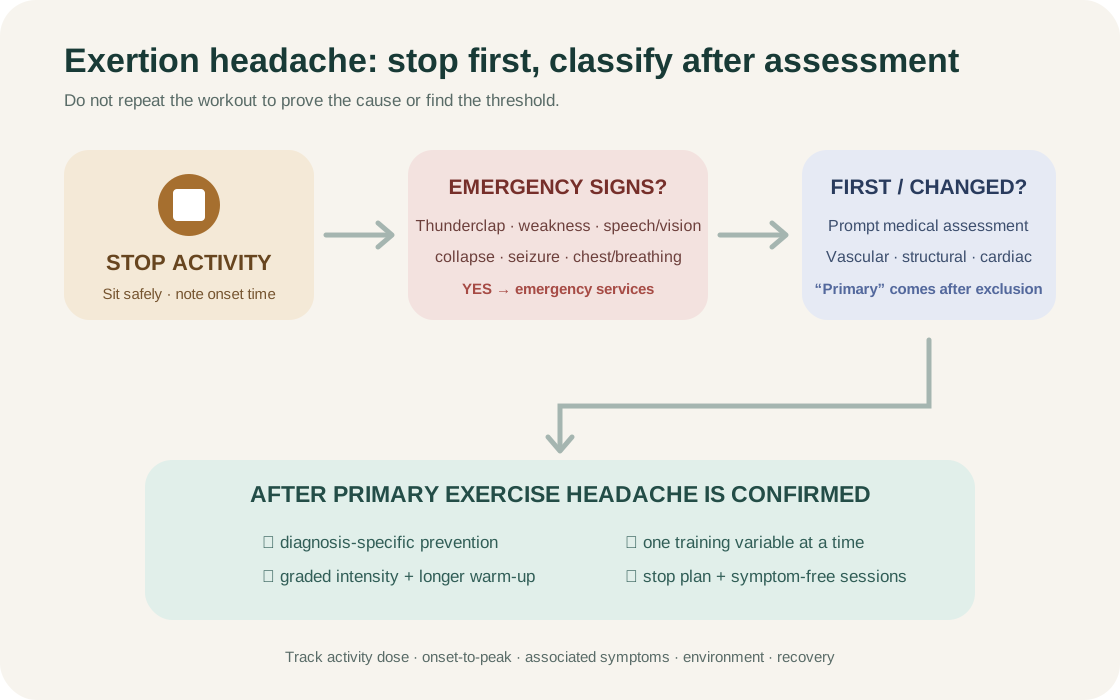
Stop exercising and call emergency services for a headache that reaches maximum intensity within seconds to a minute, or for pain with weakness, speech trouble, confusion, fainting, seizure, double vision, marked neck stiffness, chest pressure, severe breathlessness, or collapse. Arrange prompt medical assessment for the first headache of this type. Do not repeat the workout to “test” it.
What is an exertion headache?
“Exertion headache” and “exercise headache” describe timing, not cause. Running, rowing, swimming, weightlifting, racquet sports, intense intervals, sex, coughing/straining, heavy physical work, and heat or altitude exposure can all precede head pain—but they do not all belong to the same diagnosis.
ICHD-3 reserves primary exercise headache for headache brought on only during or after strenuous physical exercise, lasting under 48 hours, and not better explained by another disorder. Older names include benign exertional headache, but “benign” should not be assumed before evaluation.
Exertion headache symptoms
Primary exercise headache is often described as pulsating or throbbing and commonly affects both sides, but it can be one-sided and have different qualities. It begins during strenuous activity or shortly afterward and can last from minutes to under 48 hours. Nausea and light/sound sensitivity may occur, especially when exercise triggers a migraine phenotype.
No symptom shape proves a primary cause. Secondary exercise headaches can feel identical at first and may add vomiting, loss of consciousness, double vision, neck stiffness, persistent neurological symptoms, or a longer course. A severe secondary cause can also occur without every classic warning sign.
Why the first exercise headache needs assessment
ICHD-3 states that on first occurrence it is mandatory to exclude subarachnoid hemorrhage, arterial dissection, and RCVS. NICE lists headache triggered by exercise among features that should prompt consideration of further investigation and/or referral.
Risk assessment also changes with abrupt onset, new headache after age 40–50, pregnancy/postpartum status, recent head or neck injury, stimulant/vasoactive drug exposure, cancer or immune suppression, abnormal neurological examination, fever, or a marked change from a known pattern. A headache fading after rest does not rule out a vascular event.
Primary vs. secondary exercise headache
| Feature | Primary exercise headache may show | Secondary cause is more concerning when |
|---|---|---|
| Onset | Builds during sustained strenuous effort | Thunderclap, first-ever, or distinctly changed onset |
| Course | Minutes to under 48 hours, full recovery | Persistent/worsening pain or incomplete neurological recovery |
| Associated signs | Throbbing, nausea, light/sound sensitivity | Fainting, seizure, weakness, speech/vision change, neck stiffness |
| Context | Repeated similar attacks after assessment | Injury, postpartum state, systemic illness, chest/breathing symptoms |
| Examination/testing | Appropriate work-up finds no better cause | Abnormal neurological/cardiac/eye findings or vascular/structural evidence |
This table is not a clearance tool. Secondary disease can lack obvious red flags, which is why first-event evaluation matters.
Exertion headache vs. exercise-triggered migraine
Exercise can trigger an ordinary migraine attack in some people. That attack may include a longer headache phase, nausea, movement sensitivity, light/sound sensitivity, aura, or postdrome and may also occur without exercise at other times.
Primary exercise headache is tied specifically to strenuous activity and is classified separately. A person can have both diagnoses. The distinction affects preventive strategy: migraine care considers the whole monthly pattern, while primary exercise-headache planning centers on exertion dose and timing. Track whether non-exercise attacks occur and compare the symptom sequence with the migraine trigger/factor guide.
Exertion headache vs. cough or strain headache
Brief pressure spikes from coughing, sneezing, heavy lifting with breath-holding, bowel straining, laughing, or bending can trigger primary cough headache, another diagnosis of exclusion. Sustained running, swimming, or cycling fits the exercise category more naturally.
Real activities overlap: a deadlift may involve both muscular exertion and Valsalva strain. Record the exact movement, breath pattern, rep/set, and whether pain began with a single strain or accumulated across sustained effort. Do not recreate the maneuver for classification.
Causes of secondary exertion headache
Important alternatives include:
- subarachnoid hemorrhage or another intracranial bleed;
- RCVS, which commonly causes recurrent thunderclap headaches;
- cervical or intracranial arterial dissection;
- structural lesions or obstruction of cerebrospinal-fluid flow;
- Chiari malformation or pressure disorders;
- heat illness, severe dehydration, electrolyte disturbance, or altitude illness;
- cardiac ischemia presenting as exertional head pain, especially with chest/jaw/arm discomfort, breathlessness, sweating, nausea, or cardiovascular risks; and
- acute eye, sinus, infection, or injury-related causes in the appropriate context.
These conditions need different tests and treatment. “I was dehydrated” or “my blood pressure rose during the lift” should remain hypotheses until the dangerous alternatives are addressed.
How exertion headache is diagnosed
The clinician reconstructs the exact activity, onset, time to peak, duration, recovery, associated symptoms, prior headache history, and medical context. Neurological, cardiovascular, neck, and eye examinations may be relevant.
Abrupt or first events often prompt brain and vascular imaging; the exact combination and urgency depend on timing and local protocols. CT, lumbar puncture, MRI/MRA, or CT angiography may be used to evaluate bleeding, dissection, RCVS, structural disease, or pressure problems. Cardiac testing is considered when pain reliably tracks exertion or occurs with cardiac symptoms/risk. A normal basic scan does not automatically establish primary exercise headache if the history calls for vascular or other targeted evaluation.
What causes primary exercise headache?
The mechanism is not established. Proposed explanations include dilation of cranial blood vessels, impaired venous outflow, or an exaggerated pressure response during strenuous activity. Heat, humidity, altitude, and migraine susceptibility are associated contexts in some people.
Those associations are not diagnostic tests. High exercise blood pressure is expected to a degree; one gym reading cannot explain head pain. Hydration and conditioning affect tolerance but do not convert a first thunderclap into a routine training issue.
Exertion headache treatment
Treatment starts with the cause. A secondary disorder receives cause-specific emergency or specialist care. After evaluation confirms primary exercise headache, management can combine activity modification and, when needed, prescribed preventive medicine.
Indomethacin is commonly reported for prevention or pre-exercise use, and beta blockers such as propranolol have been used when attacks are frequent. Evidence comes mainly from case series and clinical experience rather than large randomized trials. NSAID gastrointestinal, kidney, blood-pressure, bleeding, and medication-interaction risks matter; beta blockers can affect heart rate, blood pressure, asthma, and exercise capacity. Dosing and timing belong with a clinician.
If exercise actually triggers migraine, migraine-specific acute or preventive treatment may be more appropriate. Frequent acute medicine use should be tracked by medication days to avoid a medication-overuse pattern.
A safer return-to-exercise plan
Return only after the clinician has addressed the first-event or changed-pattern risk and given an activity boundary. Then a graded plan may include:
- Start below the intensity that previously caused symptoms.
- Use a longer gradual warm-up before high-intensity work.
- Increase one dimension at a time—duration, load, pace, heat, or altitude.
- Avoid breath-holding and straining when technique is a factor; seek qualified coaching if needed.
- Follow individualized hydration, fueling, and heat guidance rather than fixed internet targets.
- Stop for recurrent head pain, neurological symptoms, faintness, chest symptoms, or unusual breathlessness.
Do not “push through” to prove tolerance. The goal is to find a sustainable dose with a documented backup plan, not to reproduce the original event.
Heat, hydration, altitude, and fueling
Hot/humid conditions and altitude can increase physiological strain. Dehydration, missed meals, caffeine/stimulant changes, and insufficient acclimatization can coexist with exercise headache or migraine. They should be recorded without being blamed automatically.
Heat exhaustion can involve heavy sweating, weakness, dizziness, nausea, and headache; altered mental status, collapse, or very high body temperature suggests heat stroke and needs emergency cooling/help. Altitude headache with severe breathlessness at rest, confusion, poor coordination, or chest symptoms also needs urgent descent and care. See dehydration headache for careful fluid-context guidance.
What to record after an event
Once safety is addressed, capture:
- exact activity, set/rep/distance, duration, intensity, and breath pattern;
- whether onset occurred during effort, immediately after, or hours later;
- time from first pain to maximum intensity;
- location, quality, severity, duration, and recovery;
- neurological, visual, neck, vomiting, fainting, chest, and breathing symptoms;
- heart-rate/blood-pressure data only if already measured safely;
- temperature, humidity, altitude, travel, and acclimatization;
- food, fluid, caffeine, supplements, pre-workout or other medicines;
- recent illness/injury and pregnancy/postpartum context; and
- first-ever versus established/changed pattern.
Record symptom-free sessions after clearance too. They help locate an intensity/environment boundary without deliberate provocation.
Frequently asked questions
Are exertion headaches dangerous?
Primary exercise headache is not caused by another disorder, but that diagnosis is made after serious alternatives are excluded. A first, thunderclap, or neurologically complicated event may be dangerous and needs prompt assessment.
How long does an exercise headache last?
ICHD-3 allows primary exercise headache to last less than 48 hours. Duration alone cannot identify the cause; sudden onset and associated symptoms matter more for urgency.
Can lifting weights cause an exertion headache?
Yes. Heavy lifting can involve sustained exertion and brief Valsalva strain. Because cough/strain headache and secondary causes overlap, record the exact movement and seek assessment rather than repeating the lift.
Does hydration prevent exertion headache?
Adequate hydration supports exercise safety, but no universal fluid target prevents primary exercise headache, and improvement after drinking does not exclude a vascular cause. Use individualized guidance for climate, duration, health, and medications.
Can I exercise again after an exertion headache?
Stop the triggering session and obtain assessment for a first, abrupt, or changed event. Return-to-exercise timing depends on what was excluded or diagnosed; after clearance, rebuild intensity gradually with a stop plan.
The practical takeaway
Exertion headache means pain during or after physical effort; primary exercise headache is the diagnosis only after secondary causes are excluded. Treat thunderclap onset, neurological loss, collapse, or cardiac symptoms as emergencies and a first pattern as a reason for prompt assessment. After a primary diagnosis, treatment can include graded activity changes and carefully selected prevention. The most useful record combines the activity dose, onset-to-peak clock, associated symptoms, environment, recovery, and symptom-free sessions—without deliberately provoking another attack.
For frequency planning, read frequent headaches and the medical disclaimer.
Calmraine provides educational information and cannot clear exercise or diagnose exertional pain. Read the medical disclaimer.
Sources
- 4.2 Primary exercise headacheInternational Headache Society · Accessed
- Exercise headaches—Symptoms and causesMayo Clinic · Accessed
- Exercise headaches—Diagnosis and treatmentMayo Clinic · Accessed
- Headaches in over 12s—RecommendationsNICE · Accessed
- Primary Exercise HeadacheCurrent Neurology and Neuroscience Reports / PubMed · Accessed
- Exercise Headache: a ReviewCurrent Pain and Headache Reports / PubMed · Accessed
- Epidemiology of Primary Exercise Headache: A Systematic Review and Meta-AnalysisNeuroepidemiology / PubMed · Accessed