
A caffeine withdrawal headache can begin 12 to 24 hours after you stop or sharply reduce regular caffeine, often feels worst during the next day or two, and usually fades within 2 to 9 days. Fatigue, sleepiness, irritability, low mood, nausea, muscle aches, and difficulty concentrating can occur with it. Not everyone who reduces caffeine develops symptoms, and headache timing alone does not prove withdrawal.
If the headache is sudden and extremely severe, follows a head injury, or comes with weakness, confusion, fainting, fever and a stiff neck, new vision loss, or trouble speaking, seek urgent medical care. Do not assume a new or alarming headache is “just caffeine.”
Caffeine withdrawal headache timeline
The timing is fairly consistent across controlled studies, but the intensity varies widely.
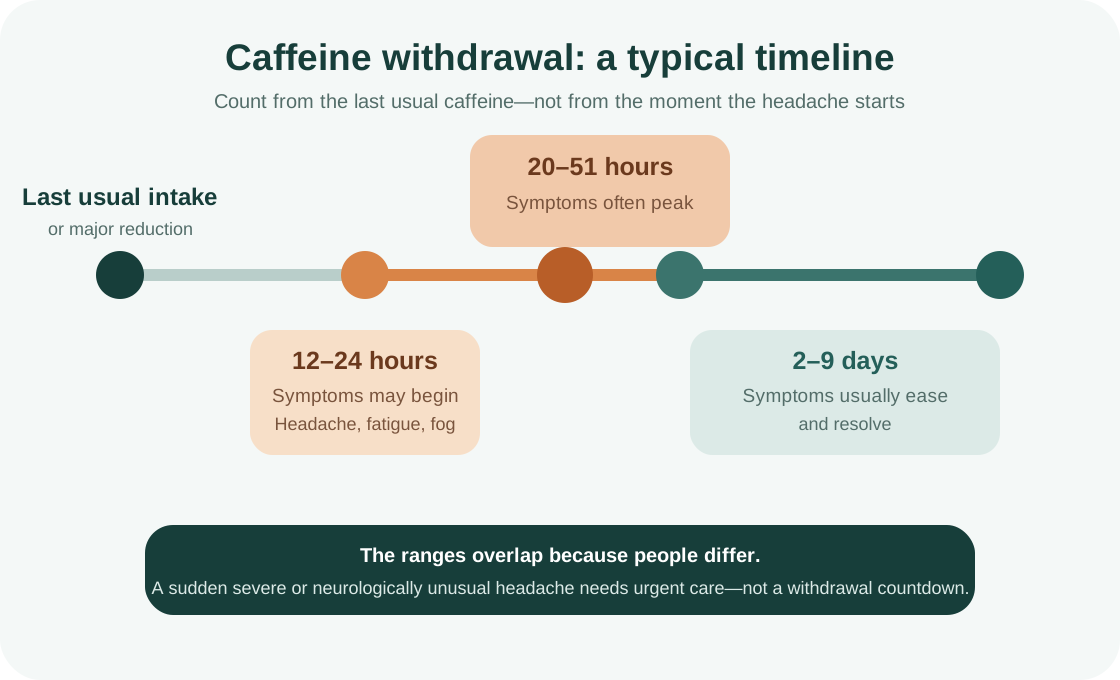
| Time after the last usual caffeine | What may happen |
|---|---|
| First 12 hours | Often no symptoms yet. The absence of an immediate headache does not rule withdrawal in or out. |
| 12–24 hours | Headache, tiredness, drowsiness, irritability, or poor concentration may begin. |
| 20–51 hours | Symptoms are often at their strongest. Work, study, driving, or exercise may feel harder. |
| Days 2–9 | Symptoms generally ease and resolve, though each symptom may improve at a different rate. |
The International Classification of Headache Disorders uses a narrower clinical definition: headache developing within 24 hours after interruption of more than 200 mg per day for over two weeks, then resolving within seven days or promptly after caffeine. That definition helps clinicians classify headache disorders; it is not a minimum amount required for anyone to experience withdrawal. Research has found symptoms after lower habitual intakes too.
What caffeine withdrawal feels like
Headache is the best-known symptom, but the whole pattern often matters more than the pain alone.
Common symptoms include:
- a dull, pressure-like, or throbbing headache;
- pain on both sides of the head, although location varies;
- fatigue, low energy, or unusual sleepiness;
- reduced alertness or “brain fog”;
- difficulty concentrating;
- irritability, low mood, or feeling less motivated;
- nausea; and
- less commonly, muscle aches, stiffness, or a flu-like feeling.
A critical review of 66 experimental and survey studies found headache in about half of controlled withdrawal conditions, while clinically significant distress or functional impairment occurred in a smaller group. In other words, withdrawal is common enough to recognize but not inevitable, and severity ranges from barely noticeable to temporarily disabling.
Why stopping caffeine can cause a headache
Caffeine blocks adenosine receptors in the brain. Adenosine normally contributes to sleep pressure and affects blood-vessel activity. With regular caffeine use, the nervous system adapts to that repeated blockade. A sudden reduction removes the familiar stimulant effect while those adaptations are still present.
The result can include greater adenosine activity, changes in cerebral blood flow, sleepiness, fatigue, and headache. The body then readjusts, which is why symptoms usually resolve rather than continuing indefinitely.
This mechanism does not mean every headache after a missed coffee is withdrawal. A delayed meal, poor sleep, infection, stress, dehydration, a medication change, or migraine can occur at the same time.
Where caffeine may be hiding
Before cutting back, list actual products rather than counting only cups of coffee. Caffeine can come from:
- brewed coffee, espresso, instant coffee, and cold brew;
- black, green, white, and some herbal-blend teas;
- cola and other caffeinated soft drinks;
- energy drinks, shots, powders, gums, and chews;
- chocolate and cocoa;
- pre-workout or weight-loss supplements;
- some cold, pain, and migraine medicines; and
- decaffeinated coffee or tea, which can still contain small amounts.
Check the serving size as well as the number on the label. One bottle may contain more than one serving. Coffee-shop caffeine can vary substantially by bean, preparation, and size, so a label or the company’s current nutrition information is more useful than a universal “one cup” estimate.
A practical way to reduce caffeine gradually
Abruptly stopping is more likely to produce withdrawal than a gradual reduction. If there is no medical reason to stop immediately, use this adaptable process:
- Measure your baseline for three ordinary days. Record every caffeinated product, serving size, and time. Include medicines and supplements.
- Choose one repeatable source to change. For example, make one drink smaller, mix regular and decaf, steep tea for less time, or replace one serving with a caffeine-free option.
- Reduce by a modest step. The American Migraine Foundation suggests about 25% per week. Treat that as a starting framework, not a requirement.
- Hold the new level long enough to observe it. If headache or fatigue is disruptive, make the next reduction smaller or wait longer before the next step.
- Keep timing consistent while reducing amount. Changing both the dose and the time every day makes symptoms harder to interpret.
- Plan the hardest step for lower-demand days. The first 24–48 hours after a reduction may affect concentration, driving comfort, or work.
- Recalculate as products change. Switching from one coffee or energy drink to another can accidentally increase intake even when the container looks smaller.
You do not need to pursue zero caffeine unless that is your goal or a clinician has advised it. Some people reduce to a stable amount that fits their sleep, migraine, anxiety, pregnancy, heart, or medication needs.
What may help a withdrawal headache
Most caffeine withdrawal symptoms are temporary. Practical supportive steps include:
- protect sleep time and keep the wake time reasonably steady;
- drink normally and respond to thirst rather than forcing excessive water;
- eat regular meals, especially if caffeine previously replaced breakfast;
- reduce demanding tasks during the expected peak when possible;
- use a quiet, dimmer environment if light or sound aggravates the headache;
- take gentle movement breaks if stiffness is part of the pattern; and
- follow the label and your clinician’s advice for any pain medicine you already use safely.
Taking caffeine again can relieve true withdrawal quickly, but it also resets the reduction and can continue the dependence cycle. If symptoms are severe, a clinician or pharmacist can help you decide whether a smaller, slower taper makes more sense than repeatedly stopping and restarting.
Do not add a new pain medicine without checking the active ingredients. Some combination headache products already contain caffeine, and frequent use of acute headache medicine can contribute to medication-overuse headache.
Caffeine withdrawal, migraine, or another headache?
Withdrawal can trigger a migraine attack in a susceptible person, and the two can overlap.
| Pattern | Clues that may fit |
|---|---|
| Caffeine withdrawal | A clear reduction from a regular pattern; onset the next day; fatigue, drowsiness, irritability, or brain fog; improvement over several days |
| Migraine | Moderate or severe pain, nausea, light/sound sensitivity, worsening with activity, possible aura, and a familiar attack pattern |
| Dehydration or missed meals | Thirst, dry mouth, darker urine, heat/exertion, or a long gap between meals—but these clues are not diagnostic |
| Infection | Fever, sore throat, cough, congestion, body aches, or sick contacts |
| Medication effect | A new medicine, changed dose, missed dose, or a product that contains caffeine |
Use the comparison to organize observations, not to self-diagnose. Read more about migraine versus other headaches and dehydration headache patterns.
Who should get individual advice before changing caffeine?
Talk with a healthcare professional or pharmacist before making a large change if you:
- are pregnant, breastfeeding, or trying to conceive;
- have migraine or frequent headaches;
- have an arrhythmia, uncontrolled blood pressure, severe anxiety, or a sleep disorder;
- take stimulant, heart, asthma, antibiotic, psychiatric, or other interacting medicines;
- use a caffeine-containing prescription or over-the-counter medicine;
- consume high-dose energy products or concentrated powders; or
- need to maintain alertness for safety-critical driving, machinery, shift work, or caregiving.
Children and teenagers are more sensitive to caffeine and should not use an adult taper plan without professional guidance.
Track the change without blaming every symptom on it
For each reduction, record:
| Caffeine pattern | Headache | Other symptoms | Context and function |
|---|---|---|---|
| Product, serving, estimated caffeine if known, time, and what changed | Start/end, location, intensity, feel, movement sensitivity | Sleepiness, nausea, mood, concentration, light/sound sensitivity | Sleep, meals, fluids, illness, medicines, work or school impact |
Also record counterexamples: a reduction without headache, and a headache when caffeine did not change. After several weeks, those entries are more informative than a single bad day. Caffeine can be one possible migraine factor among several rather than the sole cause.
When to contact a clinician
Arrange medical advice when the headache:
- persists beyond the expected withdrawal period;
- is becoming more frequent or severe;
- repeatedly disrupts work, school, sleep, or normal activity;
- requires frequent acute pain medicine;
- begins after a medicine or supplement change;
- is new during pregnancy or soon after delivery; or
- does not match your usual headache pattern.
Seek urgent help for a sudden “worst headache,” new weakness or numbness, trouble speaking, confusion, seizure, fainting, fever with neck stiffness, new loss of vision, severe eye pain, or headache after significant injury.
Frequently asked questions
How long does a caffeine withdrawal headache last?
It commonly improves within a few days. Research describes an overall withdrawal range of about 2 to 9 days, while the ICHD-3 classification expects caffeine-withdrawal headache to resolve within seven days after complete withdrawal. Longer-lasting or worsening headache deserves another explanation and medical assessment.
How soon after stopping caffeine does a headache start?
Symptoms most often begin 12 to 24 hours after stopping or sharply reducing regular caffeine. They commonly peak around 20 to 51 hours.
Can one missed coffee cause a withdrawal headache?
Yes, if that coffee is part of a regular caffeine pattern. The chance and severity tend to rise with greater habitual intake, but symptoms have been documented at relatively low daily amounts.
Does drinking coffee fix a caffeine withdrawal headache?
Caffeine can rapidly relieve true withdrawal, but that response is not a safe diagnostic test and may continue the cycle. A gradual, planned reduction is usually easier than repeated abrupt stops and rescues.
Can decaf help when reducing caffeine?
Mixing regular and decaf or replacing one serving can create a smaller step. Decaf is not always completely caffeine-free, so check the product information if precision matters.
Is caffeine withdrawal dangerous?
Caffeine withdrawal itself is generally temporary and not life-threatening, but symptoms can impair concentration and function. The danger is assuming an unrelated urgent headache is withdrawal or attempting safety-critical work while severely affected.
Make the change measurable, not miserable
A caffeine withdrawal headache is most useful to understand as a temporary response to a change in a regular pattern. Inventory every source, reduce in repeatable steps, protect the first two days after each change, and slow the plan if symptoms interfere with daily life.
Calmraine can record caffeine timing, pain, symptoms, and other possible factors together. It does not diagnose withdrawal, but a clear timeline can help you and a healthcare professional see whether the pattern repeats.
Sources
- Caffeine-withdrawal headacheInternational Headache Society · Accessed
- Caffeine WithdrawalStatPearls / NCBI Bookshelf · Accessed
- A critical review of caffeine withdrawal: empirical validation of symptoms and signs, incidence, severity, and associated featuresPsychopharmacology / PubMed · Accessed
- CaffeineMedlinePlus · Accessed
- Caffeine for Headaches: Helpful or Harmful?Nutrients / PubMed Central · Accessed
- Understanding Caffeine HeadacheAmerican Migraine Foundation · Accessed