
Cluster headaches are attacks of severe or very severe, strictly one-sided pain around the eye or temple, usually lasting 15–180 minutes and accompanied by same-side eye/nose/eyelid signs and/or marked restlessness. They occur in a recognizable daily pattern during active periods called bouts, then may remit for months or years. “Cluster” does not mean any group of headaches close together.
Cluster headache is a trigeminal autonomic cephalalgia (TAC) and needs professional diagnosis. The pain often escalates too rapidly for ordinary tablets; effective attack treatment usually requires prescribed high-flow oxygen and/or a fast non-oral triptan, plus prevention during the bout.
Get emergency help for thunderclap onset, new weakness/numbness, speech trouble, confusion, fainting, seizure, or sudden persistent vision loss. Seek urgent assessment for a first newly drooping eyelid or unequal pupils, a painful red eye with blurred vision, or a first suspected cluster bout.
Cluster headache symptoms and timing
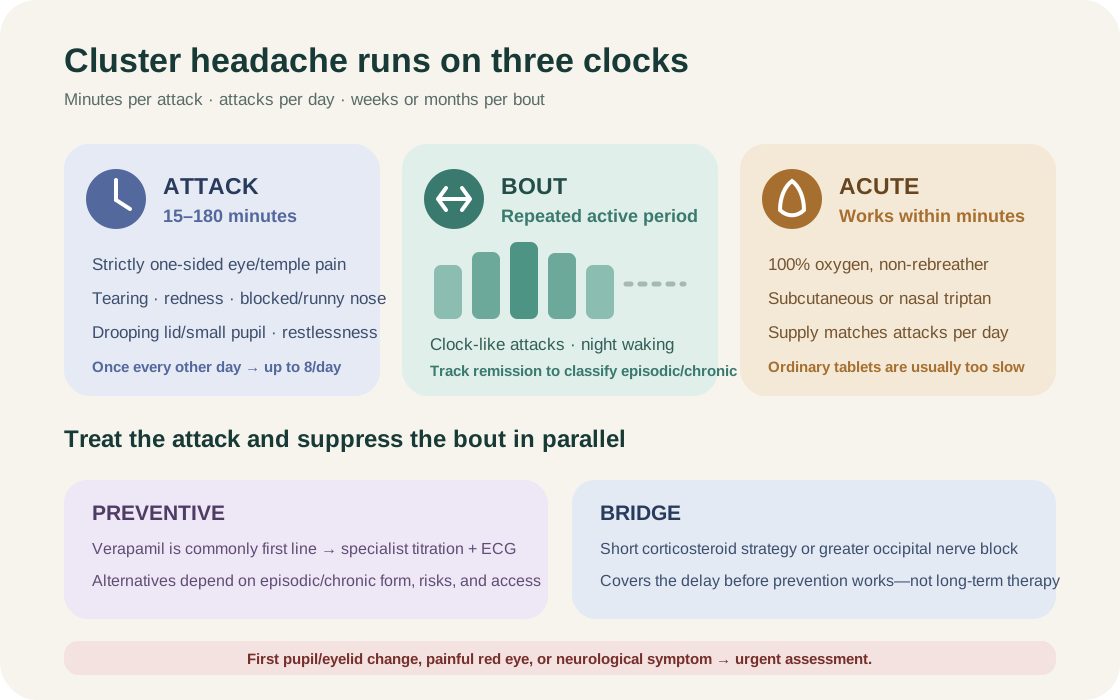
ICHD-3 describes the core pattern as:
- severe or very severe pain around/above one eye and/or the temple;
- pain that stays strictly on one side during an attack;
- untreated attack duration of 15–180 minutes;
- frequency from once every other day to eight times daily during active periods;
- at least one same-side cranial autonomic sign or restlessness/agitation; and
- a recurring attack history not better explained by another disorder.
Same-side signs can include red or tearing eye, blocked or runny nose, eyelid swelling, forehead/facial sweating, a smaller pupil, or a drooping eyelid. People often pace, rock, press the head, or cannot keep still. Nausea and light/sound sensitivity can occur too, so their presence does not automatically make the attack migraine.
What a cluster headache attack feels like
Pain is commonly described as piercing, drilling, burning, or like intense pressure behind the eye. It rises quickly, is excruciating, and can make normal conversation or stillness impossible. The eye/nose signs are usually on the painful side and often build with the pain.
The attack can end almost as quickly as it began, leaving exhaustion or anticipatory fear. Between attacks in a bout, a person may feel normal or have lower-level residual discomfort. Cluster headache is among the most painful neurological disorders; psychological distress and sleep loss deserve direct care, not minimization.
What is a cluster headache bout?
A bout (cluster period) is a stretch of recurring attacks, often for weeks or months. Attacks may appear at similar clock times, wake someone from sleep, and occur one or more times a day. Remission is an attack-free interval between bouts.
- Episodic cluster headache: bouts lasting from seven days to one year, separated by pain-free remission of at least three months.
- Chronic cluster headache: attacks continue for at least one year without remission, or remission lasts less than three months.
These formal labels describe remission history, not pain severity. A current first bout cannot always be classified until enough time passes.
What causes cluster headaches?
The exact cause is not fully known. The pattern involves trigeminal pain pathways and the autonomic nervous system. The striking daily and seasonal rhythmicity points toward hypothalamic and circadian biology. Genetics contribute in some families, but most people do not have a simple inherited cause.
Alcohol can trigger an attack quickly for some people during an active bout, while having no effect in remission. That observation must not be used as a diagnostic test. Strong odors, heat, or exertion are reported by some people, but avoidance does not replace acute and preventive treatment. Smoking is associated with cluster headache but is not a sufficient cause and does not explain every case.
Cluster headache vs. migraine
| Feature | Cluster headache | Migraine |
|---|---|---|
| Untreated duration | 15–180 minutes | Usually 4–72 hours in adults |
| Frequency | Up to multiple attacks daily during a bout | Often less frequent, though chronic migraine can be near-daily |
| Behavior | Restlessness/agitation is characteristic | Movement often worsens pain; lying still is common |
| Eye/nose signs | Prominent, same-side signs are typical | Congestion/tearing can occur but are less defining |
| Pattern | Clock-like attacks and multiweek/month bouts | Variable attack timing; menstrual and other patterns can occur |
Severe one-sided pain, nausea, and light sensitivity can occur in both. A person can also have both disorders. Treatment timing and formulations differ, which makes accurate diagnosis important.
Other conditions that can look similar
Other TACs include paroxysmal hemicrania, SUNCT/SUNA, and hemicrania continua. They differ mainly in attack duration/frequency, continuity, autonomic features, and response to specific treatment. Trigeminal neuralgia causes very brief electric-shock facial pain, often triggered by touch or chewing.
Acute angle-closure glaucoma, carotid or cavernous-sinus disorders, pituitary disease, infection, and other secondary conditions can produce orbital pain, redness, pupil/eyelid change, or neurological symptoms. This is why first-bout assessment and sometimes imaging matter.
How cluster headache is diagnosed
Diagnosis uses the attack and bout history plus neurological/eye examination. A clinician will ask about exact duration, maximum daily frequency, side-lock, eye/nose signs, restlessness, nighttime timing, remission, family history, medicine response, and red flags.
NICE recommends discussing neuroimaging for a first bout with a clinician experienced in headache or a neurologist. MRI or other testing may be selected to exclude structural or vascular mimics, especially with abnormal examination, atypical features, persistent pupil/eyelid findings, or changed pattern. A scan does not itself confirm cluster headache.
Acute cluster headache treatment
Attacks escalate fast, so acute treatment must work within minutes. NICE recommends prescribed:
- 100% oxygen, delivered at at least 12 litres per minute through a non-rebreathing mask with a reservoir bag; and/or
- a subcutaneous or nasal triptan, selected for medical suitability and supplied in enough quantity for the expected attack frequency.
European guidance strongly supports high-flow oxygen and subcutaneous sumatriptan. Oxygen can be repeated without medication-overuse headache and has few systemic effects, but access and equipment training are essential. Triptans have cardiovascular and maximum-use constraints and require an individualized supply plan.
Paracetamol/acetaminophen, NSAIDs, opioids, ergots, and oral triptans are not recommended by NICE for acute cluster attacks because onset is too slow and the tradeoffs are poor. That is a treatment-specific point—not a reason to assume severe orbital pain is cluster headache before diagnosis.
Home oxygen safety
Cluster oxygen is prescribed medical oxygen, not a consumer oxygen can or improvised setup. The non-rebreathing mask, reservoir, regulator, flow, cylinder size, and delivery plan all matter.
- Keep cylinders secured upright according to supplier instructions.
- Keep oxygen away from smoking, vaping, flames, gas stoves, candles, sparks, and flammable oils/greases.
- Learn how to check the supply before a bout peaks and how to order replacement/ambulatory cylinders.
- Use only the prescribed setup; do not alter regulators or tubing.
- Have a backup acute plan for travel, empty cylinders, or nonresponse.
The prescription should account for attacks per day and the time required per treatment—not merely provide one small cylinder.
Preventive and bridge treatment
Prevention aims to suppress attacks throughout the bout. Verapamil is widely recommended first line, but cluster doses can affect cardiac conduction; specialist selection, dose titration, medication-interaction review, and repeat ECG monitoring are important.
Because verapamil and other preventives take time to work, a clinician may use transitional treatment such as a short corticosteroid course or a greater occipital nerve block. Steroids are not a durable prevention strategy because repeated exposure carries important risks.
Alternatives in specialist care can include lithium, topiramate, galcanezumab for episodic cluster in some jurisdictions, or non-invasive vagus nerve stimulation. Evidence and approval/access differ for episodic versus chronic cluster headache. Refractory disease belongs in specialist headache care; invasive procedures are reserved for highly selected cases.
Planning for the next bout
An effective plan is prepared during remission, not rebuilt during the first night of severe attacks. It should specify:
- How to recognize a familiar bout and whom to contact.
- Acute oxygen/triptan access and maximum-use limits.
- When and how prevention starts, including ECG scheduling.
- A bridge plan if attacks begin before prevention works.
- What counts as nonresponse or a dangerous pattern change.
- Travel, work, sleep, and mental-health support.
Do not stop preventive medicine or improvise dose changes merely because a bout seems to have ended; follow the agreed taper/stop plan.
Track attacks and bouts separately
For every attack, record start/end, exact side, eye/nose/eyelid signs, restlessness, acute treatment timing, time to relief, and recurrence. For the bout, record first/last attack date, attacks per day, nighttime pattern, remission, prevention start/change, and adverse effects.
Count oxygen treatments and triptan doses separately. A 24-hour attack clock helps ensure supply and safety decisions reflect the real daily pattern.
Frequently asked questions
Why are they called cluster headaches?
The attacks cluster into active bouts, often recurring at similar times for weeks or months, followed by remission. The name does not mean several unrelated headaches close together.
How long does a cluster headache last?
An untreated attack usually lasts 15–180 minutes. The bout containing those attacks can last weeks or months. Chronic cluster headache is classified by lack of long remission, not a single nonstop attack.
Can cluster headaches switch sides?
Pain is strictly one-sided during an attack. Many people remain on the same side through a bout; side changes can occur between attacks or bouts. A new pattern still deserves review.
Does oxygen really treat cluster headache?
Yes. High-flow 100% oxygen through a prescribed non-rebreathing setup is a guideline-supported acute treatment. Ordinary room-air devices, low-flow nasal tubing, and consumer oxygen products are not equivalent.
Are cluster headaches dangerous?
Primary cluster headache itself is not usually caused by a dangerous lesion, but similar symptoms can come from urgent eye, vascular, or structural disorders. The extreme pain and sleep disruption also create serious functional and mental-health risk, so rapid effective care matters.
The practical takeaway
Cluster headaches are short, extremely severe, side-locked attacks with same-side autonomic signs and/or restlessness, recurring in bouts. Diagnosis requires the attack clock, daily frequency, bout/remission history, examination, and first-bout assessment. Fast prescribed oxygen and/or non-oral triptan treats attacks; verapamil and other specialist strategies suppress the bout. Prepare oxygen supply, prevention, monitoring, and backup care before the next attack—and never dismiss a first pupil/eyelid or neurological change as “just cluster.”
For comparisons, read migraine vs. headache, different kinds of headaches, and the medical disclaimer.
Sources
- Cluster headacheInternational Headache Society · Accessed
- Headache—Hope through researchNational Institute of Neurological Disorders and Stroke · Accessed
- Cluster headachesNHS · Accessed
- Headaches in over 12s—RecommendationsNICE · Accessed
- Treatments for cluster headacheNICE · Accessed
- European Academy of Neurology guidelines on the treatment of cluster headacheEuropean Journal of Neurology / PubMed · Accessed
- Cluster headache treatment optionsAmerican Migraine Foundation · Accessed