Caffeine can help some headaches, cause others, and make a headache pattern harder to interpret. It can boost the effect of certain pain medicines, relieve caffeine withdrawal, disturb sleep or aggravate symptoms in sensitive people, and contribute to medication overuse when caffeine-containing headache products are taken frequently. The effect depends on the product, amount, timing, regularity, and your headache pattern.
There is no single “caffeine headache” with one cause. A sudden extremely severe headache, new weakness or numbness, confusion, trouble speaking, fainting, seizure, fever with a stiff neck, new vision loss, or headache after significant injury needs urgent medical assessment—not a coffee experiment.
Caffeine headache: the four roles caffeine can play
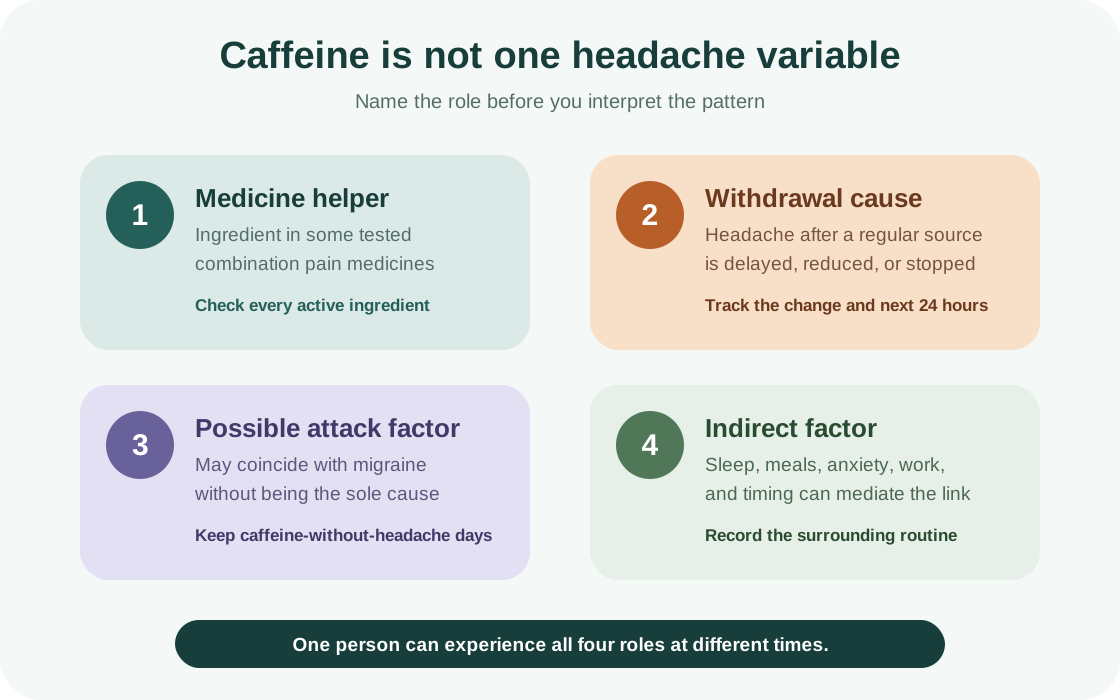
| Role | Typical context | What to inspect |
|---|---|---|
| Medicine helper | Caffeine is an ingredient in a labeled combination pain medicine | Exact active ingredients, dose, treatment day, and response |
| Withdrawal cause | A regular caffeine source is delayed, reduced, or stopped | Last usual intake, size of change, onset over the next 12–24 hours |
| Possible migraine factor | An attack follows caffeine use, but not consistently | Amount, timing, other factors, and caffeine days without migraine |
| Indirect factor | Caffeine affects sleep, meals, anxiety, or routine | Late use, sleep timing, skipped food, stress, and next-day symptoms |
These roles can overlap. A late caffeinated pain medicine might help pain that evening, disrupt sleep, and then be followed by another headache. That does not prove which link mattered most.
Why caffeine can help a headache
Caffeine blocks adenosine receptors and affects alertness, blood-vessel activity, and pain signaling. It is also used as an adjuvant—an ingredient added to improve another pain reliever’s effect.
A Cochrane review of 20 randomized, double-blind studies covering several acute pain conditions found that adding caffeine to common analgesics produced good pain relief in about 5% to 10% more participants than the same analgesic alone. Headache was among the studied conditions, though the review also included dental, postoperative, postpartum, and menstrual pain.
That evidence supports specific tested combinations; it does not mean coffee is interchangeable with a medicine. A brewed drink varies in caffeine, enters the body differently, and does not supply the other active ingredients. Adding coffee or a caffeine pill to a combination medicine can unintentionally duplicate caffeine.
Why caffeine can cause a headache
Three patterns are often confused.
Withdrawal after a missed or reduced usual amount
Regular caffeine use produces adaptation. When intake falls suddenly, headache, fatigue, drowsiness, irritability, nausea, and poor concentration can begin 12–24 hours later. Symptoms often peak during the next day or two. The complete caffeine withdrawal headache timeline explains gradual reduction and the usual 2–9 day course.
A possible attack factor
Some people report caffeine before migraine attacks, but evidence does not support calling it a universal trigger. Studies use different definitions and amounts, and caffeine may be consumed during early migraine symptoms—when tiredness, yawning, or food cravings have already begun. That can make caffeine look like the cause even when the attack was underway.
To test the pattern fairly, include caffeinated days without migraine and migraine days without unusual caffeine. One coincidence is not enough.
An indirect sleep-and-routine effect
Caffeine later in the day can delay or fragment sleep in sensitive people. It can also accompany a rushed morning, missed meal, long shift, stress, or energy-drink use. The next headache may relate to the combined change in sleep and routine rather than caffeine alone.
Does caffeine help migraine?
It can, but the answer depends on what “caffeine” means.
Some evidence supports caffeine-containing combination medicines for acute migraine or headache. Caffeine may enhance the analgesic component, and a familiar caffeinated drink may also relieve withdrawal occurring during an attack. For other people, caffeine contributes to jitteriness, nausea, light sensitivity, sleep disruption, or a repeated withdrawal cycle.
The practical question is not “Is caffeine good or bad for migraine?” It is:
Which product did I use, was it part of my usual pattern, what other active ingredients were present, when did symptoms start, and did the same thing happen on comparable days?
If migraine attacks are frequent or acute treatment often fails, a clinician can build a specific treatment plan. Repeatedly adding more caffeine makes it harder to see whether the underlying migraine treatment is working.
How much caffeine is too much for headaches?
The FDA cites 400 mg per day as an amount not generally associated with negative effects for most healthy adults. That is a broad population safety reference, not a headache target and not a promise that 400 mg will suit an individual.
For people with episodic migraine, the American Migraine Foundation discusses a more conservative ceiling of about 200 mg per day, or one to two caffeinated beverages, while emphasizing individual variation and consistency. Someone may experience sleep disruption, palpitations, anxiety, reflux, or headache at a lower amount.
Pregnancy, breastfeeding, age, heart rhythm conditions, blood pressure, anxiety, sleep disorders, and interacting medicines change the decision. Children and teenagers should not use the adult figure. Ask a healthcare professional for a personal limit when any of these apply.
Caffeine amounts vary more than “cups” suggest
A cup is not a dependable unit. Brew method, bean, steep time, concentrate, serving size, and brand can produce very different amounts.
Use this order of evidence:
- the current product label;
- the manufacturer or café’s current nutrition data;
- a trusted generic estimate only when better information is unavailable; and
- “unknown” instead of a falsely precise total.
Audit coffee, espresso, tea, cola, energy drinks, chocolate, pre-workout products, caffeine tablets, gum, cold medicine, and pain medicine. Decaf may contain a small amount too. Record the whole package’s servings, not just the front-label number.
Check headache medicines for hidden caffeine
Read the active ingredients panel. Caffeine may be combined with acetaminophen/paracetamol, aspirin, or other medicines. Product names and formulations differ by country and can change, so brand recognition is not enough.
For every acute medicine, record:
- exact product name and formulation;
- every active ingredient and labeled strength;
- number of tablets, capsules, or packets used;
- date and time;
- whether another product with the same ingredient was taken; and
- pain and function before and after the labeled response interval.
Do not stack a caffeinated medicine, caffeine tablet, energy drink, and coffee without counting them together. A pharmacist can check duplication, interactions, and whether a product is suitable with your other conditions.
Caffeine and medication-overuse headache
Medication-overuse headache is associated with frequent use of acute headache medicines in someone with a pre-existing headache disorder. The ICHD-3 specifically includes caffeine as an adjuvant in its combination-analgesic category.
The important unit is treatment days, not just tablets. Taking several doses on one day is one treatment day for a diary, although every dose still matters for safety. Do not wait for a self-calculated diagnostic threshold before asking for help.
Talk with a clinician when you need acute headache medicine on multiple days most weeks, the medicine works for less time, morning headache becomes common, or attacks are becoming more frequent. Do not abruptly stop a medicine that has been prescribed or used frequently without guidance; withdrawal and the underlying headache both need a plan.
Should you drink coffee when a headache starts?
Use this quick check before deciding:
- Is this headache new, sudden, severe, or neurologically unusual? If yes, seek medical care instead of testing caffeine.
- Did you miss a regular caffeine source? A familiar next-day pattern may fit withdrawal, but repeated rescue continues the cycle.
- Does your headache medicine already contain caffeine? Check before adding a drink or supplement.
- Is it late enough to disrupt sleep? Short-term relief may trade against next-day risk.
- Do caffeine, palpitations, anxiety, pregnancy, or interacting medicines require a personal limit? Use professional advice rather than a general internet figure.
- Are you treating headaches frequently? Review the pattern instead of escalating caffeine.
If you already have a clinician-approved acute plan, follow that plan and the product label. Coffee is not a substitute for prescribed migraine treatment.
Run a cleaner caffeine-and-headache experiment
Avoid dramatic stop-start tests. For two to four weeks, keep the caffeine pattern reasonably stable and record:
| Exposure | Headache | Response | Competing context |
|---|---|---|---|
| Product, amount if known, time, usual/unusual, medicine ingredients | Onset, intensity, feel, migraine symptoms, function | What you took, time, relief, recurrence, side effects | Sleep, meals, stress, illness, menstrual timing, hydration, other medicines |
Then look for repeated contrasts:
- similar caffeine with and without headache;
- similar headaches with and without caffeine changes;
- weekends versus workdays;
- late versus early intake;
- beverage caffeine versus a labeled medicine; and
- abrupt reduction versus a stable lower pattern.
Change one repeatable variable at a time. The migraine trigger tracking guide shows how to use counterexamples and avoid restrictive conclusions.
When to seek medical advice
Arrange routine care when headaches are becoming more frequent, caffeine or acute medicine feels necessary to function most days, sleep is persistently disrupted, symptoms continue despite a stable pattern, or you want to reduce a high regular intake.
Seek urgent care for a sudden “worst headache,” new weakness, numbness, confusion, trouble speaking, seizure, fainting, fever with neck stiffness, new loss of vision, severe eye pain, pregnancy-related new severe headache, or headache after significant injury.
Frequently asked questions
Can too much caffeine cause a headache?
Yes. A high or unusual amount may aggravate headache in some people, while regular high intake increases the opportunity for withdrawal when the timing changes. Sleep disruption and caffeine-containing medicine use can also contribute indirectly.
Can a small amount of caffeine help a headache?
Caffeine can enhance some formulated pain medicines, and it may relieve withdrawal. A beverage alone is less predictable and should not be treated as equivalent to a tested medicine combination.
Why does coffee sometimes help and sometimes hurt?
The context changes. It may correct withdrawal one day, accompany early migraine symptoms another day, help a medicine, or disturb sleep. Product, amount, timing, regularity, and other symptoms distinguish these roles.
Is caffeine a migraine trigger?
It can be a possible factor for some people, but it is not universal. Record counterexamples and avoid removing every caffeinated food or drink after one attack.
Can caffeine cause rebound headaches?
Withdrawal after regular caffeine use can cause headache. Separately, frequent use of caffeine-containing combination pain medicine can be part of medication-overuse headache. “Rebound” is often used loosely for both, so name the pattern precisely.
Is 400 mg of caffeine safe if I have migraine?
The FDA’s 400 mg figure is a general reference for most healthy adults, not migraine guidance. AMF discusses a lower 200 mg ceiling for episodic migraine, and individual needs may be lower still.
Separate the role before changing the routine
Caffeine is neither a universal headache remedy nor a universal trigger. The most useful approach is to identify the exact source, keep medicine ingredients separate from drinks, record timing and counterexamples, and review frequent treatment days early.
Calmraine can log caffeine as a possible factor and caffeine-containing products as medicines. It cannot decide whether caffeine helped or caused an attack, but it can keep the evidence organized for that conversation.
Sources
- Caffeine for Headaches: Helpful or Harmful?Nutrients / PubMed Central · Accessed
- Caffeine and Primary (Migraine) Headaches—Friend or Foe?Frontiers in Neurology / PubMed Central · Accessed
- Caffeine as an analgesic adjuvant for acute pain in adultsCochrane · Accessed
- Medication-overuse headacheInternational Headache Society · Accessed
- Understanding Caffeine HeadacheAmerican Migraine Foundation · Accessed
- Spilling the Beans: How Much Caffeine is Too Much?U.S. Food and Drug Administration · Accessed
- CaffeineMedlinePlus · Accessed