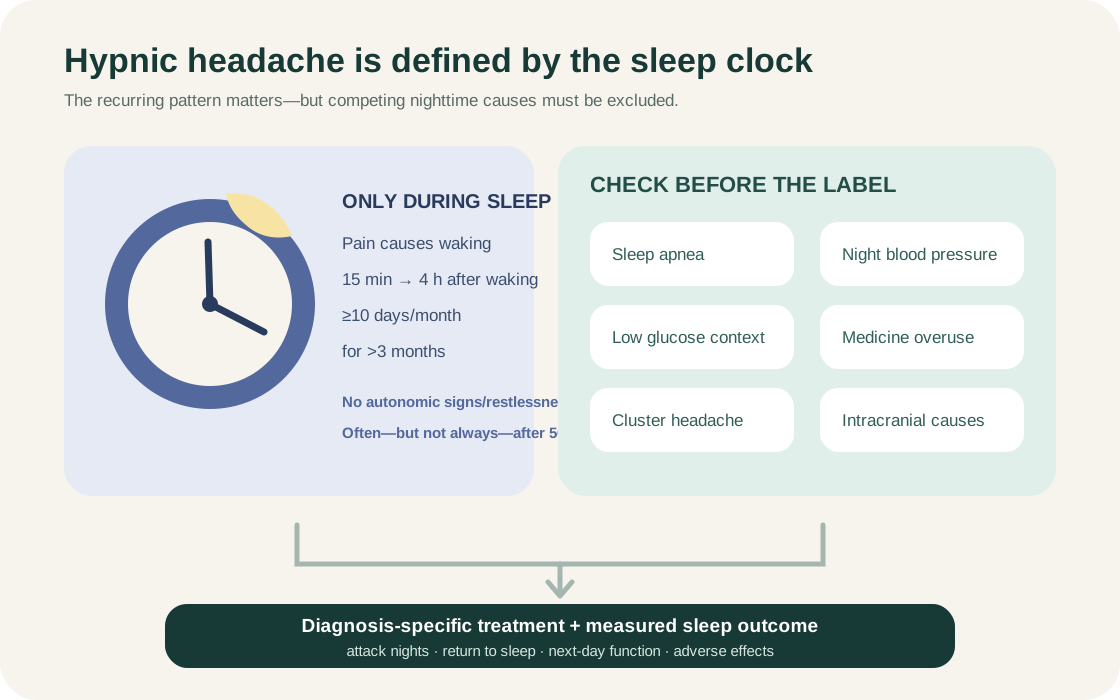
Hypnic headache is a rare primary headache disorder that develops only during sleep and wakes the person. Attacks usually last 15 minutes to four hours after waking and recur frequently, often at a similar clock time. The nickname “alarm clock headache” describes that pattern, but a timed nighttime headache is not automatically hypnic headache.
Other causes of sleep-related headache—including sleep apnea, nighttime high blood pressure, low blood glucose, medication overuse, cluster headache, and intracranial disease—must be considered before the diagnosis is made.
Arrange prompt medical assessment for a new headache that repeatedly wakes you, especially after age 50. Seek emergency help for a thunderclap headache, new weakness/numbness, speech trouble, confusion, seizure, fainting, sudden vision loss, fever with marked neck stiffness, or headache after significant injury.
What is a hypnic headache?
Hypnic headache belongs to the ICHD-3 group “other primary headache disorders.” Its defining feature is unusually strict: attacks develop only during sleep and cause awakening. A person may wake, notice pain, get up or move around, and then return to sleep after it resolves.
Most people first develop the pattern after age 50, but younger adults and children have been reported. Age supports recognition; it is not a requirement. Because new headache later in life also raises concern for secondary causes, the typical age makes evaluation more—not less—important.
Hypnic headache symptoms
Pain is often dull or throbbing and mild to moderate, but severe attacks occur. It commonly affects both sides of the head, although one-sided pain is possible. Many people report one attack per night; some have more than one.
ICHD-3 excludes the prominent same-side tearing, nasal congestion, drooping eyelid, and restlessness characteristic of trigeminal autonomic headaches. Yet real hypnic-headache series include some migraine-like features, including nausea or light/sound sensitivity. The diagnosis rests more on the sleep-only recurring pattern and exclusion work than on one pain adjective.
Sleep disruption creates its own burden: fatigue, anxiety about bedtime, reduced concentration, falls risk during nighttime waking, and impaired driving the next day. Those functional effects belong in the treatment decision.
Hypnic headache diagnostic criteria
ICHD-3 requires recurrent attacks with all of the following:
- The headache develops only during sleep and causes waking.
- It occurs on at least 10 days per month for more than three months.
- It lasts from 15 minutes to four hours after waking.
- There are no cranial autonomic symptoms or restlessness.
- Another ICHD-3 diagnosis or disorder does not better explain it.
These are classification criteria, not instructions to wait three months before seeking care. A clinician can investigate an emerging pattern and may use “probable hypnic headache” when one criterion is not yet met.
Hypnic headache vs. morning headache
A hypnic attack wakes the person from sleep. A morning headache is noticed on waking at the usual time and may have started before, during, or after the final sleep period. Morning headaches have a broader differential that includes sleep apnea, bruxism, migraine, medication/caffeine withdrawal, sleep loss, and carbon monoxide exposure.
Record whether pain itself caused awakening, whether an alarm or another symptom woke you first, and whether headache also occurs during naps. Read the morning-headaches guide for the on-waking pattern.
Hypnic headache vs. cluster headache
Both can wake someone at a similar time. Cluster headache is typically excruciating, strictly one-sided around the eye/temple, lasts 15–180 minutes, and includes same-side eye/nose/eyelid signs or marked restlessness. It occurs in bouts and can also happen while awake.
Hypnic headache is often bilateral and less severe, has no defining autonomic signs or restlessness, and develops only during sleep. The distinction affects treatment: oxygen and fast non-oral triptans are central to cluster attacks, while hypnic headache uses a different preventive strategy. See the cluster-headaches guide.
| Feature | Hypnic headache | Cluster headache | SUNCT / SUNA |
|---|---|---|---|
| Onset during sleep | Always, by definition | Common but can occur while awake | Rarely; usually awake |
| Duration per attack | 15 min – 4 hours | 15–180 minutes | 1–600 seconds (very brief) |
| Pain severity | Mild to moderate (severe possible) | Severe to very severe | Moderate to severe |
| Pain location | Often bilateral | Always strictly one-sided (periorbital/temporal) | Periorbital / trigeminal distribution, one-sided |
| Same-side autonomic signs | No (their presence argues against hypnic) | Prominent (tearing, nasal, eyelid, pupil) | Prominent and often numerous (conjunctival injection, tearing) |
| Restlessness / agitation | Not a feature | Characteristic | Not a defining feature |
| Age at typical onset | Usually >50 | Any adult (20–40s peak) | Any adult |
| First-line prevention | Caffeine, lithium, melatonin | Verapamil, oxygen, corticosteroid bridge | Lamotrigine, specialist care |
This table summarises key distinguishing features; a clinician uses the full history, examination, and appropriate tests to differentiate these conditions.
Other nighttime causes to rule out
ICHD-3 specifically calls for attention to:
- Obstructive sleep apnea: snoring, witnessed breathing pauses, gasping, dry mouth, and daytime sleepiness may prompt a sleep study. Morning headache can occur, but apnea does not automatically explain every nocturnal attack.
- Nocturnal hypertension: ambulatory blood-pressure monitoring may be more informative than one daytime reading when the history suggests it.
- Hypoglycemia: most relevant with diabetes treatment or another glucose disorder; do not improvise nighttime glucose treatment without a plan.
- Medication overuse or withdrawal: frequent acute pain medicine, caffeine timing, and recently stopped medicines can alter the night pattern.
- Intracranial disorders: new later-life or changed headache, abnormal examination, cancer/immunosuppression, or positional/neurological features may justify imaging.
Other possibilities include migraine, sleep bruxism/TMD, glaucoma, carbon monoxide exposure, giant cell arteritis in adults over 50, and sleep-related seizure. The examination and context decide which require testing.
How hypnic headache is diagnosed
There is no single confirmatory test. A clinician uses the sleep/headache history, neurological examination, medicine/substance review, blood pressure, and clues to secondary disease. The key question is not merely “what time?” but “did pain begin during sleep and cause waking every time?”
Brain MRI (or CT when appropriate) may be used to exclude structural causes. Polysomnography can evaluate suspected sleep apnea or unusual sleep events. Ambulatory blood pressure, glucose evaluation, eye assessment, inflammatory blood tests, or other studies are selected from the history—not ordered universally.
Bring a full list of prescription/over-the-counter medicines, supplements, caffeine and alcohol timing, and any nighttime doses. Mention snoring reports, witnessed behaviors, falls, daytime sleepiness, jaw symptoms, new systemic symptoms, and whether anyone else in the home wakes with headache (a carbon-monoxide warning).
What causes hypnic headache?
The mechanism is unknown. The precise sleep timing and later-life onset have led researchers to study the hypothalamus, circadian rhythms, melatonin biology, and sleep-stage transitions. These are plausible models, not a proven single cause.
Attacks have been reported during multiple sleep stages, so “it happens during REM” is not a diagnostic fact for every person. Likewise, a consistent clock time does not prove a circadian disorder. The strongest evidence remains the clinical pattern and exclusion of better explanations.
Hypnic headache treatment
Treatment evidence is limited to case series, observational reports, and reviews because the disorder is rare. Plans balance attack prevention, sleep quality, medical comorbidities, and adverse effects.
Caffeine
Bedtime caffeine—often as coffee—is commonly tried as first-line prevention, and caffeine may also be used after waking for an attack. Paradoxically, some people can take it without major insomnia. But that is not universal: caffeine can worsen sleep, reflux, palpitations, anxiety, bladder symptoms, or blood pressure and can interact with the person’s total caffeine pattern.
Do not add a bedtime dose until a clinician has assessed the headache and reviewed caffeine, medicines, heart rhythm, blood pressure, and sleep. Caffeine-containing pain products used frequently can contribute to medication-overuse headache.
Prescription prevention
Lithium has the most repeatedly reported preventive evidence, but its narrow therapeutic range and kidney, thyroid, interaction, and toxicity risks require careful selection, blood tests, and monitoring. It may be a poor fit for some older adults or people taking interacting medicines.
Indomethacin, melatonin, topiramate, and other medicines have helped in smaller reports. One-sided pain may influence consideration of indomethacin, but gastrointestinal, kidney, blood-pressure, and bleeding risks matter. Choice should follow confirmed diagnosis, comorbidities, current medicines, and a defined follow-up plan.
How to measure whether treatment works
Before changing treatment, establish a baseline of at least several weeks if clinically safe. Track:
- nights with attacks per month;
- attacks per night;
- time from sleep onset to waking;
- pain duration after waking;
- severity and ability to return to sleep;
- next-day fatigue and function;
- rescue medicine/caffeine used; and
- adverse effects or insomnia.
Agree on a review date and a meaningful target, such as fewer attack nights and better next-day function. Do not change several variables at once or continue a poorly tolerated therapy simply because the disorder is rare.
A useful sleep/headache timeline
For each night, record bedtime, estimated sleep onset, every wake time and reason, headache start estimate, end, side/location, quality, intensity, associated symptoms, medicine/caffeine, and return-to-sleep time. Also mark symptom-free nights and daytime or nap attacks.
Add sleep context: snoring, witnessed pauses/gasping, unusual movements, nightmares, jaw soreness, alcohol, late meals, new medicines, and daytime sleepiness. A two-axis calendar—clock time across the top and dates down the side—makes recurring timing visible without assuming the cause. The headache tools library can help preserve this pattern.
When to seek urgent care
Call emergency services for thunderclap onset, new neurological deficit, confusion, seizure, fainting, sudden visual loss, severe eye pain/redness, fever with meningitis features, or head injury. Leave a building and seek emergency guidance if multiple occupants develop headache, nausea, or confusion because carbon monoxide may be present.
Seek prompt medical review for a new night-waking headache, escalating frequency or severity, cancer/immunosuppression, pregnancy/postpartum onset, jaw pain with chewing or scalp tenderness after age 50, unexplained weight loss/fever, or a pattern that is no longer sleep-only.
Frequently asked questions
Why is it called alarm clock headache?
Hypnic headache may wake a person at a similar time on many nights. The nickname describes regularity, but identical clock time is not required and is not enough for diagnosis.
Can hypnic headache happen during a nap?
Yes. The key feature is onset during sleep, so attacks can occur during daytime naps. Headaches that also begin while awake do not fit the classic sleep-only criterion.
Does hypnic headache always start after age 50?
No. Onset is usually after 50, but younger adults and children have been reported. New headache at any age deserves context-appropriate assessment.
Does coffee really treat hypnic headache?
Caffeine is one of the most commonly reported acute and preventive options, but evidence is limited and bedtime caffeine is not suitable for everyone. Discuss diagnosis, dose/form, total intake, sleep, blood pressure, and interactions with a clinician.
Is hypnic headache dangerous?
Primary hypnic headache is not attributed to another disease, but that conclusion is reached only after secondary nighttime causes are considered. The sleep loss and treatment risks also deserve active management.
The practical takeaway
Hypnic headache is a rare, frequently recurring headache that begins only during sleep, causes waking, and lasts 15 minutes to four hours after waking. A sleep-only clock pattern is useful evidence—not a self-diagnosis. Evaluation should address sleep apnea, nighttime pressure/glucose issues, medication overuse, cluster headache, and intracranial or other secondary causes. Once the diagnosis is established, caffeine or prescription prevention may help, but treatment should be selected and measured against sleep quality, attack nights, next-day function, and medical risk.
For related patterns, read sleep deprivation and headache and the medical disclaimer.
Calmraine provides educational information and cannot diagnose nighttime headache or sleep disorders. Read the medical disclaimer.
Sources
- 4.9 Hypnic headacheInternational Headache Society · Accessed
- Headache—Hope through researchNational Institute of Neurological Disorders and Stroke · Accessed
- Hypnic HeadacheAmerican Migraine Foundation · Accessed
- Hypnic Headache: What It Is, Causes, Symptoms & TreatmentCleveland Clinic · Accessed
- Epidemiology and clinical features of hypnic headache: A systematic review and meta-analysisCephalalgia / PubMed · Accessed
- Hypnic headache: clinical course and treatmentCurrent Treatment Options in Neurology / PubMed · Accessed