
Abdominal migraine causes repeated episodes of moderate or severe belly pain, most often in children. The child is usually well between attacks. Pain is often near the belly button or hard to pinpoint. Nausea, vomiting, poor appetite, or pale skin may occur. Under the ICHD-3 definition, head pain does not occur during the abdominal episodes.
It is a real migraine-related disorder, but it cannot be diagnosed from stomach pain alone. Appendicitis, infection, constipation, urinary problems, inflammatory bowel disease, celiac disease, and other causes may need to be considered first—especially when symptoms are new, changing, or accompanied by warning signs.
What is abdominal migraine?
Abdominal migraine is classified as an episodic syndrome that may be associated with migraine. It is seen mainly in children, most often in school-age years, although adults can occasionally receive the diagnosis.
The episodes have three defining characteristics:
- The abdominal pain is strong enough to interrupt normal activity.
- Symptoms settle completely between episodes.
- A medical evaluation does not find another condition that better explains the pattern.
The name can be confusing because “migraine” is often treated as a synonym for severe headache. Migraine is a neurological disorder with symptoms that can involve the digestive system, sensory processing, balance, mood, energy, and cognition as well as head pain.
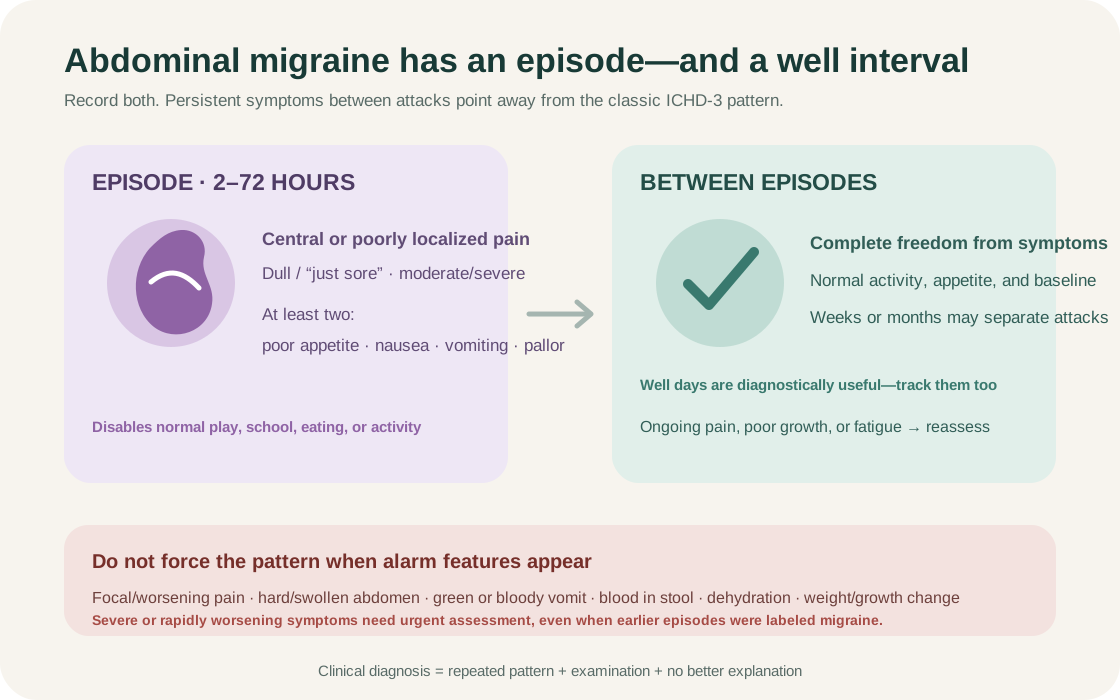
Abdominal migraine symptoms
The main symptom is recurrent abdominal pain. Children may have difficulty describing the quality or exact location, so behavior can be as informative as words.
Common features include:
- pain around the belly button, near the center of the abdomen, or poorly localized;
- dull, sore, or aching pain;
- moderate or severe intensity;
- loss of appetite;
- nausea;
- vomiting;
- pale skin or dark shadows under the eyes;
- fatigue or a desire to lie still;
- episodes lasting from a few hours to as long as three days; and
- complete return to normal between episodes.
A younger child may curl up, hold their stomach, stop playing, refuse food, cry, become unusually quiet, or ask to stay in a dark room. Those behaviors are worth recording with the same attention as a pain score.
Does abdominal migraine include a headache?
Under the formal ICHD-3 classification, headache does not occur during the abdominal episode. If head pain is present, a clinician may consider migraine without aura or another explanation instead.
That distinction does not mean children with abdominal migraine never experience headaches. Some have a personal or family history of migraine, and many later develop typical migraine headaches. It simply helps clinicians classify the episode happening now.
Abdominal migraine diagnostic criteria
The ICHD-3 criteria describe at least five attacks with all of the following:
- pain lasting 2 to 72 hours when untreated or unsuccessfully treated;
- at least two pain features: midline or around the belly button, dull or “just sore” quality, and moderate or severe intensity;
- at least two associated features: poor appetite, nausea, vomiting, or pallor;
- complete freedom from symptoms between attacks; and
- no other disorder that better explains the symptoms.
These criteria help clinicians organize the history; they are not a home quiz. A child does not need to wait through five frightening episodes before receiving medical care, and matching the list does not rule out another condition.
ICHD-3 vs. Rome IV criteria
Two classification systems describe abdominal migraine from different clinical perspectives. ICHD-3, used in headache medicine, requires at least five attacks lasting 2–72 hours and says headache does not occur during the abdominal episode. Rome IV, used in disorders of gut–brain interaction, allows diagnosis after at least two stereotyped episodes over six months, requires pain lasting at least one hour and interfering with normal activity, and includes headache or light sensitivity among possible associated symptoms.
Those differences can make two careful clinicians document the same child differently. They do not mean one system proves the other wrong. The shared core is more important: stereotyped, disabling central abdominal pain; associated nausea, vomiting, appetite loss, or pallor; return to baseline between attacks; and no better medical explanation.
What causes abdominal migraine?
The exact cause is not known. Current thinking involves some of the same brain–gut, nervous-system, and genetic pathways involved in other forms of migraine. The digestive system and brain communicate continuously through nerves, hormones, immune signals, and the microbiome. An abdominal migraine episode may reflect a temporary disruption in that network.
Factors that may support the diagnosis include:
- a family history of migraine;
- a child who later develops typical migraine attacks;
- repeated, highly similar episodes;
- normal health between episodes; and
- predictable accompanying symptoms such as pallor, nausea, or vomiting.
These clues are not causes. Family history does not prove the diagnosis, and an apparent trigger does not make other explanations disappear.
Possible abdominal migraine triggers
Families commonly report episodes around:
- missed or delayed meals;
- disrupted sleep;
- travel;
- emotional stress or excitement;
- illness;
- bright or flickering light;
- motion sickness;
- dehydration;
- intense exercise; or
- certain foods.
The most useful approach is not to eliminate a long list of foods or activities. Start with a simple episode diary and look for a repeated, specific pattern. Unnecessary restriction can make eating anxiety, nutrition, school participation, and family life worse.
How abdominal migraine differs from other stomach pain
| Feature | Abdominal migraine pattern | Another cause may be more likely when… |
|---|---|---|
| Timing | Similar episodes separated by complete wellness | Pain is continuous, steadily worsening, or never fully resolves |
| Location | Central, around the belly button, or hard to localize | Pain becomes sharply focused, especially in the lower right abdomen |
| Associated symptoms | Nausea, vomiting, poor appetite, pallor | There is persistent diarrhea, blood, urinary pain, rash, swelling, or significant fever |
| Between episodes | Child returns to normal activity and appetite | Weight loss, poor growth, ongoing fatigue, or nighttime symptoms continue |
| Headache | Usually absent during the classified abdominal episode | Head pain and sensory symptoms dominate the episode |
No single row can rule a condition in or out. The child’s age, examination, growth, bowel and urinary symptoms, medication use, and complete timeline matter.
Abdominal migraine vs. cyclic vomiting syndrome
Both are episodic syndromes associated with migraine biology and can include abdominal pain, nausea, pallor, and symptom-free intervals. The dominant symptom helps separate them. In abdominal migraine, abdominal pain is the central, most disabling feature. In cyclic vomiting syndrome, repeated intense vomiting is the defining feature, and episodes often have a highly stereotyped start and duration for that child.
Other disorders of gut–brain interaction, including functional dyspepsia and irritable bowel syndrome, more often have ongoing or meal/bowel-related symptoms rather than weeks or months of complete wellness. Constipation can also cause recurrent pain and can coexist with migraine. A pediatrician or pediatric gastroenterologist should interpret the full pattern rather than forcing a label from one symptom.
How doctors diagnose abdominal migraine
Diagnosis begins with a detailed history and physical examination. There is no single scan or blood test for abdominal migraine.
A clinician may ask about:
- exactly where the pain is felt;
- how quickly it builds and how long it lasts;
- vomiting frequency and appearance;
- bowel movements and urination;
- fever, rash, weight change, appetite, and growth;
- whether the child is completely well between attacks;
- headache, light sensitivity, sound sensitivity, or motion sickness;
- family history of migraine;
- school absences and activity limits; and
- medicines, supplements, diet changes, and stressful events.
Tests are chosen based on the individual history and examination. They may be used to investigate another suspected cause rather than to “prove” abdominal migraine.
Abdominal migraine treatment
Treatment has two goals: make an active episode more manageable and reduce future episodes when they are frequent or disruptive. Evidence is more limited than it is for typical migraine, so plans are individualized by a pediatric clinician.
During an episode
Practical comfort measures may include:
- resting in a quiet, dim room;
- using a cool cloth if it feels soothing;
- offering small, regular sips if nausea is present;
- avoiding pressure to eat a full meal during active vomiting; and
- using only medicines that the child’s clinician has recommended for that child.
A clinician may discuss anti-nausea medicine, pain relief, or migraine-specific acute treatment depending on age, diagnosis, health history, and symptom severity.
Preventing episodes
When attacks are frequent, prolonged, or interfere with school and family life, the treatment plan may include:
- consistent sleep and wake times;
- regular meals and snacks;
- reliable hydration;
- identifying one or two repeated triggers rather than restricting everything;
- strategies for stress, anxiety, or school-related pressure;
- treatment of constipation or another coexisting problem; and
- a preventive medicine when the likely benefit outweighs the risks.
Possible preventive medicines appear in specialist guidance and small studies, but there is no one best option for every child. Choice and dosing belong with a pediatric clinician familiar with the child.
Evidence is limited: reviews largely rely on small observational studies, retrospective series, and treatments adapted from ordinary migraine. No medicine is specifically approved by the US FDA for abdominal migraine. If medicine is proposed, ask what outcome will count as benefit, how long the trial will run, which adverse effects to watch for, and when the plan will be reviewed. A diary should track episode frequency, duration, vomiting, function, and rescue treatment—not just pain intensity.
A useful abdominal migraine diary
An episode record can shorten the path from “their stomach hurts again” to a history a clinician can actually interpret. Use a simple notebook, the headache-diary tools library, or another format the caregiver can complete consistently.
Record:
- date and start/end time;
- the child’s own words for the pain;
- pain location;
- what activity stopped;
- appetite;
- nausea and each episode of vomiting;
- pallor, flushing, fatigue, or desire to sleep;
- fever, stool, and urinary symptoms;
- head pain, light sensitivity, or sound sensitivity;
- food and drink immediately before the episode without assuming causation;
- sleep and unusual stress;
- medicine given and response; and
- whether the child became completely well afterward.
Also record non-episode days. The return to full health between attacks is diagnostically important.
When abdominal pain needs urgent care
Seek urgent or emergency medical help for a child with:
- severe or rapidly increasing pain;
- a hard, swollen, or very tender abdomen;
- pain that moves to or concentrates in the lower right abdomen;
- green vomit, blood in vomit, or blood in stool;
- inability to keep fluids down or signs of significant dehydration;
- unusual sleepiness, floppiness, confusion, or difficulty waking;
- breathing difficulty;
- high fever with a very unwell appearance;
- testicular pain or swelling;
- a concerning rash;
- pain after a significant injury; or
- a first episode that is severe or unlike anything the child has experienced.
Arrange a routine medical assessment for recurrent pain, weight loss, poor growth, persistent symptoms between episodes, frequent school absence, or any pattern that is becoming more severe.
Outlook for children with abdominal migraine
Many children improve as they move through adolescence, although a substantial proportion later develop typical migraine headaches. Knowing the pattern can help families respond more calmly, reduce unnecessary restrictions, and prepare an effective school or care plan.
It is useful to give the school clear instructions: what an episode usually looks like, which comfort measures are permitted, which medicine has been authorized, who should be contacted, and which symptoms require urgent help.
A practical school plan can specify access to water and a quiet space, permission to contact a caregiver, clinician-authorized medicine, a return-to-class threshold, and emergency signs. The goal is safe participation—not automatic dismissal for every stomach ache or pressure to remain in class during a disabling episode.
Frequently asked questions
Can adults have abdominal migraine?
Yes, but it is much less commonly diagnosed in adults. Recurrent abdominal pain in an adult needs a medical evaluation before abdominal migraine is considered.
Is abdominal migraine the same as a stomach migraine?
“Stomach migraine” is an informal name people sometimes use for abdominal migraine. The formal term is abdominal migraine.
Can a child have abdominal migraine without a family history?
Yes. Family history can support the overall picture, but it is not required and does not establish the diagnosis by itself.
What foods trigger abdominal migraine?
There is no universal food list. If a specific food repeatedly appears before otherwise similar episodes, bring the diary to a clinician before making major restrictions.
How long does an abdominal migraine last?
The classified duration is 2 to 72 hours. A different duration does not identify the cause, and severe or worsening abdominal pain should be assessed based on the symptoms—not the clock alone.
The practical takeaway
Abdominal migraine is a recurring, disabling central abdominal-pain syndrome, seen mostly in children, with nausea, vomiting, poor appetite or pallor and a complete return to health between attacks. Diagnosis uses the repeated pattern, the child’s examination and growth, and appropriate exclusion of gastrointestinal, urinary, inflammatory, surgical, and other causes. During an established episode, a clinician-designed comfort and medicine plan can help; frequent attacks may justify prevention. Track both attack days and well days, avoid broad food restriction, and treat new focal, worsening, bloody, bilious, dehydrating, or persistent symptoms as a reason for prompt medical assessment.
For the broader context, see types of migraine, migraine symptoms, and the medical disclaimer.
Sources
- 1.6.1.2 Abdominal migraineInternational Headache Society · Accessed
- Abdominal Migraine: What It Is, Causes, Symptoms & TreatmentCleveland Clinic · Accessed
- Abdominal migraineAmerican Migraine Foundation · Accessed
- Review of Abdominal Migraine in ChildrenGastroenterology & Hepatology / PubMed Central · Accessed
- Abdominal pain in children—Advice for parentsCambridge University Hospitals NHS Foundation Trust · Accessed
- Red flag symptoms and suggested actions in children with vomitingNICE · Accessed
- Clinical features of abdominal migraine: a systematic review and summary of data from 662 patientsFrontiers in Neurology / PubMed Central · Accessed